

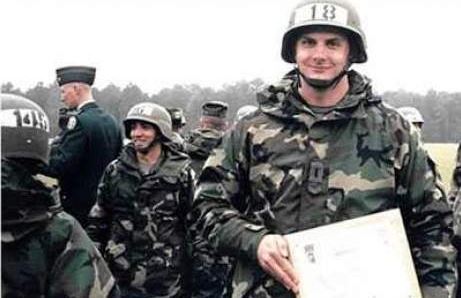

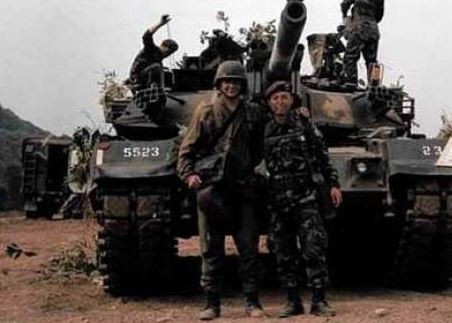
He offered to take a polygraph test for his handlers when they asked if he was working for an American intelligence agency. He told them that he wished to leave the military, but they encouraged him to stay. They further urged Debbins to apply for and join the Special Forces. He was told that “he was of no use to the Russian intelligence service as an infantry commander.” Debbins passed Special Forces Selection (SFAS) and the qualification course (SFQC) and was assigned as a captain in the 1st Battalion, 10th Special Forces Group (1-10 SFG).
On another trip to Russia, he briefed his GRU contacts about his SF unit, its personnel, locations, and mission. Debbins had his security clearance suspended and command of his A-Team revoked for an unspecified security violation in 2004 or 2005. He then left the military in 2005 with an honorable discharge, according to the indictment.
In subsequent meetings with his GRU handlers, Debbins disclosed information about his unit’s deployments to Azerbaijan and Georgia that were deemed “SECRET/NOFORN.” Debbins also gave the GRU the names of his former team members knowing that the Russians sought the “information for the purpose of evaluating whether to approach the team members to see if they would cooperate with the Russian intelligence service.” He also passed the names of two American counter-intelligence agents who tried to recruit him for an operation.
Once his active duty service was over he began to work for a Ukrainian steel company in Minnesota through his Russian contacts. He remained a member of the Reserves until 2010. During this time his security clearance was reinstated by an Army adjudicator, although he was warned that his family and business connections to Russia might make him “the target of a foreign intelligence service.”
Debbins was a “true believer” and not motivated by monetary gains. In fact, when the Russians (who are notoriously cheap in the intelligence world when it comes to paying agents) offered him $1,000 he initially declined it stating that he “loved and was committed to Russia.” He only reluctantly accepted the money as “gratitude for his assistance to the Russian intelligence service.” At a 2003 meeting, he was given a bottle of Cognac and a Russian military uniform.
The Justice Department did not divulge how it came to know that Debbins was spying for Russia. His last contact with his handlers was in 2011 when he told them that moved to the D.C. area (Gainesville, VA).
He will be indicted formally on Monday. He faces life imprisonment if convicted.
“The facts alleged in this case are a shocking betrayal by a former Army officer of his fellow soldiers and his country,” Alan E. Kohler Jr., FBI Assistant Director of the Counterintelligence Division, said in a statement.
The entire indictment can be read here.








COMMENTS