

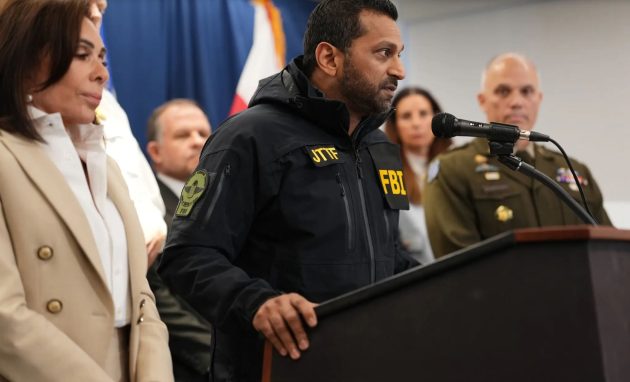
President Donald J. Trump condemned the shooting as a “crime against humanity.” He ordered the deployment of 500 additional National Guard troops to Washington, D.C., increasing the force beyond the roughly 2,200 already in the city under a broader domestic security mobilization.
On social media, Vice President JD Vance echoed the president’s claims, arguing the shooting underscores the need for strict enforcement and tougher immigration standards.
Critics warn the reaction risks stigmatizing all evacuees — including longtime U.S. allies — and undermines trust in asylum and resettlement programs.
Two West Virginia National Guard soldiers were shot near the White House in a targeted ambush; the suspect, an Afghan national, is in custody and the attack is being investigated as terrorism https://t.co/EgpBysF9A9 pic.twitter.com/u69sA8s4dS
— Reuters (@Reuters) November 27, 2025
How This Fits With Guard Mission In D.C.
The deployment of National Guard troops to the District of Columbia began in August 2025 under the Trump administration’s push to “restore law and order.”
Over the preceding weeks, Guard troops carried out high-visibility patrols, traffic control, and even community support tasks such as park cleanup — operations meant to reinforce local law enforcement presence. Some Guard members were reportedly armed, operating under strict rules of engagement.
Critics questioned the necessity of such a heavy militarized presence, arguing that violent crime in D.C. had already dropped significantly compared with the same period in 2024. A data analysis by independent monitoring groups found shootings down roughly two-thirds.
But the ambush outside the White House — right in the heart of the capital — could harden support for sustained or expanded military deployment.
What Remains Unanswered
Several questions remain. Investigators have not disclosed why Lakanwal targeted those specific Guardsmen or whether he had antagonistic ties to them prior to the attack. Motive remains under official review.
Authorities have not provided a full breakdown of the weapon used beyond confirming it was a handgun. The number of rounds fired and trajectory details have not yet been released.
The two wounded soldiers’ identities remain withheld for privacy reasons, and families have yet to issue any statements on their condition or background.
Finally, the broader question hangs over the capital: Will the Guard presence remain long after the Nov. 30 deadline originally set to expire their mission? Legal challenges and court rulings have already cast doubt on the continued deployment.
In the span of a few frantic minutes, a security bubble deemed near-impenetrable cracked in the shadows of the White House. Two trained soldiers from the West Virginia National Guard were left wounded — and a nation confronted questions about its immigration policies, vetting procedures, and the true cost of “security.”
The investigation continues. Public reaction is already shaping up to influence policy debates on immigration and the domestic role of the military.








COMMENTS