
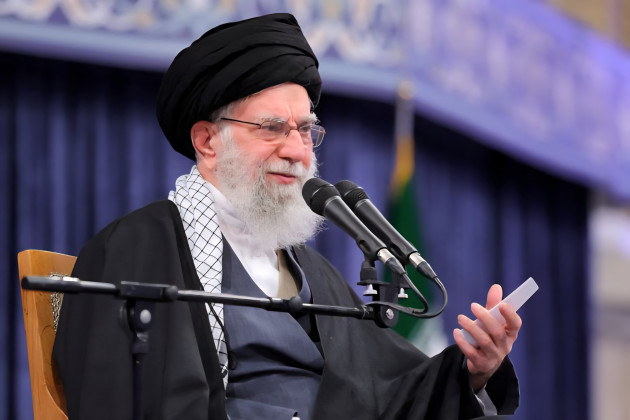
Supreme Leader Dead: U.S.–Israeli Strikes Kill Khamenei in Operation Epic Fury
Khamenei Confirmed Dead Following U.S.–Israeli Strikes Under Operation Epic Fury
President Donald Trump has publicly confirmed that Iran’s Supreme Leader, Ayatollah Ali Khamenei, was killed during coordinated U.S.–Israeli strikes conducted under Operation Epic Fury.
In a Truth Social post dated February 28, 2026, Trump wrote that Khamenei “is dead,” describing him as “one of the most evil people in History” and framing the strike as justice for both the Iranian people and American victims of the regime. He further claimed that members of the Islamic Revolutionary Guard Corps are “looking for Immunity from us.”
Senior U.S. officials have corroborated the assessment that Khamenei was killed in the strike wave targeting regime leadership compounds and high-value military infrastructure. Israeli officials have also confirmed his death through their own channels. Iranian state media has not formally acknowledged the killing and had earlier claimed that Khamenei was “safe and sound.”
Khamenei, 86, ruled Iran for 36 years following the death of Ayatollah Ruhollah Khomeini in 1989. As Supreme Leader, he held ultimate authority over Iran’s military, nuclear program, judiciary, and security services, including the Islamic Revolutionary Guard Corps. His office functioned as the central decision-making node for both conventional and proxy military strategy across the region.
The strike that reportedly killed Khamenei was part of a broader decapitation-focused campaign aimed at degrading Iran’s ballistic missile command structure and deterring further escalation. Operation Epic Fury has included air and sea-based assets striking targets across multiple Iranian provinces.
Khamenei’s death introduces immediate uncertainty into Iran’s succession process.
The Assembly of Experts is constitutionally responsible for selecting a new Supreme Leader, but that process unfolds under internal political pressure and factional maneuvering. The Islamic Revolutionary Guard Corps remains the most powerful organized force inside the country.
Iran has already launched retaliatory missile and drone strikes against Israel and Gulf states hosting U.S. forces. The regional battlespace remains active.
With the Supreme Leader confirmed dead, Iran now faces a leadership transition in the middle of an expanding regional war.
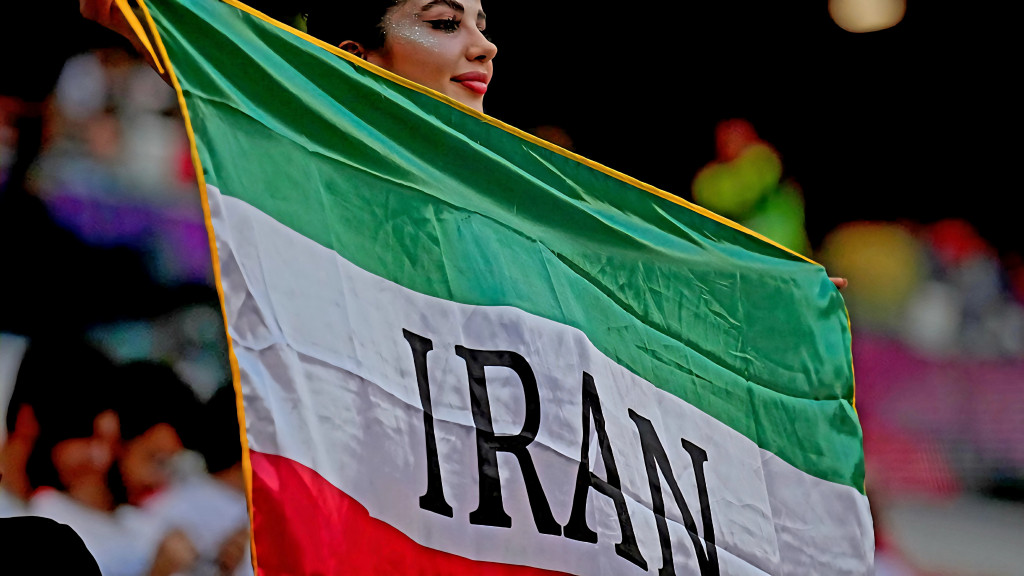
Khamenei’s Death Splits Iran: Street Celebrations Meet Loyalist Rallies
As news of Ayatollah Ali Khamenei’s death swept through Iran, the country split into scenes of celebration and defiance.
Videos circulating Saturday show crowds gathering in parts of Tehran, Shiraz, and Isfahan. In several clips, people cheer, honk car horns, and set off fireworks. Some chant anti-regime slogans. Others simply clap and film the moment on their phones. The footage suggests that for a segment of the population, the end of Khamenei’s rule feels less like mourning and more like release.
Elsewhere, the reaction moved in the opposite direction.
State-aligned outlets broadcast images of organized pro-regime demonstrations forming within hours. Groups assembled for prayer, waving Iranian flags and holding portraits of Khamenei as chants framed him as a martyr and called for resistance against the United States and Israel. By mid-afternoon local time, loyalist rallies were visible in multiple districts, a reminder that the regime’s mobilization networks remain intact and responsive.
The split response exposes the fault lines that have existed for years. Sanctions pressure, inflation, corruption scandals, and repeated protest crackdowns hardened resentment in parts of the population. At the same time, the Islamic Revolutionary Guard Corps and hardline clerical factions retain disciplined constituencies and tight control over internal security.
The immediate question is not whether the regime survives. It is who consolidates power fast enough to control the moment.
No successor has been formally announced.
Behind closed doors, clerical power brokers and IRGC commanders are expected to move quickly to prevent uncertainty from metastasizing. A contested or delayed succession risks emboldening street protests. A rapid consolidation around a hardline figure signals continuity and a likely tightening of internal control.
The stakes extend beyond Tehran. IRGC cohesion, proxy coordination across Lebanon, Iraq, and Yemen, and centralized control over missile forces all depend on a clear command structure. Any hesitation at the top creates opportunity for rivals and risk for escalation.
Iran’s system was built to endure pressure from the outside. It has never been tested like this from within.
The regional war continues. Inside Iran, the struggle over authority, loyalty, and narrative is already underway.
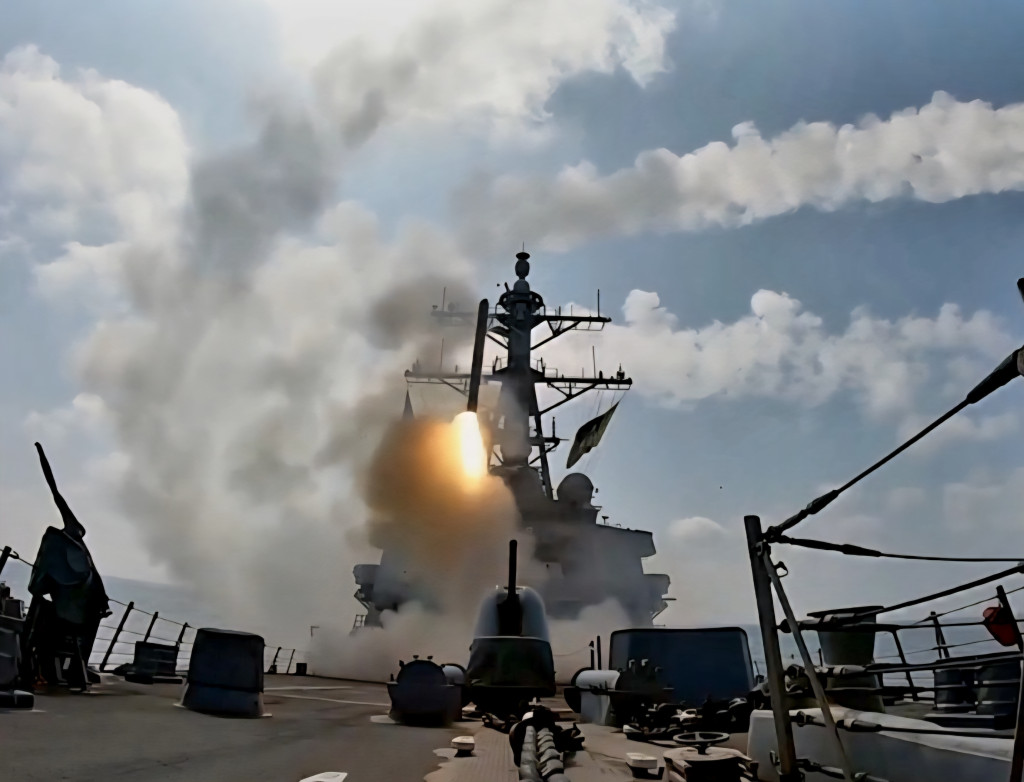
CENTCOM: No U.S. Casualties After Iranian Retaliatory Missile Barrage
Iran launched a large-scale retaliatory missile and drone barrage across the Middle East on Saturday, targeting U.S. military installations following coordinated American and Israeli strikes inside the Islamic Republic. According to U.S. Central Command, the attacks resulted in no American casualties and minimal damage.
In an official release, United States Central Command stated that “there have been no reports of U.S. casualties or combat-related injuries” and that damage to installations “was minimal and has not impacted operations.”
The retaliatory wave included hundreds of missiles and one-way attack drones aimed at U.S. facilities across the Gulf region.
Defense officials described the attacks as widespread but successfully intercepted by layered air and missile defense systems.
Video circulated online earlier in the day appeared to show activity near the headquarters of the U.S. Navy’s United States Fifth Fleet in Bahrain. Officials have not confirmed a direct hit on the headquarters facility, and CENTCOM maintains that operational capability remains intact.
The Iranian strikes followed the opening phase of Operation Epic Fury, which targeted Islamic Revolutionary Guard Corps command-and-control nodes, missile launch sites, air defense systems, and military airfields. American forces executed strikes using fighter aircraft, naval platforms, and long-range precision weapons.
Among the systems employed was the first confirmed combat use of the Low-cost Unmanned Combat Attack System, or LUCAS drone. The one-way attack platform, developed as a response to Iran’s Shahed-series drones, was deployed by Task Force Scorpion Strike, a newly formed unit under United States Special Operations Command Central.
Adm. Brad Cooper, commander of CENTCOM, stated that U.S. forces were ordered to strike targets posing imminent threats and that American personnel remain postured for continued operations if necessary.
Iranian state media has reported significant casualties inside Iran following the initial strike campaign, citing figures from the Iranian Red Crescent. Those numbers have not been independently verified.
From a military standpoint, the key development is not the number of missiles launched but the outcome.
Iran demonstrated it retains the ability to generate a sizable retaliatory volley despite damage to elements of its missile and command infrastructure. The United States demonstrated that its regional defensive architecture, including Aegis-equipped ships, ground-based missile defense batteries, and integrated radar systems, remains capable of absorbing and defeating large-scale attacks. Intercepting hundreds of inbound threats, however, carries cost.
Missile defense is not unlimited.
Interceptors must be replenished, and sustained high-tempo defense strains logistics and personnel.
For now, the headline remains clear: Iran fired, and U.S. forces held.
The broader question is duration. If Tehran continues sustained salvos over days or weeks, the conflict shifts from a single retaliatory exchange to an endurance contest measured in inventory depth, resupply rates, and escalation thresholds.
As of this reporting, American forces remain operational across the Gulf. No U.S. service members have been reported killed or injured in the retaliatory strikes.
Pentagon Moves to Cut Anthropic After Dispute Over AI Use Limits
A public rupture has opened between Anthropic, the maker of Claude, and the Department of Defense after the company refused to loosen internal guardrails tied to mass surveillance and autonomous weapons use.
The dispute centers on a $200 million Pentagon contract awarded in July 2025 that integrated Claude into classified workflows through data analytics firm Palantir.
According to defense officials, the Pentagon sought broader operational flexibility for use inside classified military networks.
Anthropic declined to remove prohibitions on large-scale surveillance of U.S. citizens and fully autonomous lethal systems.
On February 27, 2026, President Donald Trump escalated the standoff in a Truth Social post, directing all federal agencies to cease using Anthropic technology within six months. The administration also designated Anthropic a “supply chain risk,” a move that bars federal contractors, including major defense primes such as Boeing, from entering new agreements with the company.
Tensions reportedly intensified earlier in February during a contentious meeting between Anthropic leadership and Defense Secretary Pete Hegseth. On February 26, Anthropic rejected what officials described as a final proposal that would have expanded allowable use inside secure networks. Within 24 hours, the White House announced the phase-out.
OpenAI moved quickly, finalizing a separate agreement with the Pentagon that includes operational flexibility paired with technical safeguards. Defense officials indicate that transition planning is already underway.
The shift is expected to take months and could temporarily disrupt AI-enabled analytical workflows embedded in intelligence and operational planning systems.
The Pentagon is also evaluating alternatives, including xAI’s Grok platform, as part of a broader diversification strategy.
The dispute marks a pivotal moment in the relationship between Silicon Valley AI firms and the national security apparatus. It highlights an emerging fault line: whether private AI companies can impose ethical restrictions on how their systems are used once integrated into classified military environments.
For now, Anthropic appears willing to forfeit federal revenue rather than revise its internal usage policies. The Pentagon, meanwhile, is signaling that strategic autonomy in AI outweighs reliance on any single vendor.








COMMENTS