

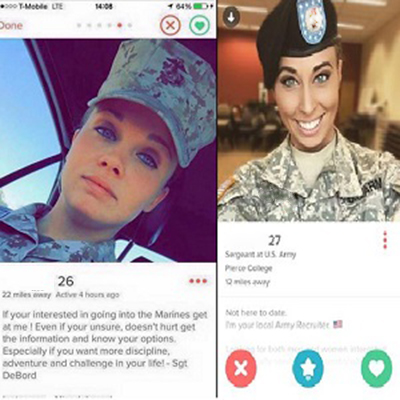
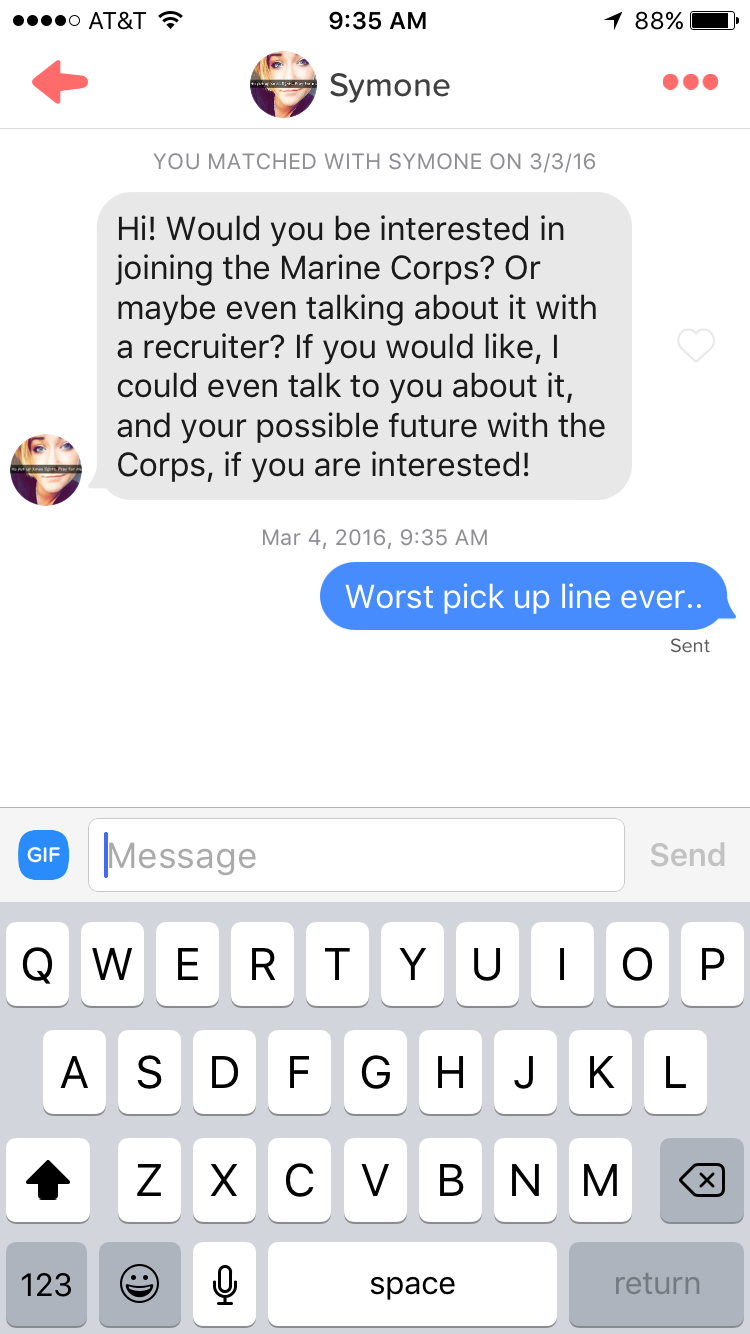
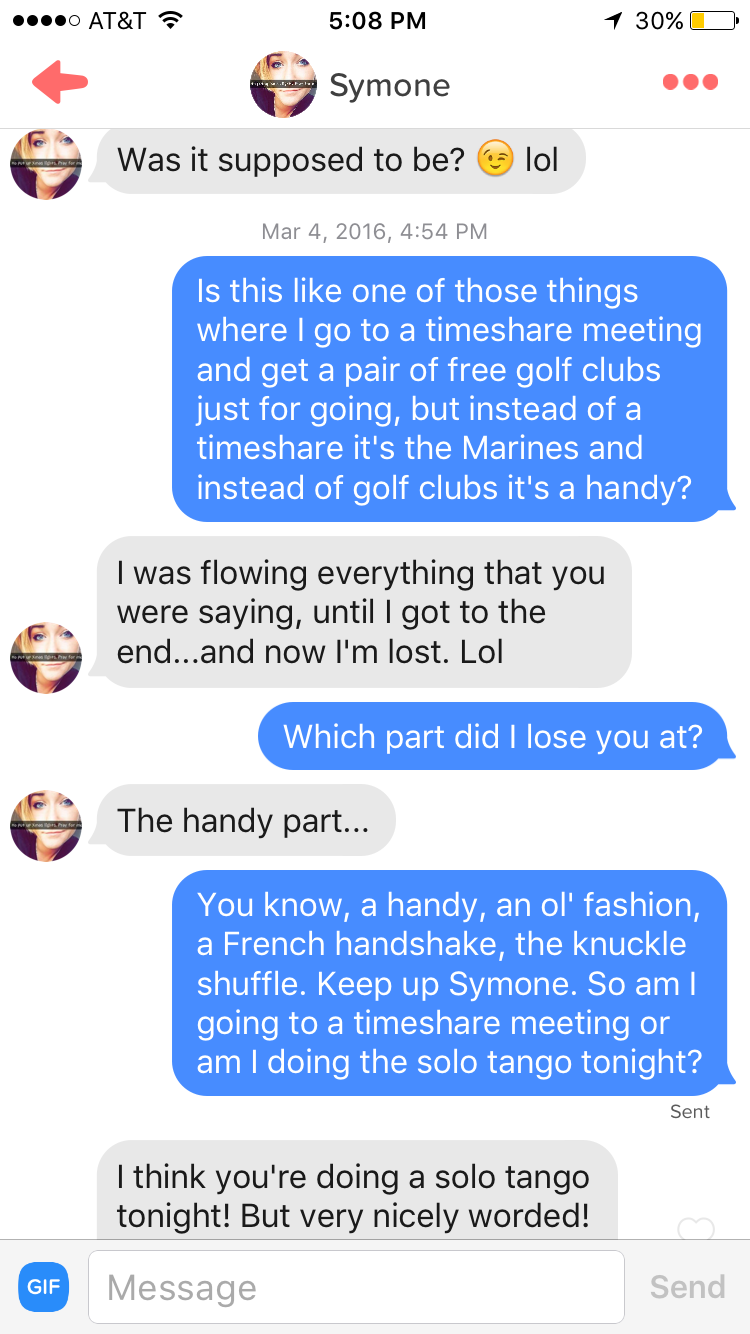

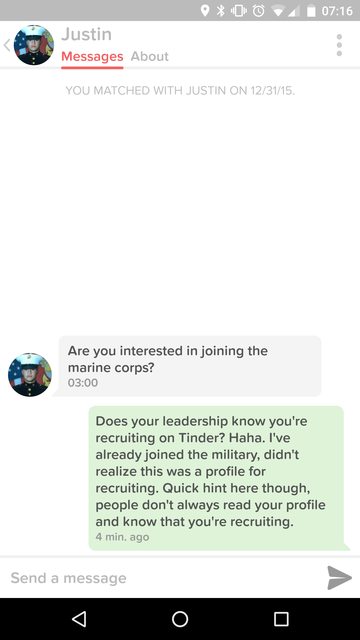
From a glance at those numbers, though, it just doesn’t add up. The DoD has been missing their targeted recruiting goals and is expected to fall even shorter this year. The United States Army Recruiting Command (USAREC,) is unofficially projecting a worst-case scenario of falling short by 20,000. The actual number may end up closer to 10,000 and the Army, as well as the DoD, is set to stay the course with their current marketing strategies. With the heads of recruitment leaning on the old adage excuses of obesity in youth and low test scores, which makes one ponder what happens if a real war breaks out and the flood gates on recruitment turn to a draft. Such excuses will fall flat and the DoD will be charged with molding service member, yet again.
Even so, this is the issue with recruiting, and it is not about fatties and window-lickers. It is all about politics. We live in a word where recruits are fostered into service; as an administrative system continues to restrict realistic training and bureaucracy rules with an iron-fist – By way of muck-racking, and swindling politicians who dream of creating mountains of molehills in scandal to play hero against the big bad military . . . You can’t hug every cat, and the military is not “The Office.” But don’t tell the politicians or press that; they’ll only reply that. “You don’t understand how these things work.” Unfortunately, I do, and they are bottom-feeding opportunists.
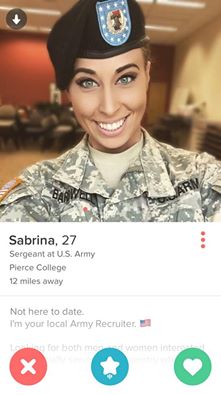
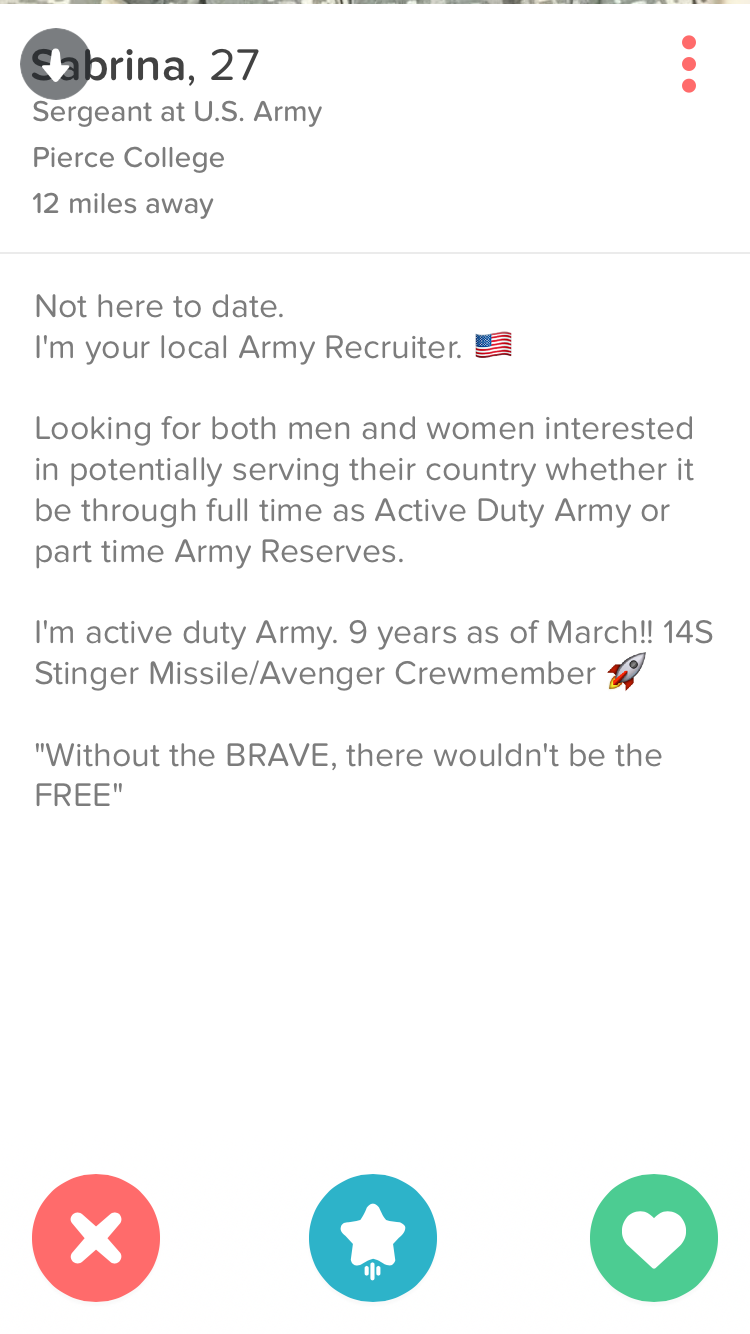
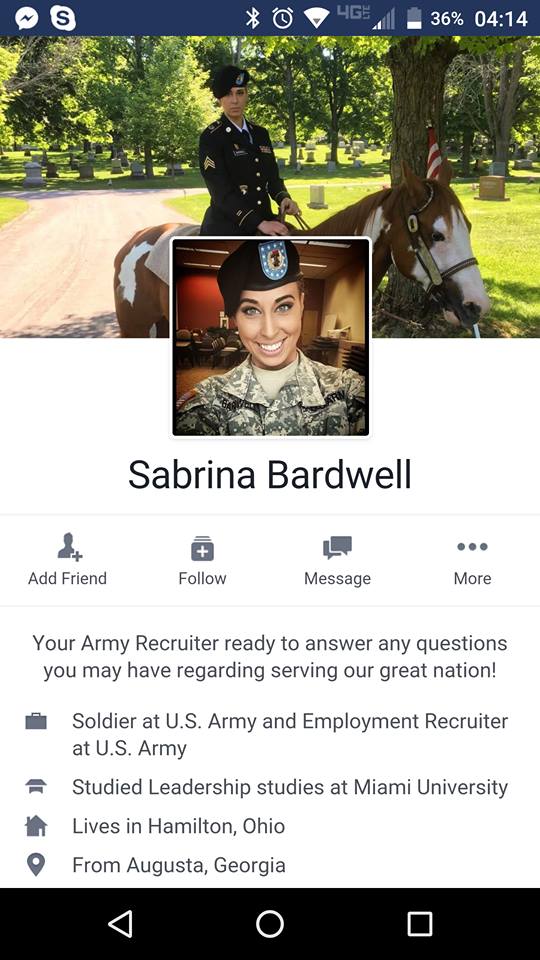
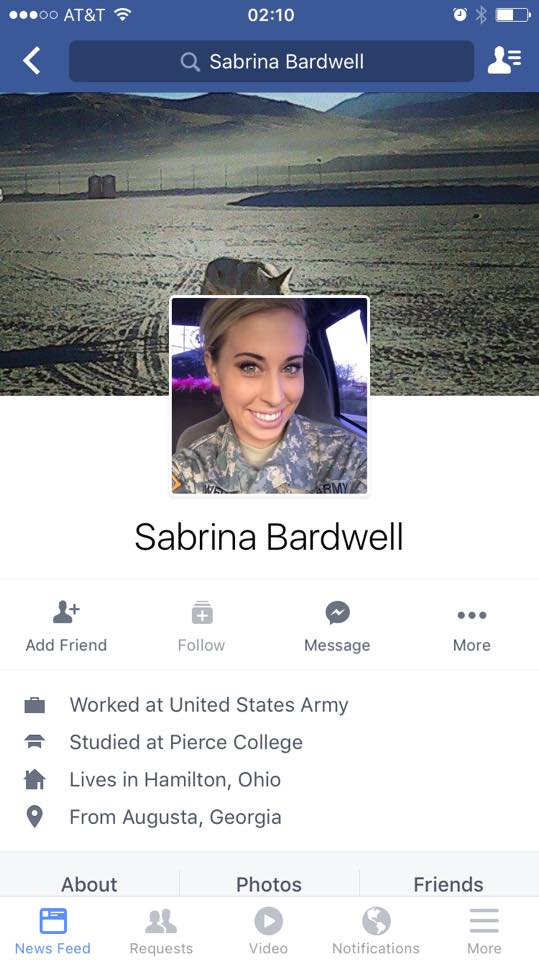
For now, unsanctioned recruiters are flocking to social media and digital marketing on their own accord, in an effort to attract millennial recruits to military service. And as their task may be challenging, their unchecked and reckless sales strategy could end in scandal.
Tinder is the outlier – for now- in regards to recruiting via social application and digital engagement. Nevertheless, the practice is not unheard of, in the private sector. An increasing number of companies are using social media as a means to identify potential talent. The human resources website, Staff.com, cites that,
92 percent of companies actively seek new employees via social media, with 73 percent of recruiters saying they have made successful hires.
Albeit the most frequently used pathways are LinkedIn for professional references and Facebook and Twitter to review how well a potential candidate may fit in with the perceived corporate culture. For the DoD, the technology is present for recruiters to use, but they’re doing it wrong. Just as well, the DoD has yet to encourage or regulate its use outside of its rather stale official social media channels of the DoD, branches, and various commands.
Even though a recent 57-page Government Accountability Office (GAO,) report, titled: “Better Coordination, Performance Measurement, and Oversight Needed to Help Meet Recruitment Goals.” The report clearly lays out how the DoD needs to advance its execution, planning, and most specifically its way of thinking in regards to attracting new recruits.
Social media channels can empower recruiters as a tool, but not as an end-all solution to fill targeted Military Occupational Specialty (MOS) shortages – Allowing recruiters to connect directly with potential recruits whom are interested and qualified. Traditional recruiting tactics leave much wanting and often results in average recruits. Yet as the 21st-century battlefield adapts to digital and technology; recruiters will need to use social media channels to identify tomorrow’s military who has not only the interest but the skills to meet those challenges.
This Addendum clarifies and specifies that someone who may, or may not be one of the recruiters featured within the article photos has claimed that their Tinder account was a hoax. Names and unit insignia were obscured- above and beyond requirements. Even so, and if the person in question is whom they claim to be; the Facebook TOS and the license allows for public content to be used, freely. When a Facebook end-user publishes content or any other information via a ‘Public’ setting, the end-user is thereby allowing everyone, including those who do not use Facebook, to access and use that information. This supplements third-party applications, such as Tinder. The Tinder application requires a valid Facebook profile to validate the end-user and uses the public photos of the end-user with the Tinder application, and this TOS usage policy applies in a Facebook TOS similar image and information usage on any public information. Further, the information posted does not target, identify, defame, harass, or false light the claiming party. The claiming party is also a uniformed service member on duty within the photo, and if the party is whom they claim to be, use of photographs and video of things that are plainly visible in public spaces is a constitutional right—and includes military, police, and other government officials carrying out their duties. Public photos can be used as long as they do not interfere with official government business, law enforcement or military operations, are not a result trespassing on private property, or breaking any other laws, these public photos are protected under the First Amendment. The photos posted within this article were posted by the end-user and into a public digital distribution channel via the Facebook and Tinder TOS.








COMMENTS