The delicate balance of power established by the framers of the United States Constitution has been a foundational aspect of governance since the nation’s inception. Central to this framework is the division of war powers, deliberately crafted to prevent the concentration of military authority in the hands of a single individual. However, in the post-World War II era, there has been a significant and troubling shift in this balance, marked by Congress’s ceding, or “abdicating,” much of its wartime authority to the executive branch. This dynamic has resulted in United States presidents routinely initiating military actions without formal declarations of war, a power explicitly granted to Congress by the Constitution. The evolution of this trend can be understood through the lens of constitutional division of powers, the expansion of executive authority, the limited effectiveness of the War Powers Resolution, and the reliance on Authorizations for Use of Military Force (AUMFs).
Constitutional Division of Power
The framers of the Constitution were acutely aware of the dangerous potential for tyranny that could arise from concentrated power, particularly in matters of war. To mitigate this risk, they divided war powers between Congress, which was given the authority to “declare war” and maintain the military, and the President, who was appointed as “Commander in Chief” to manage military forces once Congress had authorized action or in response to immediate threats. This structural arrangement was designed to foster deliberation, debate, and a holistic consideration of the implications of military action, reflecting the belief that decisions of war should not be taken lightly or without widespread consensus. Yet, this carefully engineered system has eroded over the decades, particularly in the context of escalating global conflicts and the demands of national security.
Expansion of Executive Power
Since the end of World War II, presidents from both major political parties have increasingly expanded and reinterpreted their Article II powers, often justifying military interventions on the grounds of broad “national interests.” The ambiguity surrounding what constitutes the national interest has often permitted presidents to engage in military actions that Congress never formally approved. With the rise of conflicts characterized by their complexity and global reach—such as the Korean War, Vietnam, and the War on Terror—successive presidents have taken the initiative in deploying military forces, frequently without the explicit consent of Congress. This expansion of executive power has fundamentally altered the landscape of American governance, diminishing Congress’s role in critical national security decisions.
The War Powers Resolution (WPR)
In an effort to restore some semblance of congressional authority over military actions, Congress passed the War Powers Resolution (WPR) in 1973, overriding President Nixon’s veto. The WPR was intended to ensure that Congress retained its constitutional role in decisions of war by mandating that the President report to Congress on military actions within 48 hours and cease hostilities within 60-90 days without congressional authorization. While well-intentioned, the resolution has proved largely ineffective. Presidents have often dismissed its constraints, arguing that the WPR infringes upon executive powers. Congressional reluctance to challenge or enforce the WPR—often stemming from political considerations, the fear of being accused of undermining national security, or a hesitance to hold difficult votes—has rendered it largely impotent.
Use of Authorizations for Use of Military Force (AUMFs)
The shift away from formal declarations of war has also seen Congress increasingly rely on resolutions known as Authorizations for Use of Military Force (AUMFs). The most notable examples emerged in the wake of the September 11 attacks in 2001 and the Iraq War in 2003. These authorizations have been drafted in broad terms, enabling successive administrations to interpret them expansively and justify military operations across multiple conflicts and regions beyond their original scope. The reliance on AUMFs has further marginalized Congress, allowing executive action to proliferate under the guise of congressional approval, while simultaneously discouraging robust debate and evaluation of military engagements.
Conclusion: The Erosion of Checks and Balances
The prevailing view among legal scholars and political analysts is that the power imbalance between Congress and the Executive Branch has weakened the system of checks and balances that the framers intended to protect. This erosion of congressional authority in matters of war diminishes public discourse and the democratic accountability that should accompany decisions of such magnitude. The abdication of congressional power not only risks entrenching a cycle of unilateral executive military authority but also alienates the very principles of deliberation and consensus that are essential for a representative democracy. As the nation navigates evolving threats in an increasingly interconnected world, a reassessment of the distribution of war powers is paramount to restore balance and uphold the constitutional safeguards designed to protect the republic. The dialogue surrounding this critical issue must reignite, paving the way for a more balanced and deliberate approach to military engagement that adheres closely to the constitutional vision of the nation’s founders.
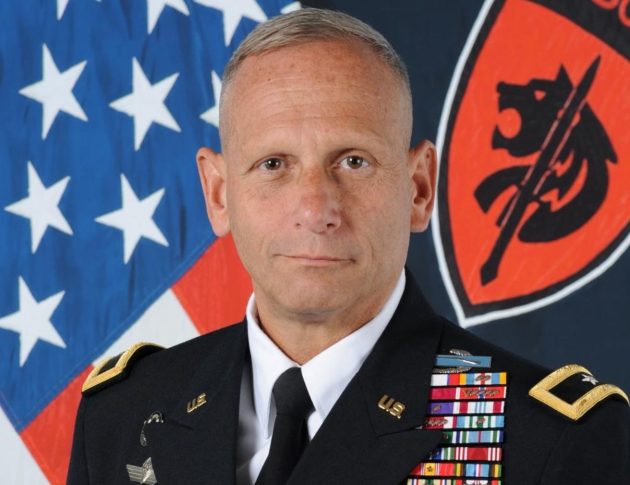
Donald C. Bolduc
Already have an account? Sign In
Two ways to continue to read this article.
Subscribe
$1.99
every 4 weeks
- Unlimited access to all articles
- Support independent journalism
- Ad-free reading experience
Subscribe Now
Recurring Monthly. Cancel Anytime.










COMMENTS