

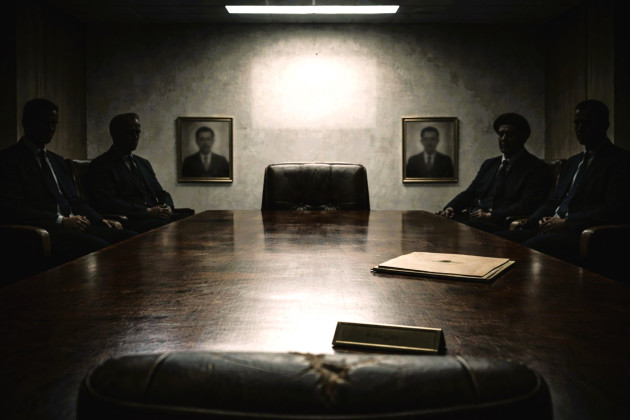
The government has overlapping, redundant structures that were specifically designed for moments like this. Multiple centers of authority. Parallel chains of command. It’s bureaucratically messy and slow to make peacetime decisions, but under attack? That redundancy is a feature, not a bug.
The missiles Iran launched at U.S. bases across the Gulf didn’t require a Supreme Leader’s signature. The chain of command didn’t break. It bent and kept moving.
We’ve seen this movie before. And we should know how it ends by now.
Saddam Hussein was pulled from a hole in the ground in December 2003. We celebrated. Iraq spiraled into a decade of sectarian war that killed hundreds of thousands of people and created ISIS.
Muammar Gaddafi was dragged through the streets of Sirte in 2011. Libya became a failed state. It still is.
Osama bin Laden was killed in Abbottabad in 2011. Al-Qaeda splintered into a dozen franchises. The Taliban eventually took Afghanistan back anyway.
In every case, the leader died, and the problem got worse because of the systems, grievances, networks, and power vacuums they left behind.
The pattern is consistent enough that it’s not a coincidence. It’s a lesson. And we keep refusing to learn it.
Here’s what should concern the strategic thinker.
By most accounts, Khamenei’s grip had been slipping for months. He was 85. Weakened by the protests. Reportedly sidelined from key decisions during the Twelve-Day War last June.
Which raises a question worth sitting with… what exactly did we gain by killing a man the system was already moving past?
The candidates being discussed as his replacement are reportedly younger, harder-line, and more closely tied to the military establishment. The pattern is the key. Regimes radicalize under fire. The next Supreme Leader will have been chosen during a war. He will owe his position to the security apparatus that kept the system alive while bombs fell. He will have every incentive to be harder, not softer, than the man he replaced.
And there’s this: Khamenei maintained a religious fatwa against nuclear weapons for decades. It was one of the few theological guardrails in the system. Whether the next leader honors that prohibition is not something we should take for granted. As former CIA officer, John Kiriakou put it this week: “If you can get nuclear weapons in a world where the U.S. exists, you have to. To protect yourself. Ask yourself why nobody’s talking about North Korea.”
Khamenei was a horrible human. His regime killed thousands of its own citizens in the streets over the past two months. The IRGC, under his authority, funded proxy wars across the Middle East. The list of legitimate grievances against him is long.
But “horrible man” and “strategic target” are not the same calculation.
In undercover work, we never confuse taking out a leader with dismantling a network. The arrests were just the beginning. The real work was always structural. We’d be cutting the supply lines, flipping the loyalties, breaking the revenue streams, and changing the conditions on the ground that made the organization possible in the first place.
Skip that work by just grabbing the guy at the top, and you haven’t truly solved anything. You’ve created a job opening. And the next person to fill it has a very clear understanding of what happens to leaders who show restraint.
Iran announced a new interim government within 24 hours of the strikes. The constitutional process is already in motion. The missiles are still launching. The system didn’t collapse…yet. One can hope.
But you can’t kill the pope and expect Catholicism to disappear.
You just get a new pope. And this time, he might not be as forgiving.
—
Tegan Broadwater spent 13 years with the Fort Worth Police Department, including two years assigned to the FBI working deep undercover inside a violent Crip organization. That operation, detailed in his book Life in the Fishbowl, resulted in 51 convictions. He has since founded Tactical Systems Network, an armed security & protection firm primarily staffed by veterans, is a creative writer and musician, and hosts The Tegan Broadwater Podcast. All book profits benefit children of incarcerated parents. Learn more at TeganBroadwater.com








COMMENTS