The Shooting in Minneapolis and the Government Response That Followed
Watching a Department of Veterans Affairs intensive care unit nurse take ten rounds of handgun fire to the back while on his knees was not how I wanted to start my Sunday in Thailand. The video came from my cousin in Boston early that morning, and my first thought was: this matters. I have been turning over lethal encounters involving federal agents since seeing the last one, and I try to understand the pressures on federal law enforcement because I have worn a badge and stood in the same boots; in the case of Renee Good, I found a defensible position for the agents even while calling the situation avoidable. This was different.
Before Alex Pretti’s body had cooled, administration officials were already telling a story that the available footage did not support. Immigration enforcement leadership labeled him a “gunman” who had approached federal agents. President Donald Trump said Pretti, who was a licensed concealed-weapons holder, should not have been carrying a gun or fully loaded magazines, language that drew criticism from gun rights groups who noted he never reached for his weapon. Trump said it was “very unfortunate” and that Pretti “should not have been carrying a gun.”
Homeland Security Secretary Kristi Noem claimed he had come to commit an act of domestic terrorism. That language carries a weight that invites the public to imagine a battlefield rather than a street. Within hours, sympathetic accounts online described a standard 9mm handgun as “military style,” conflating legality with lethality and erasing the crucial distinction between lawful possession and armed hostility.
What the Video Shows
What the video and multiple independent analyses show is not that Pretti walked toward agents firing a weapon. Verified footage from several angles depicts him, in the minutes before the shooting, holding up his phone to record agents on Nicollet Avenue. Shortly afterward, a woman near him is shoved to the ground, and Pretti is pepper-sprayed. Anyone who has been sprayed knows the effect: your vision evaporates, your ability to think disintegrates; you are not choosing resistance, you are incapacitated. At that point, control of the encounter is the obligation of the officers present.
Video shows Alex Pretti falling to the pavement after agents pepper-sprayed him. Multiple agents crowd over him. His hands remain visible. An agent strikes him in the face with an OC canister. Agents remove a legally carried handgun from his waistband as one shouts, “Gun.” Moments later, two federal agents fire into his back at close range. A DHS report confirms both agents discharged their weapons but does not state that Pretti ever reached for his firearm.
There should be nothing controversial about acknowledging what is visible on the footage. Instead, officials doubled down on a narrative that Pretti posed a violent threat. Border Patrol commander Greg Bovino suggested he sought to “massacre law enforcement,” and Noem’s characterization of domestic terrorism was echoed by others. But the preliminary internal review that surfaced later makes no mention of him brandishing a weapon or attempting to fire it.
Rights Do Not Vanish at a Protest
One fundamental question stands out. If what Pretti was doing, legally carrying a firearm while filming in public, was itself problematic, then that is a question of statute, not of threat in a single moment. Officials rushed past nuance to assert danger without evidence. Kash Patel argued that individuals do not have a right to attend protests while armed, regardless of legality, collapsing First Amendment space into Second Amendment anxiety.
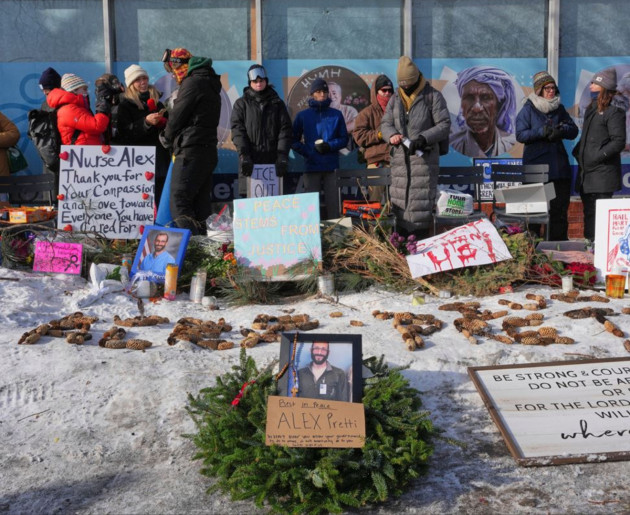
Minneapolis Morgue. Candlelight vigils. Protests spontaneous and widespread, from Boston to Los Angeles and Seattle. Calls for accountability from Republicans and Democrats alike. Demands for impartial investigations. All this follows from the stark reality that a man who tended to the sick, who cared for veterans, who stood to film federal agents, is dead.
I do not give the benefit of the doubt to an administration that rushes to judgment and then doubles down on a narrative now contradicted by video and internal reporting. They were caught lying about this before the public even saw the footage.
What else will they lie about is an open question. What is no longer in doubt is this: there was a time in this country when federal agents did not execute Americans in the street and dare the public to deny what their own eyes had seen. We are not living in that country anymore.
Already have an account? Sign In
Two ways to continue to read this article.
Subscribe
$1.99
every 4 weeks
- Unlimited access to all articles
- Support independent journalism
- Ad-free reading experience
Subscribe Now
Recurring Monthly. Cancel Anytime.
The Shooting in Minneapolis and the Government Response That Followed
Watching a Department of Veterans Affairs intensive care unit nurse take ten rounds of handgun fire to the back while on his knees was not how I wanted to start my Sunday in Thailand. The video came from my cousin in Boston early that morning, and my first thought was: this matters. I have been turning over lethal encounters involving federal agents since seeing the last one, and I try to understand the pressures on federal law enforcement because I have worn a badge and stood in the same boots; in the case of Renee Good, I found a defensible position for the agents even while calling the situation avoidable. This was different.
Before Alex Pretti’s body had cooled, administration officials were already telling a story that the available footage did not support. Immigration enforcement leadership labeled him a “gunman” who had approached federal agents. President Donald Trump said Pretti, who was a licensed concealed-weapons holder, should not have been carrying a gun or fully loaded magazines, language that drew criticism from gun rights groups who noted he never reached for his weapon. Trump said it was “very unfortunate” and that Pretti “should not have been carrying a gun.”
Homeland Security Secretary Kristi Noem claimed he had come to commit an act of domestic terrorism. That language carries a weight that invites the public to imagine a battlefield rather than a street. Within hours, sympathetic accounts online described a standard 9mm handgun as “military style,” conflating legality with lethality and erasing the crucial distinction between lawful possession and armed hostility.
What the Video Shows
What the video and multiple independent analyses show is not that Pretti walked toward agents firing a weapon. Verified footage from several angles depicts him, in the minutes before the shooting, holding up his phone to record agents on Nicollet Avenue. Shortly afterward, a woman near him is shoved to the ground, and Pretti is pepper-sprayed. Anyone who has been sprayed knows the effect: your vision evaporates, your ability to think disintegrates; you are not choosing resistance, you are incapacitated. At that point, control of the encounter is the obligation of the officers present.
Video shows Alex Pretti falling to the pavement after agents pepper-sprayed him. Multiple agents crowd over him. His hands remain visible. An agent strikes him in the face with an OC canister. Agents remove a legally carried handgun from his waistband as one shouts, “Gun.” Moments later, two federal agents fire into his back at close range. A DHS report confirms both agents discharged their weapons but does not state that Pretti ever reached for his firearm.
There should be nothing controversial about acknowledging what is visible on the footage. Instead, officials doubled down on a narrative that Pretti posed a violent threat. Border Patrol commander Greg Bovino suggested he sought to “massacre law enforcement,” and Noem’s characterization of domestic terrorism was echoed by others. But the preliminary internal review that surfaced later makes no mention of him brandishing a weapon or attempting to fire it.
Rights Do Not Vanish at a Protest
One fundamental question stands out. If what Pretti was doing, legally carrying a firearm while filming in public, was itself problematic, then that is a question of statute, not of threat in a single moment. Officials rushed past nuance to assert danger without evidence. Kash Patel argued that individuals do not have a right to attend protests while armed, regardless of legality, collapsing First Amendment space into Second Amendment anxiety.
Minneapolis Morgue. Candlelight vigils. Protests spontaneous and widespread, from Boston to Los Angeles and Seattle. Calls for accountability from Republicans and Democrats alike. Demands for impartial investigations. All this follows from the stark reality that a man who tended to the sick, who cared for veterans, who stood to film federal agents, is dead.
I do not give the benefit of the doubt to an administration that rushes to judgment and then doubles down on a narrative now contradicted by video and internal reporting. They were caught lying about this before the public even saw the footage.
What else will they lie about is an open question. What is no longer in doubt is this: there was a time in this country when federal agents did not execute Americans in the street and dare the public to deny what their own eyes had seen. We are not living in that country anymore.










COMMENTS