

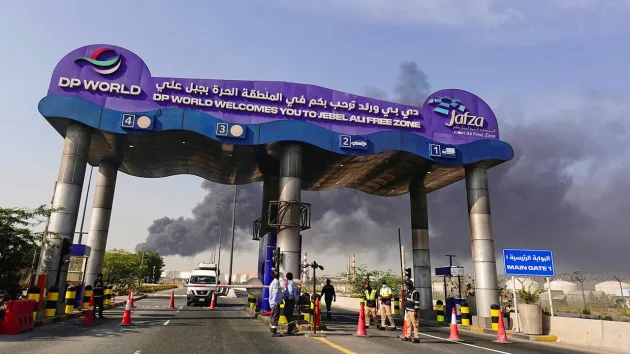
Iran is no stranger to state-sponsored aggression, and Dubai is a very, very big, very shining target these days.
The city is built on a delicate balance of money, fear, and a terrifying amount of imported (near slave) labor. The power dynamics are crazy if you take time to unpack them, and it doesn’t take much to tip the whole thing over.
The illusion of freedom...
If you run afoul of the local authorities, whether it’s a misunderstood social media post, a financial dispute with a well-connected local, or just being in the wrong place when the music stops, that illusion of liberty evaporates faster than water on a July Manhattan sidewalk.
In the UAE legal system, the burden of proof is a flexible concept, and “due process” is often whatever the guy with the most titles says it is.
You can find yourself rotting in a cell without a phone call, without a lawyer who speaks your language, and without the slightest shred of the judicial transparency you took for granted back home. You’re a guest in a gilded cage, and the moment you stop being a profitable or polite one, they don’t just show you the door; they lock it from the outside and lose the key in the sand.
Then there’s the artificiality which I could overlook were it not for what I said previously.
This isn’t a city that runs on history, or natural resources, or even the sheer will of its Emirate. Dubai is a city that runs on a constant, massive, non-stop flow of one thing: electricity.
Everything you see, from the elevators that lift you to your sky-high bedroom to the desalination plants that provide the water you brush your teeth with, runs on power.
The lights, the cooling, the transportation, the food preservation, it all relies on a power grid that is, in the grand scheme of things, an incredibly fragile and vulnerable target.
Imagine the lights go out. Not just a flick, not a temporary brownout, but a true black start. A sudden, catastrophic failure of the power infrastructure.
What do you have then?
You’re left with a city that’s as hot as two rats procreating in a wool sock.
The air conditioning is gone. The water pumps are silent. The elevators are Fall Out still.
And in that moment, all that shiny, gold-plated, “tax-free” life evaporates.
What’s your penthouse view worth when it’s 115 degrees inside and you’re on the 80th floor with no elevator and no water?
You might be thinking, “Well, that won’t happen.” But hope is not a strategy. The probability of that event, whether from an act of state-sponsored sabotage, an overwhelming cyber-attack, or simply the collapse of a grid that’s been pushed beyond its limits, is much, much higher than the brochures will ever admit.
Living in Dubai is risky.
You’re essentially betting your life and your ledger on the hope that a region defined by ancient grievances and modern warfare capabilities will suddenly decide to play nice because you have a nice infinity pool.
But as the smoke from the February 2026 strikes on the Gulf proves, the “security” you bought with your residency visa is a paper shield.
Invest or live in Dubai?
No thanks.
The smart money is already looking at the exit signs because they know that in the desert, when the music stops, the silence is deafening.








COMMENTS