

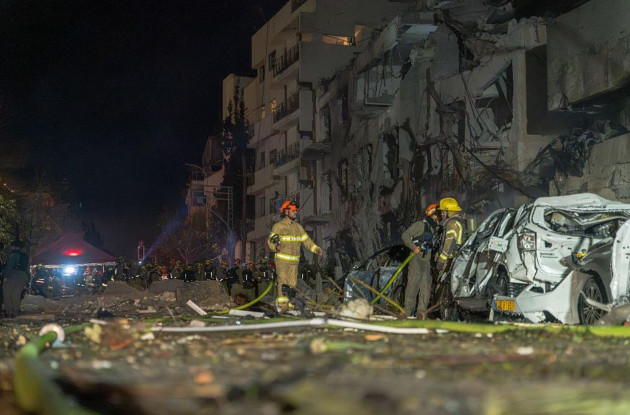
Yet the most dangerous steps on the escalation ladder have not been taken.
Iran has demonstrated its ability to launch missiles across the region, threaten commercial shipping, and pressure global energy markets, particularly through the Strait of Hormuz — a narrow waterway through which roughly twenty percent of the world’s oil supply moves each day.
At the same time, the United States and Israel possess options that could dramatically widen the conflict, from encouraging internal opposition forces to opening new fronts along Iran’s borders.
Understanding where this war currently sits on the escalation ladder helps clarify what escalation actually looks like — and what the next steps might be.
Where the War Sits on the Escalation Ladder
Strategists use escalation ladders to visualize how wars expand from limited confrontation to broader regional or global conflict. The war involving Iran, the United States, and Israel has already climbed several of those rungs.
Level One: Direct State-to-State Conflict
The first major escalation step occurs when confrontation moves beyond proxy forces into direct military operations between states.
That threshold has already been crossed.
The United States and Israel launched coordinated strikes against Iranian military infrastructure, missile systems, and nuclear-related facilities. Iran responded with ballistic missiles and drones targeting Israeli territory and U.S. military installations across the region.
Once nations begin attacking each other’s territory and military forces directly, the conflict becomes open interstate warfare rather than a proxy confrontation.
Level Two: Regional Spillover
The next rung on the escalation ladder occurs when conflict spreads geographically beyond the original combatants.
That stage is also underway.
Iranian missiles and drones have affected multiple Gulf states, including countries hosting U.S. military installations and critical energy infrastructure. The conflict has also begun affecting commercial shipping routes and maritime security across the region’s vital energy corridors.
When neighboring states begin absorbing the spillover effects of a war, the conflict effectively becomes regional in scope, even if those states are not formally part of the coalition.
Level Three: Economic Pressure Through Maritime Disruption
Another form of escalation targets the global economic system rather than purely military objectives.
Iran has long viewed the Strait of Hormuz as a strategic pressure point. Because such a large portion of the world’s oil supply passes through that narrow waterway, even limited disruptions to maritime traffic can have global consequences.
Threats against tankers, harassment of shipping, or attacks on maritime infrastructure raise economic pressure without necessarily triggering full naval confrontation.
This strategy allows Iran to widen the strategic impact of the war while maintaining a degree of ambiguity about its intentions.
Level Four: Coalition Expansion and New Fronts
Escalation can also occur when new actors enter the conflict or new fronts are opened.
Recent reporting suggests that outside powers have explored the possibility of encouraging Iranian Kurdish opposition groups to pressure Tehran from Iran’s western border. Opening such a front would expand the war from external strikes into pressure inside Iranian territory.
While no large-scale Kurdish offensive has yet occurred, the possibility illustrates how quickly the conflict could widen.
Level Five: Strategic Escalation
The most dangerous rung of the escalation ladder involves actions with global consequences.
Examples could include sustained closure of the Strait of Hormuz, widespread attacks on global shipping, large-scale strikes on Gulf energy infrastructure, or attacks extending beyond the region itself.
At that stage the conflict would move beyond a regional confrontation and become a global strategic crisis affecting energy markets and international security.
Cyber Retaliation and the Homeland Risk
Another escalation pathway lies far from the battlefield but much closer to home.
U.S. government agencies have repeatedly warned that Iranian cyber actors have targeted American infrastructure, financial systems, and government networks in the past. Public advisories issued by the Cybersecurity and Infrastructure Security Agency (CISA) and the Federal Bureau of Investigation (FBI) document Iranian cyber operations affecting sectors such as energy, finance, healthcare, and municipal networks .
Iranian cyber operations have historically included network intrusions, ransomware activity, and attempts to exploit vulnerabilities in industrial control systems. Joint cybersecurity advisories from U.S. agencies warn that Iranian state-sponsored cyber actors possess both the capability and intent to target U.S. critical infrastructure during periods of geopolitical tension.
Cyber retaliation offers Iran a way to impose pressure on the United States without launching direct military strikes on American territory.
Rather than a single dramatic attack, escalation could take the form of disruptive cyber activity affecting banking systems, transportation networks, energy infrastructure, or municipal services.
Concerns have also been raised about the possibility of proxy activity or attacks inspired by Iranian networks inside the United States. While public reporting has not confirmed the existence of organized sleeper-cell operations directed by Tehran, U.S. security agencies warn that Iran’s threat spectrum includes cyber operations, intelligence activities, and potential proxy or lone-actor attacks.
In that sense, escalation in this conflict may not be measured only by missile launches in the Middle East. It could also involve attempts to shift pressure onto the American homeland through cyber disruption or indirect attacks.
Leadership Uncertainty and the Risk of Miscalculation
Escalation ladders assume that decisions are made deliberately and that command structures remain stable.
Iran’s internal situation complicates that assumption.
With the country’s leadership navigating a succession process and multiple institutions competing for influence, authority inside the Iranian system is currently distributed among several power centers. These include clerical bodies responsible for selecting the next supreme leader as well as the Islamic Revolutionary Guard Corps, which controls many of Iran’s missile and drone forces.
When decision-making authority becomes fragmented during wartime, the risk of miscalculation, competing signals, or unauthorized escalation increases.
History shows that wars rarely escalate all at once. They climb one rung at a time — often faster than anyone expects.
What Signals Would Indicate the Next Level of Escalation?
The current war has already climbed several rungs of the escalation ladder. Iran is engaged in direct conflict with a U.S.–Israel military coalition, attacks have spread across the region, and global energy markets are watching developments closely.
The key question now is not whether escalation exists, but whether the conflict climbs to the next level.
Sustained attacks on global shipping would signal a shift toward economic warfare. The opening of new fronts inside Iran would indicate a widening battlefield. A wave of cyber retaliation against American infrastructure would bring the conflict directly to the United States.
The most dramatic escalation, however, would involve the introduction of large-scale ground forces.
For now, none of these steps has fully materialized. But the presence of these options explains why military planners and policymakers are watching events closely.
The war involving Iran, Israel, and the United States has already moved beyond a limited confrontation. The real question now is whether leaders on all sides choose to stop climbing the escalation ladder — or continue upward into a far more dangerous phase of the conflict.
—
Author Disclaimer
All statements of fact, opinion, or analysis expressed are those of the author and do not reflect the official positions or views of the U.S. Government. Nothing in the contents should be construed as asserting or implying U.S. Government authentication of information or endorsement of the author’s views.
About the Author
Steve Gottlieb is a retired U.S. Navy Medical Service Corps officer, former CIA analyst, and prior firefighter/paramedic.
References: Strategic Sources
Kahn, Herman. On Escalation: Metaphors and Scenarios. Princeton University Press, 1965.
U.S. Government Public Sources
Cybersecurity and Infrastructure Security Agency — Public advisories on Iranian cyber threats.
Federal Bureau of Investigation — Public overview of Iranian intelligence and cyber threats.
U.S. Department of Defense — Gulf War historical records and Iraqi Scud attacks against Israel.
U.S. Energy Information Administration — Strait of Hormuz global oil transit data.
Media Reporting
Reuters
Associated Press
Fox News
The Times of Israel
The Jerusalem Post
The Daily Wire
Breitbart News








COMMENTS