


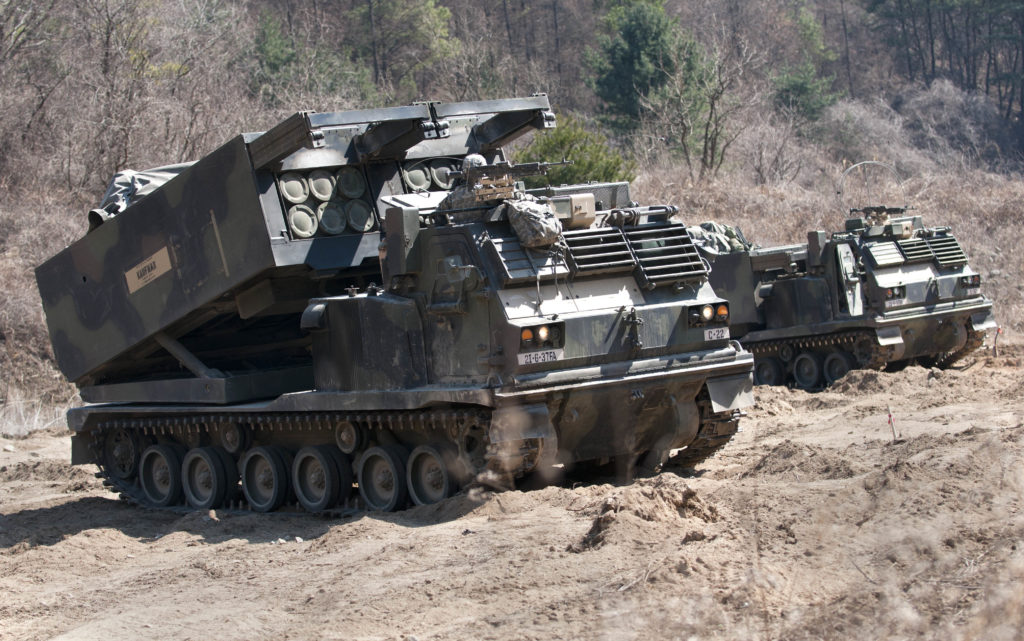
Given that their targeting system is networked they can also be widely dispersed against counterattack by Russian planes or missiles.
Anti-tank Weapons
More than 5,000 next-generation light anti-tank weapons, often known as NLAW, have been supplied to Ukraine by the United Kingdom. NLAWs are built to destroy tankers with a single shot from proximity.
It is vital for Ukraine’s military forces, which currently need firearms that the warheads are portable and easy to operate. Less than one day is all that is required to instruct a soldier in their use.
The NLAW is a lightweight weapon shot from the shoulder and has good mobility. This allows the operator to convey a rifle in addition to the NLAW. The launcher has a base weight of about 27.5 pounds and is simple to use.
It fires a high-explosive anti-tank missile with a 150 mm caliber that is remarkably strong. The NLAW has an effective range of 20 meters to 400 meters for stationary targets and up to 800 meters for stationary vehicles when it comes to destroying tanks and other vehicles.
So far in this conflict, not a single Russian tank model has proven resistant to even older anti-tank guided missile systems like the NLAW and Javelin.
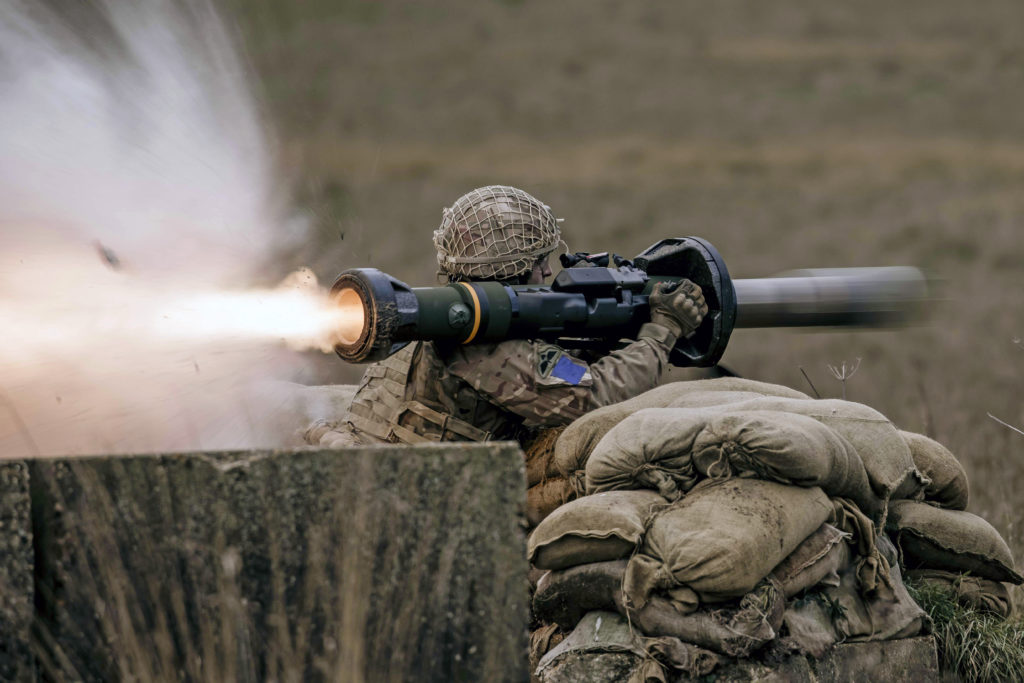
Paratroopers have demonstrated the firepower they could bring during combat missions as the British Army’s global response force. As the culmination of a course in support weapons skills, paratroopers staged a firepower demonstration on Salisbury Plain. The Next-generation Light Anti-tank Weapon (NLAW) is the first non-expert, short-range, an anti-tank missile that rapidly knocks out any main battle tank in just one shot by striking it from above. NLAW utilises predicted line of sight guidance and has overfly top and direct attack modes, and it is easy to use, making it a valuable tank destroyer for light forces that operate dismounted in all environments, including built-up areas. It also has night vision capability and is designed for all climate conditions and environments. (Source: Ministry of Defence, OGL v1.0OGL v1.0, via Wikimedia Commons)
Drones
The United Kingdom’s Ministry of Defense has stated that it will provide “dozens” of heavy load unmanned aerial vehicle (UAV) systems or drones to isolated military officers to provide operational assistance. Analysts believe that UAVs have the potential to be highly useful in delivering supplies to front-line fighters over the “last mile,” specifically in circumstances when there is a likelihood of being besieged or under the prospect of aerial bombardment from Russian forces, media reports said.
“Every time you can use a drone instead of a soldier to get supplies forward is one less time someone is exposed to extreme danger,” said Justin Bronk.
The Mallory heavy-lift supply drones are meant to bolster Ukraine’s prowess to swiftly replenish troops involved in the fighting while simultaneously lowering the jeopardy of losing personnel or more high-cost types of machinery when compared to the use of conventional vehicles. The customized unmanned aerial vehicles (UAVs) have a maximum flight range of 70 kilometers and can haul up to 65 kilograms.
It added that in trials conducted by the Royal Fleet Auxiliary in the previous year, both of these vessels, as well as a variant with an even greater weight capability, were utilized to support UK ships that are currently provided with provisions by helicopter transport, which is more expensive. The Malloy’s vessel has also been used by other branches of the country’s armed forces to transport critical supplies, such as blood products for transfusions to heal injured troops, in actual warfare conditions. It has also been used to retrieve sailors who have fallen adrift.
Air defense system
Britain has reported that it has also given five air defense systems, one of which has Starstreak missiles.
The Starstreak was developed to shoot down airplanes at a close distance when flying low. It does not consider defenses like “flares and chaff” that are delivered by a variety of warplanes, a media report revealed.
One of the most notable aspects of this system is the lightning-fast velocity of the missiles it fires. According to the company that manufactured it, Thales, the missile is composed of three tungsten darts that travel at speeds greater than Mach 3. or more than 3,700 km per hour.










COMMENTS