

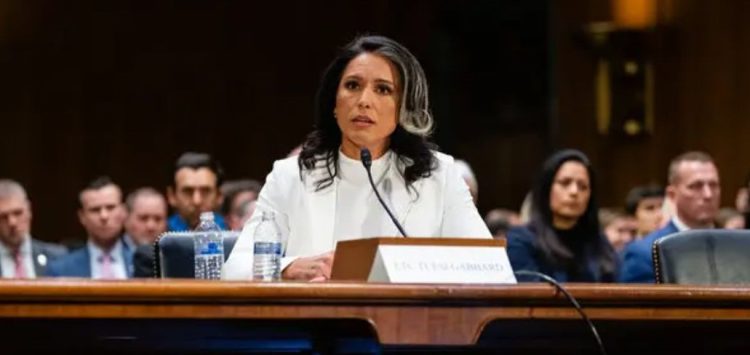
Additionally, Gabbard’s leadership style is expected to shake up the intelligence bureaucracy. She has repeatedly emphasized the need to “drain the swamp” and remove entrenched bureaucrats who she believes prioritize politics over national security. Her push for accountability within agencies like the CIA, NSA, and FBI could result in structural reforms that make these organizations more efficient and less prone to internal corruption or political influence.
Despite criticism over her past foreign policy positions, Gabbard has shown a willingness to work with people across the political spectrum. Her ability to challenge conventional wisdom and stand firm on issues she believes in could make her a strong and independent DNI. If she successfully implements her vision, she could restore trust in the intelligence community and ensure that its mission remains focused on protecting the American people rather than serving political interests.
Challenges Ahead
Gabbard faces several major challenges as she steps into the role. To succeed, she will need to prove her competence and earn the trust of both Congress and the intelligence community.
At 43, Gabbard is now responsible for managing 18 intelligence agencies. Her ability to quickly learn the ropes and effectively oversee such a complex system will be crucial. Additionally, she must work to rebuild trust with international allies.
Reforming the intelligence community is also on her agenda. Gabbard has spoken about problems with “stove-piping,” where intelligence agencies fail to share critical information with each other. She plans to assess the Office of the Director of National Intelligence (ODNI) to ensure it is running efficiently and to eliminate redundancies. However, implementing such reforms in an entrenched bureaucracy will not be easy.
She will also have to navigate intense political pressures. As a Trump appointee and a former Democrat, Gabbard is stepping into a politically charged environment. Balancing her responsibilities while maintaining the integrity of intelligence operations will be a constant challenge.
Perhaps the biggest challenge Gabbard faces is proving her impartiality. Given her political shifts and controversial past statements, she must demonstrate that she can provide unbiased intelligence assessments to the President and other top officials. Whether she can rise above political expectations and lead with integrity will determine her success in the months ahead.
Implications for the Intelligence Community
Gabbard’s confirmation signals a potential shift in the U.S. intelligence community’s approach. Her anti-surveillance stance and advocacy for civil liberties suggest that there may be significant changes in how intelligence operations are conducted, particularly concerning domestic surveillance and data collection practices. This could lead to a reevaluation of existing protocols and the implementation of stricter oversight mechanisms.
Furthermore, Gabbard’s leadership may influence the U.S.’s relationships with foreign intelligence entities. Her past interactions with international figures and her critiques of U.S. foreign interventions could result in a more cautious and measured approach to intelligence sharing and collaboration with allies.
Hindu Background
The newly confirmed DNI has a unique Hindu background that sets her apart in American politics. She was raised in a Hindu household after her mother, Carol Porter Gabbard, converted to Hinduism in the 1970s. Her father, Mike Gabbard, who was originally a Roman Catholic, later adopted Hinduism as well. This religious influence shaped Gabbard’s upbringing and remains an important part of her identity.
The Gabbard family follows the Gaudiya Vaishnava tradition of Hinduism, which originated in Bengal and centers on devotion to Lord Krishna. More specifically, their practice is linked to the Science of Identity Foundation, a Hawaii-based movement founded by Chris Butler, also known as Siddhaswarupananda. Growing up, all of Gabbard’s siblings were given Hindu names, such as Bhakti, Jai, Aryan, Tulsi, and Vrindavan, reflecting their family’s deep connection to the faith.

Gabbard has been a practicing Hindu since her teenage years and often references Hindu concepts such as dharma (duty) and seva (selfless service) in her political and public life. Her faith played a historic role in her career—she became the first Hindu ever elected to the U.S. Congress and the first to take her oath of office on the Bhagavad Gita instead of the Bible.
Despite her strong religious ties, Gabbard has emphasized that her understanding of Hinduism is deeply personal and focused on spirituality rather than sectarian divisions. She often describes her faith as being about an individual relationship with God rather than rigid religious doctrines. While many assume she has Indian ancestry because of her Hindu background, she is not of Indian descent, which has occasionally led to confusion about her origins. Regardless, her faith has remained a guiding force throughout her career and continues to shape her approach to leadership.
Wrapping Up
Tulsi Gabbard’s confirmation as the Director of National Intelligence marks a significant moment in the evolution of the U.S. intelligence community. Her tenure promises to be transformative, with potential reforms aimed at restoring public trust and ensuring that intelligence operations align with constitutional principles. As she steps into this pivotal role, the nation and the world will be watching closely to see how her leadership shapes the future of American intelligence.








COMMENTS