Ukraine and Russia are locked in a grinding stalemate where neither can win outright, yet both refuse to accept the cost of defeat as the political ground beneath them steadily erodes.
Read the full article for more on:
Important insights and detailed analysis
Expert commentary on current events
Breaking developments and updates
Updating summary...
Ukraine at a Crossroads: The Battlefield Stalls, the Politics Shift, and the War Enters a New Phase
Benjamin Reed
Speed
1x
Listen
COMMENTS
Ukraine and Russia are locked in a grinding stalemate where neither can win outright, yet both refuse to accept the cost of defeat as the political ground beneath them steadily erodes.
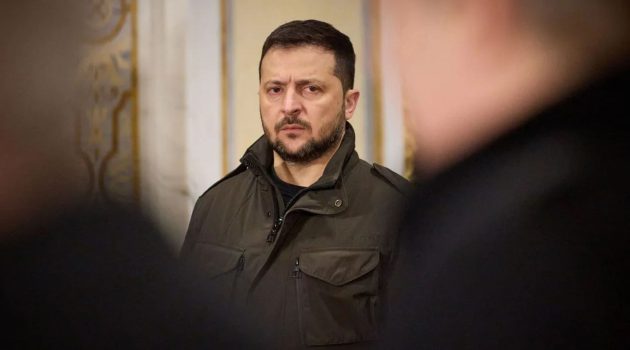
Ukrainian president Zelensky stands tense and unflinching, carrying the full weight of a country that refuses to break. Image Credit: The Economist
Things are not going well for Ukraine. They are not going particularly well for Russia either, but Kyiv carries the harsher burden of attrition. Moscow has absorbed staggering losses while sustaining a steady flow of manpower through mobilization, coerced contract recruitment, penal battalions, and limited contingents of North Korean troops. Ukraine lacks that demographic cushion and must conserve every trained soldier it has.
Advertisement
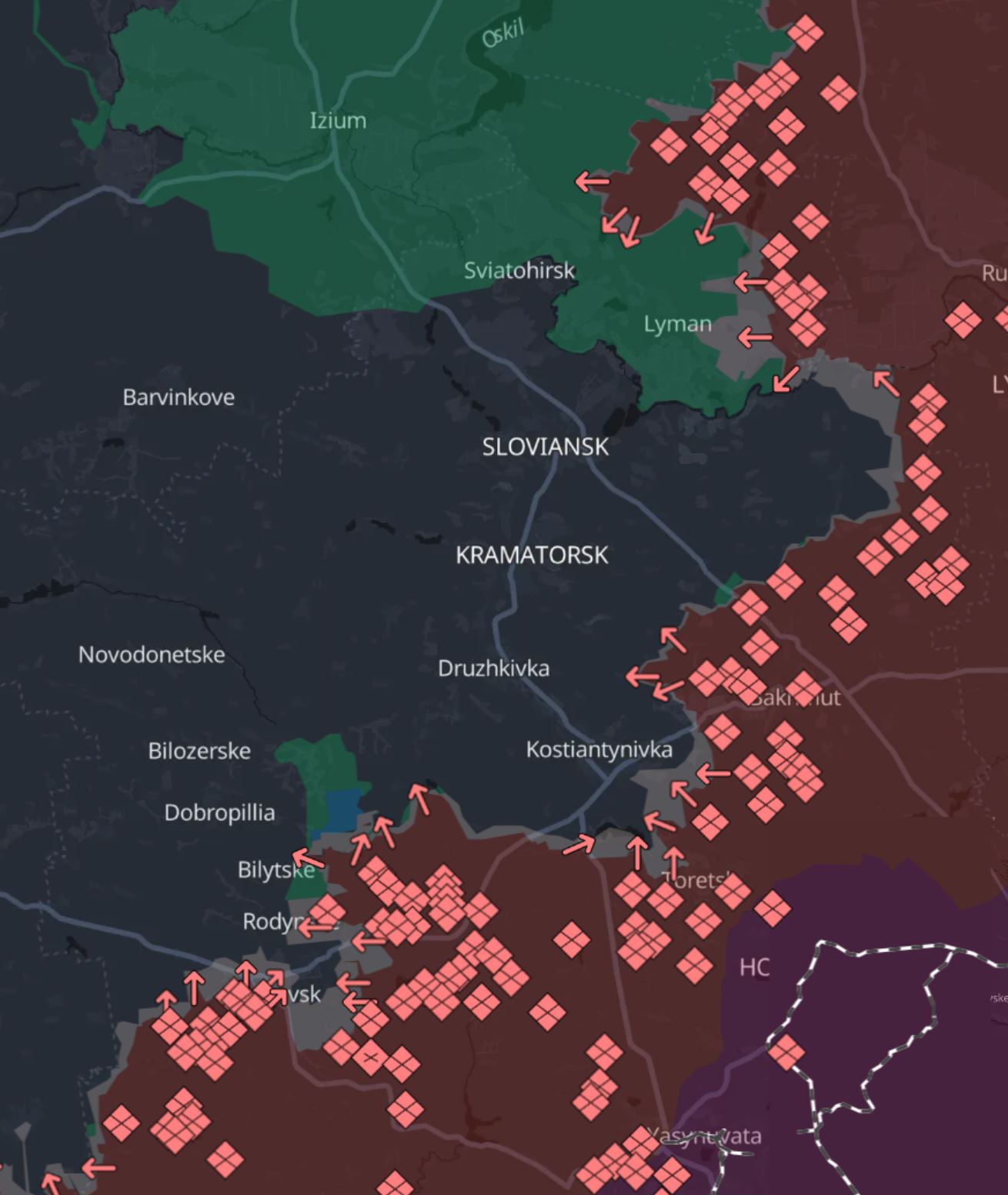
The summer offensive season ended without a defining Russian breakthrough. Moscow pushed on several axes—Kupiansk, Pokrovsk, and southern Donetsk—but none became the operational success the Kremlin hoped to frame as a strategic shift. Pokrovsk remains the focal point; Russian forces have entered the city and continue costly infiltration tactics, yet Ukrainian defenses hold the shoulders and prevent encirclement. The front advances in meters, not kilometers, with Russian forces trading lives at unsustainable ratios for modest gains.
Despite the pressure, Ukraine still holds roughly 19 to 21 percent of Donetsk Oblast, including the fortified belt anchoring Sloviansk and Kramatorsk. Those two cities remain the real strategic prizes. Sloviansk, the flashpoint of the 2014 conflict, carries symbolic weight in Moscow’s mythology of “Novorossiya.” As long as Ukraine holds this line, Russia cannot credibly claim to have secured the region.
What Russia Wants
Russian goals remain a mix of official policy, internal factionalism, and maximalist rhetoric. Hardline nationalists still talk about retaking everything east of the Dnipro: Kharkiv, Odesa, the entire coastline. These aims are militarily unrealistic without years of high-intensity warfare and a population resigned to continuous mobilization.
Advertisement
The more plausible end state—judged by Russian behavior, U.S. proposals, and the latest draft frameworks moving through Qatar and Turkey—is narrower. The outlines of a potential settlement look increasingly familiar:
Russia would gain full control of Luhansk and Donetsk, completing the administrative borders even though Ukraine still holds part of the region.
Demilitarized zones in sections of the Donbas would limit future Russian deployments.
Crimea and the Donbas would be treated internationally as de facto Russian territory, though Ukraine would not be formally asked to recognize this on paper.
Ukraine’s military would face limits on force size and long-range weapons, with U.S. guarantees offered in exchange.
Turkey and Qatar serve as mediators, reflecting a shift away from purely Western brokerage.
Planned trilateral talks in Ankara were postponed after President Zelensky pushed to widen European involvement and faced political blowback at home.
These terms broadly track with earlier Trump-era proposals: Russia secures the Donbas; Ukraine remains outside NATO and the EU; and Kyiv’s postwar military is capped in a way the Kremlin believes it can influence. For Moscow, this would be sold domestically as a correction of history: territory secured, NATO kept at bay, and Ukraine returned to a “neutral” position.
Advertisement
Kyiv sees the inverse. Any arrangement that cements territorial loss or restricts Ukraine’s sovereignty sets a precedent that invasion can be negotiated after the fact. No Ukrainian government could survive ratifying that outcome.
The Battlefield: A War of Attrition and Adaptation
The battlefield is now shaped by industrial-scale attrition and rapid technological adaptation. Russia uses mass glide bombs, cheap FPV drones, and penal assault brigades to inch forward across entrenched lines. Ukraine counters with better small-unit leadership, precision strikes, and Western systems but struggles to match Russia’s volume of men and munitions.
Artillery output remains Russia’s greatest advantage. Its factories operate at full tempo, supplemented by North Korean shells and expanded production of glide bombs. Ukraine’s ammunition supply is steadier than it was in early 2024 butstill insufficient to close the gap. Western pledges continue to outpace deliveries.
Advertisement
Drone warfare now defines the front. Electronic warfare saturates entire sectors, blinding units on both sides and forcing infantry to move only at night or under smoke. The battlefield is slow, grinding, and politically costly for both sides.
In this environment, neither army can impose its preferred political end state by force. Russia lacks the armored reserves and leadership depth for a deep offensive; Ukraine lacks the artillery and air defense density needed for a decisive counter-offensive. The war sits suspended between two impossibilities.
If the military front is defined by attrition, the political front in Kyiv is defined by exhaustion. After nearly four years of full-scale war, President Volodymyr Zelensky faces the most serious domestic pressure of his presidency. None of it resembles collapse, but the foundation is cracking.
Mobilization is the most sensitive fault line. The 2024–25 draft reforms expanded eligibility and tightened enforcement, triggering pushback from mayors, veterans’ groups, and regional councils. Ukrainians understand the need for manpower; what they resent is the uneven implementation. Poorer oblasts bear a disproportionate share of the burden, while many frontline brigades remain in the trenches for months without rotation because replacements are unavailable.
Trust in military leadership has also eroded. Zelensky’s firing of General Valerii Zaluzhnyi in 2024 removed one of the few figures who enjoyed universal legitimacy—from the trenches to Washington. His replacement, General Oleksandr Syrskyi, is competent but remains unpopular among frontline troops, who associate him with earlier high-casualty operations. Zelensky has not fully recovered from the perception that the decision was politically motivated.
Corruption Returns—and Hits Close to Home
Recent scandals involving inflated energy procurement and kickbacks at state companies have deepened this pressure, sparing few in the president’s orbit. Anti-corruption agencies pushed for broader inquiries, but the president’s office appeared reluctant to allow cases to expand.
To many Ukrainians, the issue is not the contracts; it is the sense that loyalty buys softer treatment. In wartime, that double standard lands harder than any inflated line item. Veterans, in particular, have become sharply critical: they are expected to endure mud, exhaustion, and bombardment, yet perceive the political class as insulated from accountability.
The cumulative effect is a political landscape in which Zelensky remains widely respected as the wartime leader who held the country together in 2022, yet is increasingly viewed as unwilling to confront corruption when it reaches his inner circle. That perception now shadows every mobilization debate and every negotiation proposal.
The Dissolving Consensus
A deeper structural tension is the centralization of power around the presidency. Zelensky sidelined parliament early in the war; most Ukrainians accepted this as a necessity. But four years later, the absence of elections and the narrowing of political life have become sources of resentment. Opposition parties argue that wartime does not negate the need for strategic debate. Some veterans are organizing nascent political blocs, setting the stage for a post-war realignment.
This tension intersects with diplomacy. Zelensky’s push to expand the Ankara talks to include European states reflected a legitimate strategic concern: Ukraine does not want a settlement shaped by Washington, Moscow, and Ankara alone. But it also exposed how fragile the domestic coalition has become. Hardliners accused him of entertaining concessions; moderates said he was too inflexible; military leadership warned that any ceasefire could be exploited by Russia.
A War No One Can Win—Yet No One Can End
As winter approaches, Ukraine and Russia find themselves locked in a contest of endurance. Russia grinds forward slowly, believing time favors it; Ukraine holds the line, believing the West cannot allow a Russian victory without undermining European security. Neither belief is wrong, but neither produces a path to victory.
A Russian victory requires taking Sloviansk and Kramatorsk. A Ukrainian victory requires reversing Russia’s entrenchment in the Donbas and Crimea. Both goals are out of reach for now.
The war continues not because either side still believes in victory but because defeat remains unacceptable. Until one of three pillars breaks—Russian political stability, Ukrainian manpower sustainability, or Western long-term will—the conflict remains a war of momentum without resolution.
For now, the lines hold. The politics do not.
Advertisement
What readers are saying
Generating a quick summary of the conversation...
This summary is AI-generated. AI can make mistakes and this summary is not a replacement for reading the comments.










COMMENTS