

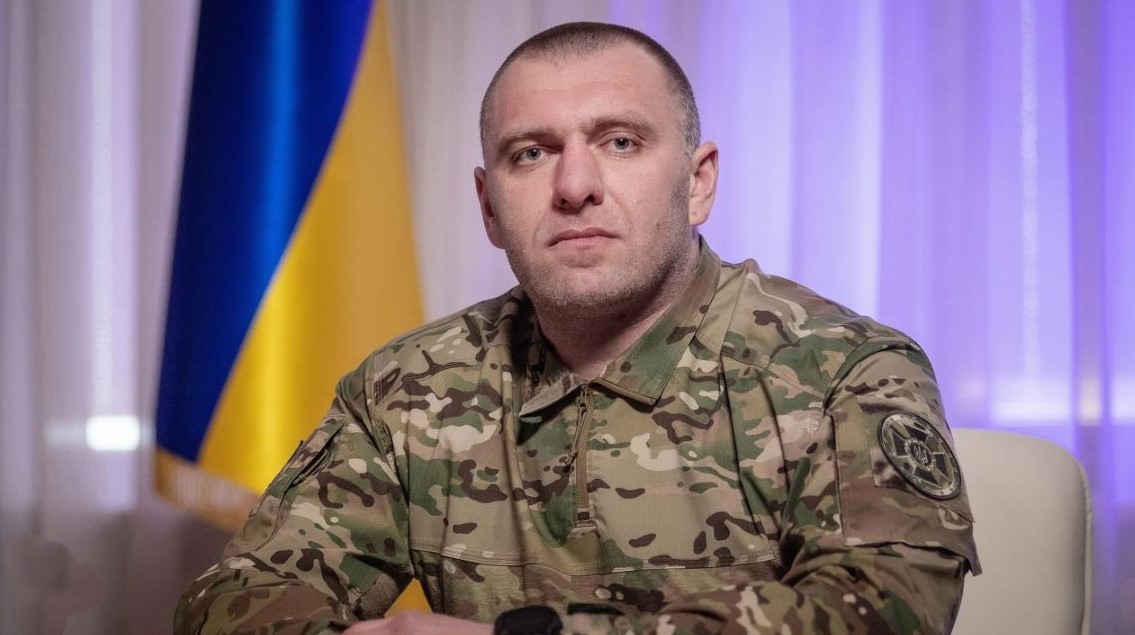
Then there’s Operation Spider’s Web, pulled off just this week. Malyuk unveiled the details like a magician showing how the trick was done. Using wooden boxes rigged to carry kamikaze drones, Ukrainian teams sneaked into Russia, set up mobile launchers, and flew their deadly payloads at Russian airfields, taking out long-range bombers responsible for turning Ukrainian cities into rubble. Every SBU operator made it back home before the drones ever lifted off. Clean, precise, devastating.
He’s also running a shadow war behind enemy lines. That includes assassinations and sabotage hits on Russian officials and collaborators in occupied Ukraine. We’re talking about bombings of enemy offices, hits on oil refineries, and a quiet but relentless purge of Russian influence. Malyuk doesn’t boast about every mission, but when he does, he makes it clear that Ukraine is playing for keeps.
On the home front, he’s been cleaning house—rooting out Russian spies inside Ukraine, even within his own agency. He’s also targeted the Ukrainian Orthodox Church branches tied to the Moscow Patriarchate, accusing them of serving as cover for Russian influence operations. It’s part of a broader counterintelligence campaign that’s as much about holding the line at home as it is about punching Moscow in the teeth abroad.
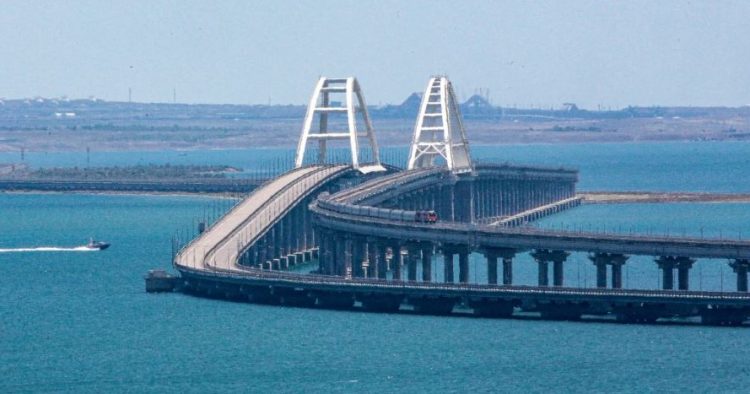
Malyuk’s statement on the bridge attack was unequivocal:
“We struck the Crimean Bridge twice in 2022 and 2023. So today we continued this tradition underwater. There is no place for any illegal Russian facilities on the territory of our state.”
Bottom line: Vasyl Malyuk is a no-nonsense, results-driven operator who’s transformed the SBU into one of the most lethal arms of Ukraine’s resistance. He’s not out there giving speeches or taking victory laps—he’s planning the next strike. And for Russia, that’s a nightmare with a Ukrainian flag stitched on it.
Strategic Implications: More Than Just a Bridge
The Crimean Bridge is more than a hunk of steel and concrete stretching across the Kerch Strait—it’s a strategic pressure point, and Ukraine keeps pushing it. With the latest underwater attack hammering the bridge’s support structures, the message is clear: this isn’t some random strike. It’s part of a calculated campaign to choke off Russia’s war machine where it hurts.
Let’s talk logistics first. This bridge is Russia’s main highway into Crimea, their supply artery for troops, tanks, fuel—everything needed to keep the fight going in southern Ukraine. Every time Ukraine blasts it, Russia’s supply lines get twisted into a knot. They’re forced to reroute through longer, sketchier paths—like ferries across the water or narrow roads hugging the southern coastline. That’s slow, vulnerable, and inefficient. It means Russian troops down south have to make do with less and wait longer to get the gear they need.
Then you’ve got the operational headaches. When that bridge is out of commission, moving heavy equipment—artillery, armored vehicles, logistics trucks—gets a whole lot harder. That slows down Russian military operations, stretches their resources thin, and makes it tougher to reinforce front-line units. Bottom line: every time Ukraine targets the bridge, they’re hitting Russia where it counts.
But this goes way beyond supply lines and concrete. That bridge is a symbol—of Russian control, of Putin’s personal legacy. Remember, he made a big deal about opening that bridge in 2018. It was supposed to scream, “Crimea is ours now.” So, when Ukraine blows holes in it—not once, not twice, but three times—it sends a loud, defiant message. It dents the Kremlin’s pride and punches a hole in their propaganda. For Ukraine, hitting the bridge is more than a military move—it’s a declaration that the occupation is not permanent, and they’re not backing down.
Of course, Russia doesn’t just sit around after getting hit. After each attack, they’ve dumped millions into repairs and ramped up the security with more air defenses, anti-drone tech, and steel barriers. They’re throwing everything at this bridge to keep it standing. That shows just how important it is to them—and how nervous they are about losing it.
There’s also the risk of escalation. Historically, every time Ukraine smacks the bridge, Russia answers with missile strikes on Ukrainian cities and infrastructure. It’s a brutal tit-for-tat cycle. One side attacks, the other retaliates. That’s the tightrope this war is balancing on—strategic strikes that risk full-blown retaliation.
From Ukraine’s perspective, the Crimean Bridge is fair game. It’s a military target that directly feeds the Russian war effort. Knocking it out weakens Russian operations, plain and simple. And beyond that, these attacks serve as a powerful bit of psychological warfare. Ukraine is proving that they can hit high-value targets deep inside Russian-controlled territory—and that shakes up the Kremlin’s narrative of control.
Here’s the nutshell: for Russia, the bridge is a lifeline and a symbol of dominance. For Ukraine, it’s both a bullseye and a morale booster. Every time they damage it, they disrupt enemy logistics, challenge Russian authority, and remind the world that Crimea is still contested territory. As long as that bridge stands, it’ll remain a high-value target—and Ukraine’s SBU will be keeping it in their crosshairs.
The operation took several months, with agents of the SBU planting explosives on the support pillars of the bridge in early 2025. The resulting explosions have caused the structural integrity of the bridge to be compromised, limiting transit between Crimea and Russia. (2/2) pic.twitter.com/ZvdBYuLROS
— Michael Solomonovitch (@MSolomonovitch) June 3, 2025
The Road Ahead: Uncertainty and Resolve
As the war grinds on, Ukraine’s recent operations indicate a shift towards more aggressive and unconventional tactics. The use of underwater explosives and drone swarms reflects a strategic adaptation to the realities of modern warfare. These actions serve both tactical and symbolic purposes, aiming to weaken Russian military capabilities and erode the perceived legitimacy of their occupation.
While the path to peace remains fraught with challenges, Ukraine’s resolve is evident. Through calculated strikes and strategic ingenuity, Ukraine continues to assert its sovereignty and challenge the status quo, one explosive charge at a time.








COMMENTS