Born out of battlefield necessity and sharpened by constant pressure, Ukraine’s Trident laser system shows how a nation at war can compress decades of weapons development into months and put cutting edge energy weapons to work where they matter most, over cities, infrastructure, and the front lines.
Read the full article for more on:
Important insights and detailed analysis
Expert commentary on current events
Breaking developments and updates
Updating summary...
Ukraine’s Trident Laser Weapon
Warren Gray
Speed
1x
Listen
COMMENTS
Born out of battlefield necessity and sharpened by constant pressure, Ukraine’s Trident laser system shows how a nation at war can compress decades of weapons development into months and put cutting edge energy weapons to work where they matter most, over cities, infrastructure, and the front lines.
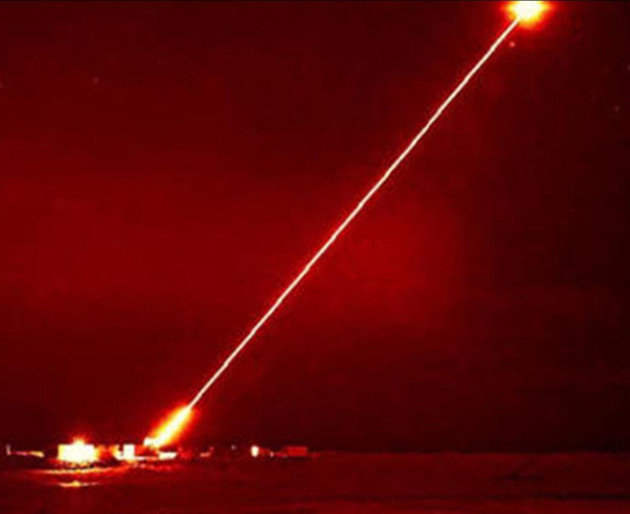
DragonFire laser weapon test, very similar to the Ukrainian Trident system. Photo credit: MoD U.K.
“Ukraine has laser weaponry called ‘Trident’…the fifth country able to claim possession of a laser weapon. Currently, we can use this laser to shoot down aircraft at altitudes exceeding two kilometers.” — Colonel Vadym Sukharevsky, commander of the Unmanned Systems Forces of the Ukrainian Armed Forces, December 16, 2024.
Until mid-December 2024, only four nations on Earth were confirmed to possess active, laser weapon systems: The United States (U.S. Navy’s SEQ-3/XN-1 LaWS/Mk. 5 HELIOS), United Kingdom (“DragonFire,” fully operational by 2027), South Korea, and communist China (“Silent Hunter,” possibly used by Russian combat forces in Ukraine.) The U.K.’s DragonFire system has already shot down high-speed drones during recent testing in November 2025, and is so precise that it can strike a low-flying, aerial target the size of a coin at 400 miles per hour, from over one kilometer (.62 miles) away.
Advertisement
In addition, Israel deployed their new, 100-kilowatt, “Iron Beam” laser weapon system in October 2025, Japan apparently has a laser weapon on an 8×8 truck chassis, and Germany tested a high-energy laser weapon on a Sachsen-class frigate in 2023.
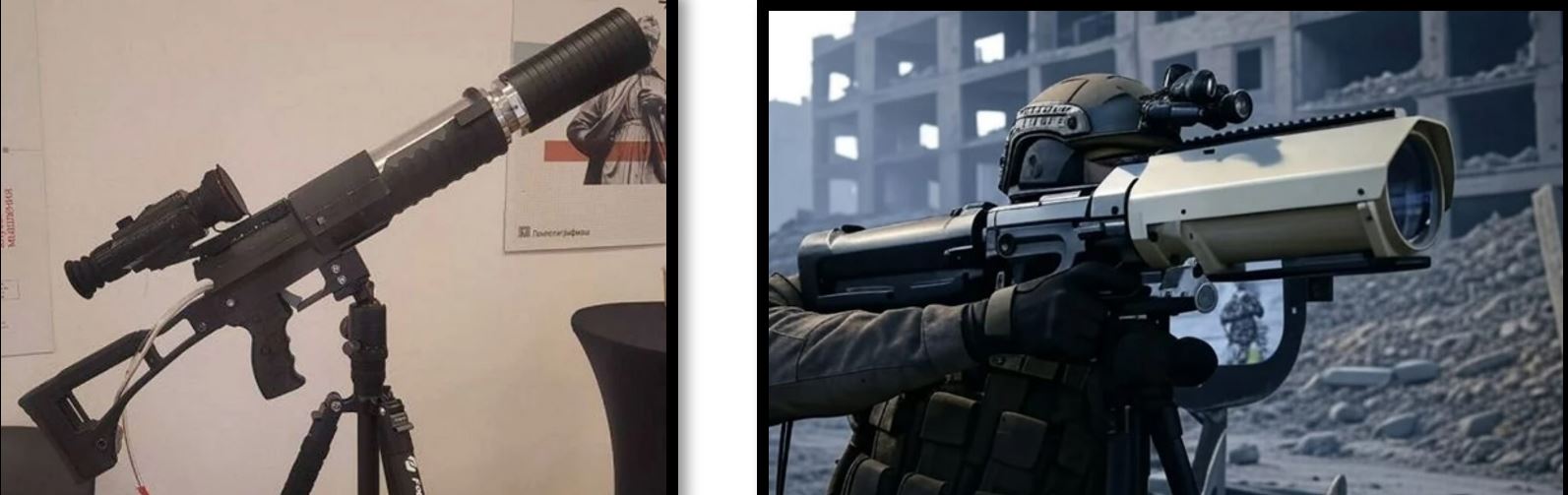
Russia (the “Peresvet/Zadira”) and France also claim to be developing their own laser weapon systems, and the Peresvet was used in combat on the night of August 12-13, 2025, but it’s a less-powerful, laser-blinding/disabling system, rather than a laser-destruction system. The Russians and French (the HELMA-LP) also possess anti-drone, laser rifle systems with a range of 500 meters, since May/June 2025.
Russian (left) and French (right) laser rifle systems. Photo credits: Russian media and CILAS.
In April 2025, Colonel Vadym Sukharevsky, commander of the Unmanned Systems Forces of the Ukrainian Armed Forces, and previous recipient of the highly prestigious, Hero of Ukraine medal for combat, made a presentation for the all-new, Tryzub (“Trident”) laser weapon system, reporting that the new weapon can engage hostile drones or cruise missiles at ranges up to three kilometers (1.86 miles), helicopters and fixed-wing aircraft at five kilometers (3.1 miles), and can operate in a disruptive, “dazzle” mode against drones and other aircraft at up to 10 kilometers (6.2 miles.)
In order to achieve these combat ranges, the Trident must operate in the 50 to 100 kilowatt (kW) power range, comparable to existing U.S. (33 to 60 kW) and U.K. (55 kW) laser weapons. This enables the laser to melt or structurally weaken the airframe or warhead of small drones at close ranges, or to blind electro-optical sensors at greater distances.
Advertisement
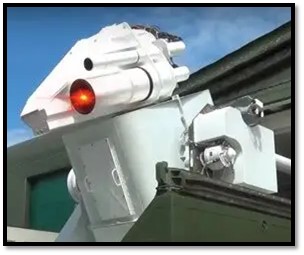
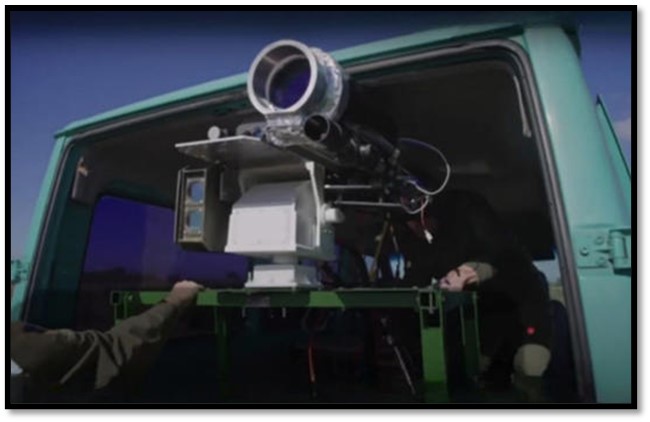
The Ukrainian Trident laser weapon system, mounted in a van. Photo credit: RBC-Ukraine.
The Trident system, named for the national symbol of Ukraine, a golden trident, is now fully operational, and employs commercial, off-the-shelf (COTS), industrial welding lasers, combined with precision, optoelectronic targeting tools. It’s specifically designed to strike or blind small, aerial targets, including drones, glide bombs, cruise missiles, and some ballistic missiles.
Ukraine’s golden trident coat of arms. Photo credit: behance.net.
There’s an old proverb that, “Necessity is the mother of invention,” and the brutal, seemingly endless war in Ukraine has driven the Ukrainians to very rapidly develop a series of low-cost, domestic, ingenious solutions, highlighting urgent, wartime demands that force quicker development cycles, and generate creative technologies into genuine combat operations much faster than in peacetime programs.
The primary mission of Trident is to protect cities, factories, hospitals, critical infrastructure, and frontline command centers from sustained barrages of Russian drones and missiles. So, a laser system that can fire repeated shots without using costly missiles is certainly advantageous, although Trident is designed to complement anti-aircraft guns and missiles, and not fully replace them.
Advertisement
The principal advantage of Trident is its low cost, with each laser shot estimated at a mere $13, compared to $100,000 to $3 million for just one interceptor missile. This reduces targeting costs by an estimated 90 to 95 percent.
No system is perfect, however, and Trident relies upon clear weather and a direct line of sight, since lasers are degraded by rain, fog, smoke, and heavy dust. Although it is equipped with an electro-optical targeting station, it is currently operated manually via joystick, rather than through autonomous tracking, which may limit the number of simultaneous targets that can be engaged. Planned upgrades include improved automation, enhanced target acquisition and tracking, and greater integration with other Ukrainian air-defense and command networks.
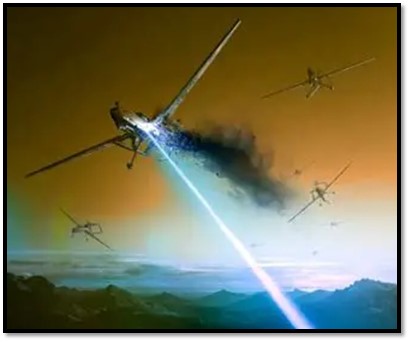
Laser weapon striking a drone. Photo credit: msn.com.
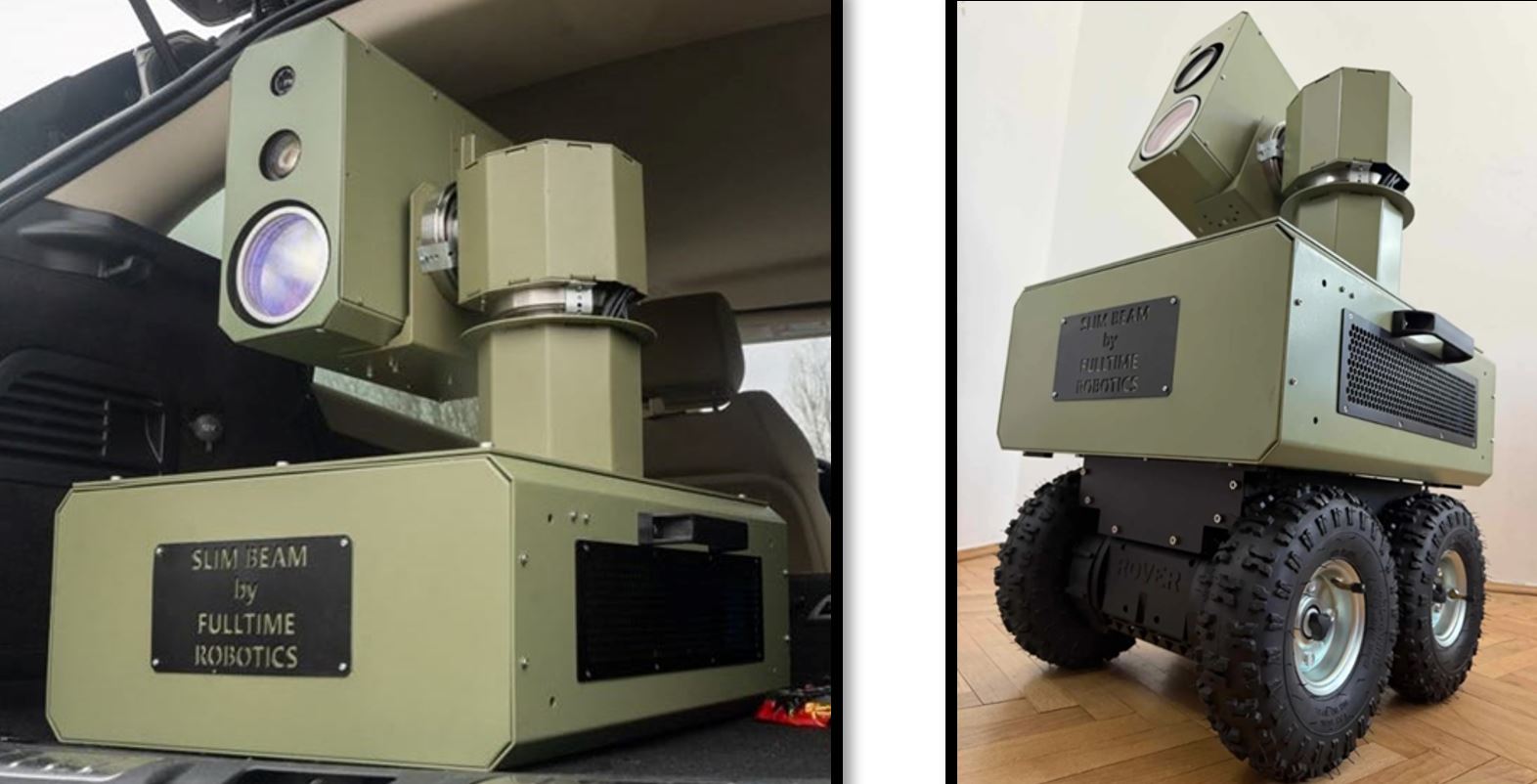
In addition, the Ukrainian defense group Fulltime Robotics recently (since May 2025) developed their new, smaller, Slim Beam portable laser weapon, with a 1.5-kilowatt laser turret.
Slim Beam is available in either fixed or mobile applications, and is capable of shooting down drones out to a half-mile in range, or blinding drone cameras out to 1.25 miles. Its laser is completely invisible to the human eye and totally silent, which are huge advantages in combat, and it provides up to 30 minutes of continuous operation. Total system weight is only about 110 pounds.
This small, laser weapon may also be used for sabotage, to burn a lock from a long distance, or for demining or explosive ordnance disposal. It can operate autonomously or be remotely controlled via a web-based interface, minimizing risk to personnel.
As these improvements are integrated into fielded Trident or Slim Beam weapon systems, and more units are produced to protect additional cities and frontline areas, other countries around the world will surely study Ukraine’s laser weapons experience as they create their own similar systems.
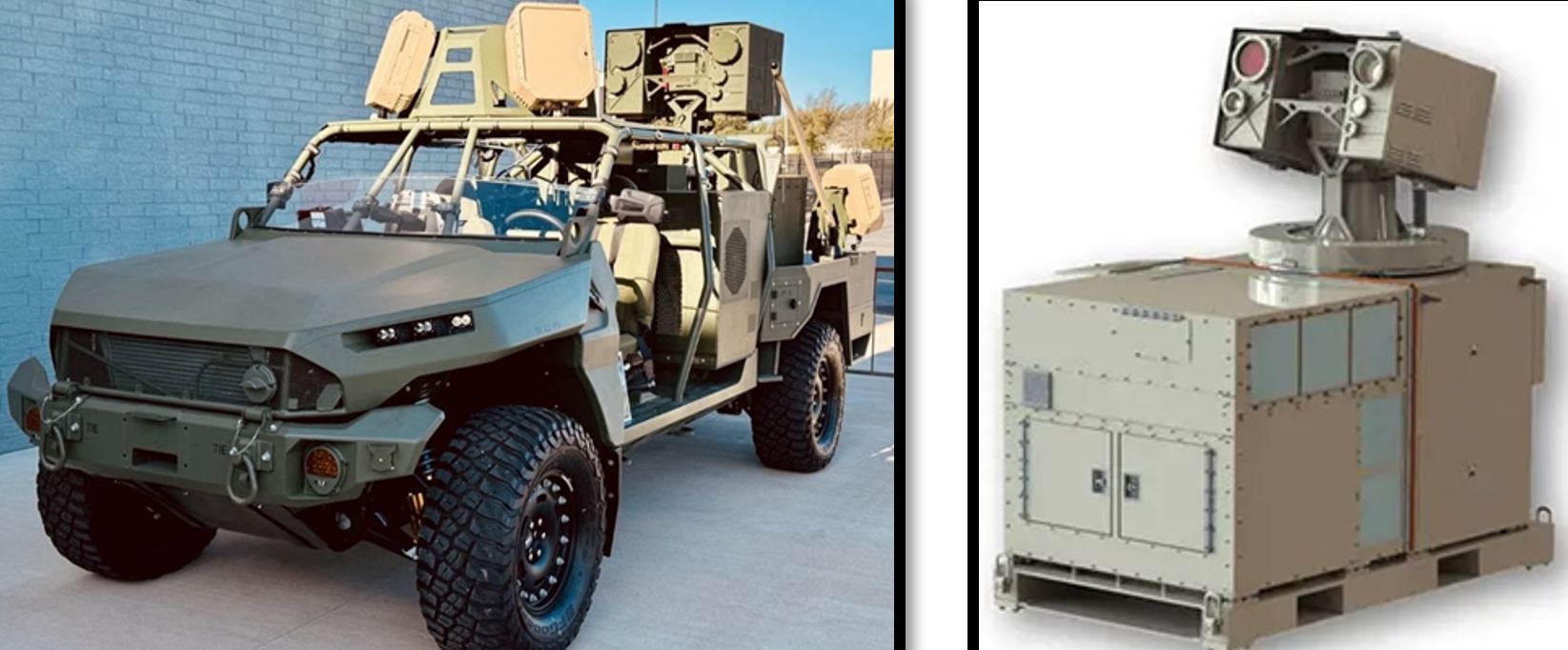
In a related development, the U.S. Army is now testing (since October 2025) two modular, mobile prototypes of the BlueHalo/AeroVironment (AV) Inc., LOCUST Laser Weapon System, mounted upon the Oshkosh Joint Light Tactical Vehicle (JLTV) platform. LOCUST is a 20-kW laser, using multi-target, infrared search-and-track modes. It can effectively counter drones weighing up to 1,200 pounds, and operating at altitudes of 18,100 feet, and airspeeds of 288 miles per hour.
US Army M1301 Infantry Squad Vehicle equipped with a Blue Halo Locust Laser Weapon System. Photo Credit: US Army. All caps: LOCUST Laser Weapon System. Photo Credit: Blue Halo.
It remains to be seen whether Trident and Slim Beam can consistently defend against swarms of Russian drone and missile attacks, but this rapidly developed, low-cost technology clearly represents a significant leap ahead for Ukrainian air defenses, changing the dynamic nature of aerial combat in the deadliest war of the 21st century.
Advertisement
What readers are saying
Generating a quick summary of the conversation...
This summary is AI-generated. AI can make mistakes and this summary is not a replacement for reading the comments.












COMMENTS