Final Approach, Interrupted
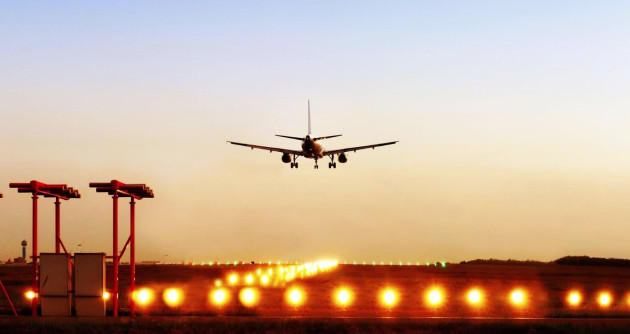
There is a moment when you are a pilot when everything gets quiet, and you shift into full focus mode. Gear down. Flaps set. Nose trimmed. The airplane slides into the groove and commits itself to the runway ahead.
United Flight 589 was in that moment Tuesday night, March 24, descending toward John Wayne Airport with 162 passengers and six crew aboard, when a California National Guard UH-60 Black Hawk, callsign Knife 25, sliced across its path.
This was not some fuzzy “close call” inflated by television graphics and agitated anchors. According to FlightRadar24 data cited by multiple outlets, the Boeing 737-800 and the helicopter came within 525 feet vertically and 1,422 feet laterally, about a quarter mile, on final approach around 8:40 p.m. local time. That is not roomy. That is not comfortable. That is the kind of spacing that makes professionals stop joking and start reviewing tapes.
The crew did what they were supposed to do. Air traffic control had already issued traffic information, but then the airplane’s collision avoidance system kicked the situation upstairs. The pilots received a TCAS resolution advisory and leveled the jet instead of continuing down the glide path. ATC audio captured the tone afterward, with a controller telling the crew, in plain language, that “that was not good.” Both aircraft landed safely. That clean ending belongs to the pilots and the systems that backed them up.
The helicopter, according to statements reported by Reuters, CBS Los Angeles, and others, was returning to Joint Forces Training Base Los Alamitos after a routine training mission. It was operating under visual flight rules, along an established VFR route, and in communication with controllers. On paper, that all sounds normal. In practice, normal can be exactly what gets people hurt when too many routine assumptions pile up in the same patch of sky.
Six Days After the Rule Change
Here is the part that turns this from a scary story into a serious one. On March 18, just six days before the incident, the FAA announced a new general notice suspending the use of visual separation between helicopters and airplanes in Class B and Class C airspace, as well as Terminal Radar Service Areas, when helicopters cross airport arrival or departure paths. John Wayne sits in Class C airspace, which puts it squarely inside that rule set. The FAA made the change after concluding that visual separation was not enough in dense mixed traffic around major airports.
That policy shift did not come out of thin air. It followed the January 29, 2025, midair collision near Reagan National Airport between an American Airlines regional jet and a U.S. Army Black Hawk, a crash that killed 67 people and blew a crater in whatever institutional faith remained around “see and avoid” in crowded terminal airspace. The FAA also pointed to additional recent helicopter-airplane conflicts as part of the justification for tightening the rules.
So now the real question is not whether this was alarming. It plainly was. The real question is why, less than a week after the FAA said visual separation was no longer good enough at places like this, a military helicopter still wound up crossing the nose of an airliner on final. Either the new rule had not fully filtered down into operations, or it had, and something still broke loose in the machinery. Neither answer is comforting.
Already have an account? Sign In
Two ways to continue to read this article.
Subscribe
$1.99
every 4 weeks
- Unlimited access to all articles
- Support independent journalism
- Ad-free reading experience
Subscribe Now
Recurring Monthly. Cancel Anytime.
The Margin Is Gone
That is how near-collisions happen. Not as one cinematic act of stupidity, but as a chain of ordinary judgments colliding at high speed. A jet flies a predictable descent. A helicopter follows a known route. Controllers manage both. Everybody is talking. Everybody is legal. Then geometry turns vicious, timing compresses, and the margin vanishes.
The official line will be that the system worked. Fair enough. ATC issued traffic. TCAS barked. The pilots responded. No wreckage hit the ground. But that should not be the standard. The last line of defense is not supposed to carry the whole burden. When a passenger jet on short final and a Black Hawk in transit miss each other by seconds and a few hundred feet, that is not routine traffic management. That is a warning shot. And this one came six days after the government said it was tightening the rules.
Every major accident in aviation begins as a near miss that didn’t get enough attention.
This one ended clean. No wreckage, no headlines, no funerals.
But the spacing, the timing, and the setting all say the same thing: the margin is thinner than we want to admit.
And in aviation, thin margins don’t stay quiet forever.










COMMENTS