Prelude to the Swarm
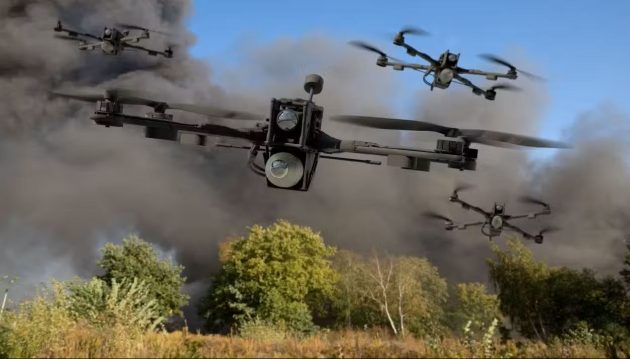
The war in Ukraine has ripped aside old illusions: tiny quadcopters, loitering munitions, and grinning FPV (first-person view) drone swarms are rewriting rules of battle. In response, the U.S. Army is launching what may be its most audacious industrial gamble since the early jet age: procure at least one million drones in the next two to three years, a sea of change in acquisition, doctrine, and manufacture.
Where the Army stands today
Today, the Army buys roughly 50,000 drones each year, a significant number by historical standards, but under the new vision, it will soon seem like just a footnote. That volume pales when you look at adversary benchmarks: the Army Secretary estimates that both Russia and Ukraine each produce about 4 million drones annually, and China may produce more than 8 million.
Why the sudden change?
The logic is blunt: expensive platforms are increasingly vulnerable. Top Army brass has said the U.S. can’t keep investing tens of millions in a system that an $800 drone might knock out. The war in Ukraine has shown that high volumes of cheap unmanned systems can saturate, confuse, and destroy key assets. So the Army is shifting from “treasured acquisition” to “flood the battlefield” with systems treated more like ammunition than rare birds. The mantra: expendable, replaceable, many. Maybe we’ll end up seeing that on a patch somewhere.
Enter “SkyFoundry”
To pull off this industrial sprint, the Army is launching a new pilot: the SkyFoundry initiative, led by Army Materiel Command (AMC). One aim: hit manufacturing rates of 10,000 drones per month by next year, and then scale further. The idea: a public‑private partnership, distributed across depots and commercial sites, to design, test, and build small unmanned air systems at volume — not just one or two prototypes but thousands. Legislative backing is already in motion via the “SkyFoundry Act of 2025,” which envisions production capability of one million small UAS per year.
The role of Army Secretary Daniel Driscoll
Driscoll is the architect of this shift. In his remarks, he explicitly recast drones from expensive systems to ammo‑like assets: “we expect to purchase at least a million drones…” and “we want them to be treated as expendable munitions.” He is pushing two major prisms: (1) domestic supply‑chain independence for motors, sensors, batteries, circuit boards (currently heavily reliant on China), and (2) terminating slow acquisition cycles and traditional “exquisite” procurement to match future wars. He has directed funding away from legacy systems and toward this unmanned‑mass future.
What this looks like on the factory floor
If one million drones are to be acquired in two to three years, that works out to on the order of ~ 30,000 to 40,000 drones per month (assuming 3 years) and likely rising thereafter. But more concretely, the SkyFoundry pilot aims for 10,000/month initial production. Units slated to employ them: every brigade combat team (active duty and National Guard) is expected to be equipped with large numbers of small unmanned aerial systems, plus specialized loitering‑munitions packages. One estimate: about 1,000 drones per division in the near term.
Doctrine flip: drones as expendables
Think of older drone procurement as buying luxury sedans for the battlefield; now the Army is buying BMX bikes for a zombie apocalypse—cheap, rugged, with lots of them, and replaceable. In effect, the Army is saying: we’ll flood the zone, sacrifice scouts if needed, and treat the drone mission as attritable. Driscoll explicitly said drones will be used like “ammunition,” not precious assets.
Already have an account? Sign In
Two ways to continue to read this article.
Subscribe
$1.99
every 4 weeks
- Unlimited access to all articles
- Support independent journalism
- Ad-free reading experience
Subscribe Now
Recurring Monthly. Cancel Anytime.
Dependencies and risk points
But this plan hinges on three fragile pillars:
- Supply‑chain fix: Without domestic manufacturing of key components (motors, sensors, batteries), the ramp‑up stalls. China currently dominates many of these.
- Manufacturing scale‑up: Getting to 10,000+ drones per month — and ultimately hundreds of thousands per year — will test the industrial base in ways the Army hasn’t before.
- Doctrine and tactics adoption: Units must integrate massive volumes of drones into mission planning, logistics, and training. Big numbers without smart employment equals wasted inventory. The Ukraine war teaches that numbers alone don’t guarantee victory.
Pentagon policy change
This isn’t just the Army’s internal pivot; the Department of Defense has changed its acquisition policy. In July 2025, the Secretary of Defense rescinded restrictive policies limiting drone production, and the initiative known as Replicator sought to deliver thousands of inexpensive drones by August 2025. Additionally, budget documents reflect a big shift: FY26 procurement is targeted higher, and munitions, unmanned systems, and drone‑mass production are major winners here.
Closing: The swarming horizon
In the coming months, the Army will ask: how many drones does my squad need? How many will I lose in training? What part of the battlefield will see 20 drones launching every minute? The answer is rapidly shifting from “a handful” to “hundreds, thousands, millions”. The industrial base will resemble an ammunition factory as much as an aerospace line. Under Driscoll’s script, drones will become as common as mortar rounds — not treasured artifacts — and units will be judged on drone inventory, sortie count, attrition rate. The war on the horizon may well be defined not by singular hero platforms, but by seas of unmanned systems that rise like locusts, swarm like fish, and expend themselves in the tens of thousands.










COMMENTS