A U.S. soldier rolling up to a jittery Tanzanian border with a handful of CS grenades is the kind of bad-luck crossroads where bureaucracy, suspicion, and raw political nerves all decide to jump the same man at once.
Read the full article for more on:
Important insights and detailed analysis
Expert commentary on current events
Breaking developments and updates
Updating summary...
US Soldier Busted For Trying To Bring Tear Gas Grenades Into Tanzania
Guy D. McCardle
Speed
1x
Listen
COMMENTS
A U.S. soldier rolling up to a jittery Tanzanian border with a handful of CS grenades is the kind of bad-luck crossroads where bureaucracy, suspicion, and raw political nerves all decide to jump the same man at once.
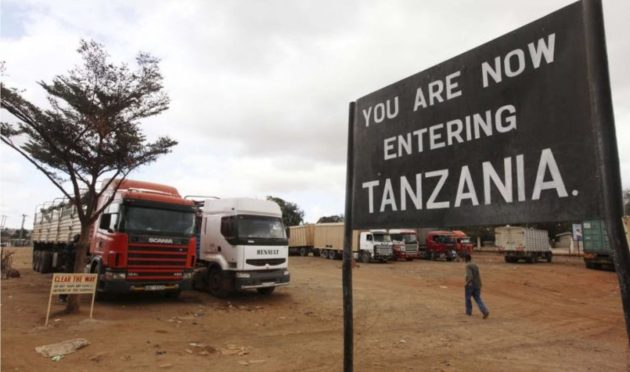
The simple message “You are now entering Tanzania” comes with armed suspicion, restless truck lines and the sense that one bad decision can follow you all the way home. Image Credit: Amboseli National Park
The Arrest at Sirari
On a tense Sunday at the Kenya-Tanzania frontier, a thirty-year-old U.S. Army sergeant found out the hard way that Sirari is no place for mistakes with grenades.
Advertisement
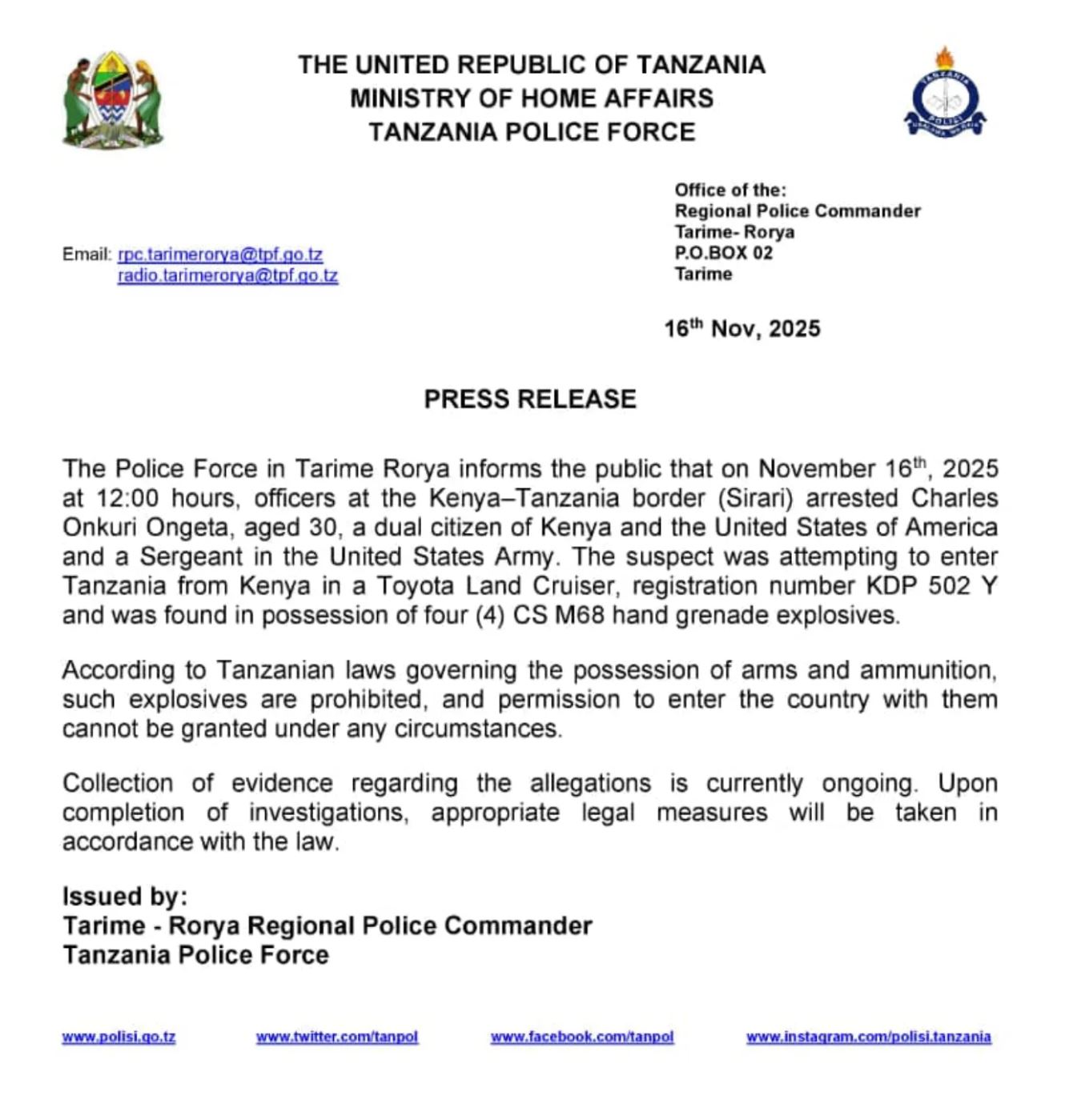
According to a statement from Tarime Rorya regional police, Sergeant Charles Onkuri Ongeta, a dual citizen of the United States and Kenya, was stopped on November 16, 2025, as he attempted to drive a Toyota Land Cruiser with Kenyan plates from Kenya into Tanzania at the Sirari crossing. Officers who searched the vehicle reported finding four CS gas hand grenades hidden inside.
Tanzanian authorities publicly identified him as a serving member of the U.S. Army and said he was coming in from the Kenyan side with the grenades in his personal vehicle. Police seized the grenades on the spot and took Ongeta into custody for interrogation while they continued to collect evidence “to ensure appropriate legal action is taken,” as the regional police statement put it.
Local reporting and a government-owned daily in Dar es Salaam emphasized that under Tanzania’s firearms and explosives regulations, importing grenades of this kind is flatly illegal. Officials stressed that even if he had tried to declare the items and request permission, the answer under current law would still have been no.
Advertisement
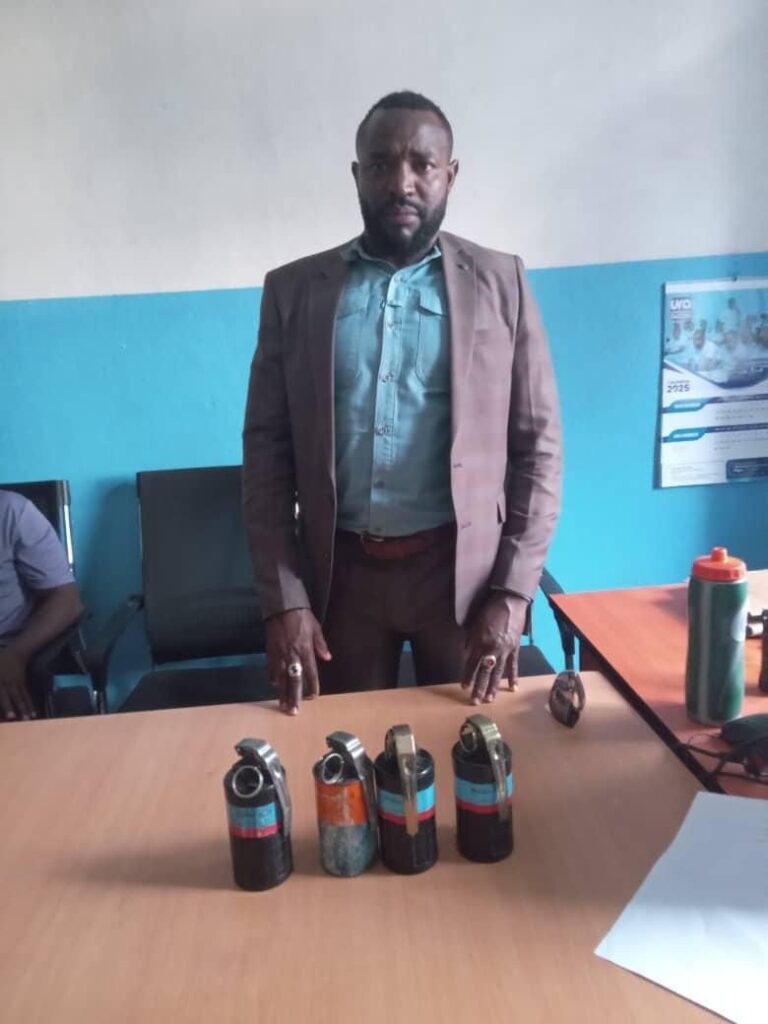
Ongeta with the (what look to be tear gas) grenades he allegedly tried to smuggle into Tanzania.
What the U.S. Army Is Saying
So far, the most detailed official comment from the American side has come from U.S. Army Europe and Africa, the headquarters that oversees Army forces on the continent. In a statement quoted by Stars and Stripes, the command confirmed that the soldier was traveling with family members and that he had been heading to Tanzania to visit relatives when he was detained.
“United States officials are currently working with Tanzanian authorities to address the issue,” the command said, adding that specific details about the soldier would not be released immediately.
That tells us a few things. First, this is already a live consular and military justice case, with the U.S. embassy and Army lawyers engaged behind the scenes. Second, the Army is closing ranks in public, limiting comment while it tries to understand how a serving noncommissioned officer ended up at a foreign border with live (although not explosive) grenades in his truck.
Advertisement
There has been no public statement yet from the U.S. embassy in Dar es Salaam that goes beyond the standard warning language already circulating about unrest in Tanzania after its disputed election. That silence is typical when an American in uniform is under investigation by a partner government, and the facts are still being sorted out.
Tanzania Is in No Mood for Surprises
Ongeta picked about the worst possible month to show up at a Tanzanian border post with grenades in his possession. Allegedly.
The country is still reeling from an October 29 general election that African Union observers said did not meet regional or international democratic standards. They documented ballot stuffing, the exclusion of key opposition candidates, and a hostile climate for independent observers.
Advertisement
When protesters poured into the streets after the vote, security forces responded with live fire, mass arrests, and a nationwide curfew. Human Rights Watch and other monitors have reported that Tanzanian police and army units used lethal force against demonstrators across several cities. Opposition figures and rights groups claim the death toll is in the hundreds or higher, figures the government rejects but has not credibly answered.
The government of President Samia Suluhu Hassan has framed this unrest as a security crisis rather than a political dispute, and has already moved troops, riot police, and intelligence officers to critical nodes such as airports and key border crossings. The Sirari crossing between Kenya’s Migori County and Tanzania’s Tarime District is one of those pressure points. It is a crucial trade artery and a known route for contraband and informal migration.
The official line from Tanzania. Try as I might, this old soldier could find no such animal as a CS M68 hand grenade explosive. The devices shown with the gentleman in the photo above were NOT M68 fragmentation grenades. Image Credit: Instagram
Tanzanian leaders have spent the past year talking about border control as a core part of national defense. During a September 2024 visit to the Kenya-Tanzania frontier, Immigration Commissioner General Anna Makakala told her officers that stopping smuggling and illegal crossings was essential for national security, especially as the country moved toward major elections.
Layered on top of the political crisis is a real regional terror threat. Tanzanian officials and Western partners have been warning about the spread of Islamic State-linked violence from Mozambique’s Cabo Delgado province and from the Democratic Republic of Congo into Tanzanian territory. Tanzania and Mozambique signed defense and security agreements to fight cross-border terrorism. The United States, Kenya, and Tanzania have trained together under U.S. Africa Command’s Justified Accord exercise series, which now includes scenarios focused on chemical, biological, and radiological threats in East African cities.
In that environment, a foreign soldier with any type of grenades rolling up to a busy frontier post is not a quirky customs problem. For Dar es Salaam, it lands squarely in the overlap between internal unrest, terrorism fears, and the narrative that outside forces are meddling in Tanzanian affairs.
What This Means for Ongeta and for the Force
Right now, Ongeta is in the custody of a government that is angry, insecure, and under intense international scrutiny for how it handles both protests and foreign influence. That is a harsh place for any detainee, let alone an American accused of bringing military grenades into the country without authorization.
If Tanzanian prosecutors pursue full charges under their arms and explosives laws, he could be looking at a long sentence. Authorities have already made it clear that grenades of this type cannot be imported under any circumstances. Given the timing, it would not be surprising if they argue that the case is tied to broader security concerns, even in the absence of evidence that he intended to use the devices inside Tanzania.
Takeaway Message
In the end, it is not the grenades that should worry us most, but the reminder that one wrong move in the world’s tighter corners can turn an ordinary day into a fault line running straight through a nation’s nerves.
Advertisement
What readers are saying
Generating a quick summary of the conversation...
This summary is AI-generated. AI can make mistakes and this summary is not a replacement for reading the comments.










COMMENTS