

What is the Role of SOCOM?
SOCOM is not a service, and it is not only a headquarters. It is a unified combatant command with about 70,000 people across the active force, reserve components, National Guard, civilians, and contractors. It owns four service components, plus JSOC as a sub-unified command, and it synchronizes seven Theater Special Operations Commands that plug into each geographic combatant command. That’s it in a nutshell, a unique animal.
The commander’s portfolio is unusual in the Pentagon. Under Title 10, Section 167, the SOCOM boss has unique acquisition authority for “SO-peculiar” gear and can act as a head of agency for buying and fielding what the force needs. That is why SOCOM moves faster than the services on mission-specific kit, such as lightweight assault aircraft modifications, advanced ISR payloads, suppressed small arms, tactical networking, and electronic warfare tools that rarely fit standard service pipelines. The commander delegates much of this to SOF-AT&L, but the statutory authority sits with the four-star.
SOCOM’s published mission set is broader than many realize. It develops and employs SOF to conduct global special operations and activities in concert with the Joint Force, U.S. agencies, allies, and partners. The core tasks range from counterterrorism, counterproliferation, and foreign internal defense, to unconventional warfare, irregular warfare campaigning, information operations, and crisis response. The current fact book and recent congressional reporting put hard numbers and clear language on those roles.
Headquarters sits at MacDill Air Force Base in Tampa, the same strategic hub that houses U.S. Central Command. From that beachhead, SOCOM coordinates global operations and the constant churn of deployment, training, experimentation, and partner engagement.
What changes under Bradley
Commanders matter in how they weigh risk, where they place bets, and which programs move from glossy brief to field use. Bradley’s time at JSOC and SOCCENT suggests three emphases. First, high-end targeting and data-driven manhunts that now include cyber and space feeds alongside the classic human and signals picture. Second, coalition utility in tough neighborhoods, where SOF relationships can decide whether a strike package takes off or a partner unit answers the call. Third, the quiet grind of irregular warfare against state adversaries, where below-threshold competition runs daily and is deniable. His confirmation and the handover ceremony signify the mandate to expand those connective tissues and maintain the force’s lethality in both darkness and daylight.
Why the community should care
For operators, enablers, and the families pacing the kitchen at 0200, leadership is not abstract. It shows up in mission approvals, training realism, kit that works, and a commander who will fight for resources when everyone else says to wait in line.
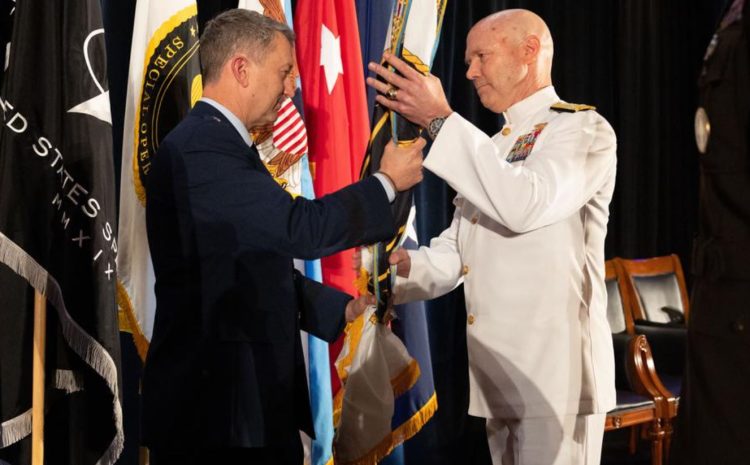
Fenton’s run steadied the ship through an uneasy period. Bradley’s tenure begins with a clean pass of the colors and a clear charge.
The mission set did not shrink. The targets changed shape. The force needs a commander fluent in both worlds.
That is what SOCOM got on October 3rd.








COMMENTS