

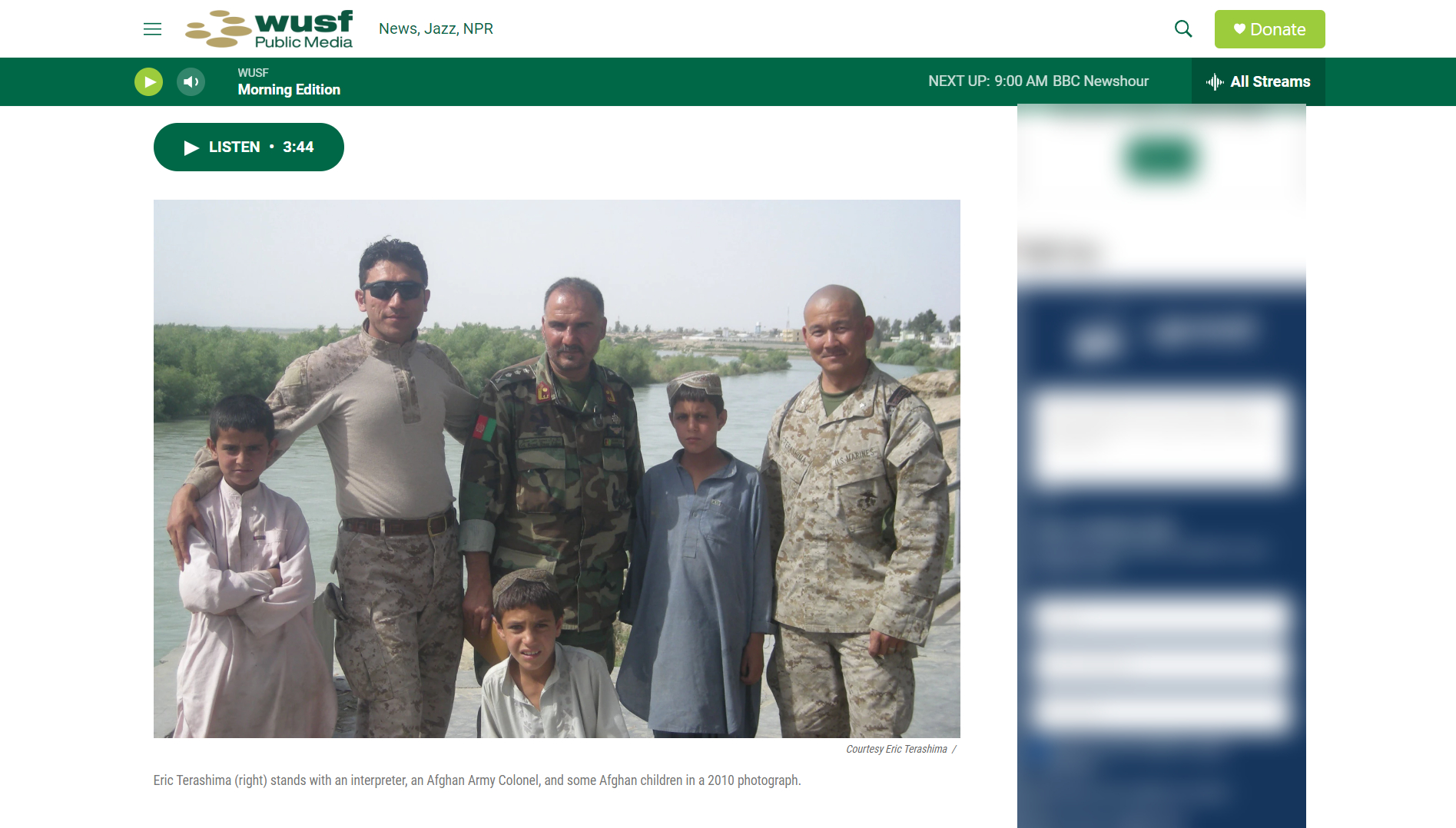
Terashima didn’t stop there. He continued helping more former colleagues, partnering with several non-profit organizations to pull out and find safe resettlements for these refugees. But it wasn’t as easy as Manzoor’s. Most of Terashima’s friends were already sinking financially before the Taliban took over. Remember the Covid pandemic? Yeah, that and other factors that made immigration way more challenging.
The Marine veteran is not alone in this struggle though, as many other veterans, especially those who formed close bonds with the locals, feel obligated to save Afghans left behind from the miserable place. Kim Staffieri, head of the Association of Wartime Allies, confirmed these concerns saying that the thoughts and emotions that come to mind for veterans “…thinking about leaving someone behind—someone that stood side by side with them on the battlefield—it’s really becoming a pretty significant mental health issue for many veterans.”
Likewise, Staffieri helped Afghans with application processing for their special immigrant visas for the past year, aiding veterans taking allies out of Afghanistan and into the US as much (and faster) as possible. Nonetheless, the process remains painstakingly slow and doesn’t always guarantee approval.
“They came with true intent and good hearts and really wanted to help people,” said Staffieri, regretfully adding, “A year later, most of them have not been successful.”
Blessed sight: A family of Afghan refugees arrive at Washington Dulles International Airport on August 27. Photo: Olivier Douliery for AFP. pic.twitter.com/bQcyVyvjpn
— Batya Ungar-Sargon (@bungarsargon) August 27, 2021
Other allied troops, like Canada, are working tirelessly to bring refugees into the country in collaboration with their former interpreters.
“When we were unable to get them out a year ago, it was devastating. But since then we’ve come together, we’ve doubled down and been able to get 3,000 people out,” said Brian Macdonald, head of the non-profit organization Aman Lara, or “Sheltered Path.”
And like the American veterans, they too are experiencing a slow, frustrating, not to mention dangerous, process since refugees need to go through the Taliban to get a passport.
“They helped us get Osama Bin Laden; these Afghan interpreters served with us every step of the way.”
U.S. Army Veteran’s are fighting to help Afghan translators. I’m told nearly 100,000 Afghans surround the airport, seeking refugee status. Hear word from the ground on @BN9 pic.twitter.com/BrSvojtDbe
— Ashonti Ford (@AshontiFordTV) August 25, 2021
When the US forces and other allied troops withdrew from Afghanistan last year, it was thought for the Afghan government to at least stand for a couple of years (or months), but it didn’t even last for a week. Instead, it collapsed as quickly as it was left to run its own. It was a young democracy against a long-standing Islamic Movement, and with frightened citizens who did not fully trust the government capable of protecting them, the collapse seemed inevitable.
Advocates call on the current administration and Congress to allow more Afghans to come to the US and speed up the visa processing backlog.
“Whether it’s the SIV program or the refugee program, these are supposed to be life-saving immigration pathways, and they are anything but,” said Chris Purdy of Veterans for American Ideals and Outreach. Moreover, believing that having to help the Afghan allies would also mean alleviating the stress of the US veterans who worked alongside these people.
“We’ve lost people to suicide. We’ve lost people to health issues. We’ve lost people who just are burnt out and they can’t do it anymore. The guilt and the shame that they feel for not being able to help the last three people on their list, for example, it’s going to carry with them for the rest of their lives,” Purdy explained.








COMMENTS