In my previous article, I argued that counterinsurgency doctrine fundamentally misreads the threat environment in Latin America and the Caribbean, and that the United States needs a counter subversion approach instead. The reason is simple. The region faces neither insurgencies, nor isolated criminal violence, nor accidental institutional failure. What it faces is deliberate political warfare, one that weaponizes crime, corruption, and foreign backing to reshape the strategic environment without open conflict.
This article defines that model.
The United States now confronts a politically engineered mode of conflict across the Western Hemisphere that I call Vietkanization. Its aim is not regime change but regime capture and control. Those driving it seek to obtain and maintain power over institutions, territory, populations, and strategic outcomes while preventing genuine sovereignty from reasserting itself. The strategic purpose? Not collapse, but managed instability. The end state? A weakened, distracted United States whose hemispheric influence has been degraded, displaced, or rendered irrelevant.
Vietkanization, at root, manages conflict through proxy control and engineered fragmentation. External actors reduce their visible involvement by shifting coercive functions onto local proxies: cartels, armed networks, politicized security forces, compromised officials, and parallel governance structures. Responsibility blurs. Attribution becomes difficult. The environment looks like crime, corruption, and local dysfunction, which is precisely why the model works. It stays below the traditional threshold of war while producing strategic effects comparable to war.
Vietkanization also depends on Balkanized fragmentation as a durable condition, not a problem to solve, but an asset to cultivate. Regional rivalries, factional politics, cartel-controlled corridors, parallel justice systems, politicized courts, and compromised security institutions all ensure that no central authority can consolidate power in any coherent or lasting way. Under Vietkanized conditions, consolidation gets punished; fragmentation gets rewarded.
This stands apart from regime change. Regime change is visible, risky, and invites backlash. Vietkanization depends on regimes remaining in place while being hollowed out and repurposed. Elections still occur. Ministries still function. Courts still issue rulings. Embassies remain open. International observers can point to process and form. But real control flows through informal coercion, corruption networks, and foreign influence embedded inside the state. Sovereignty becomes theater. Control becomes practice.
The concept fuses two historical logics. From Vietnamization comes the outsourcing of fighting and governance to local forces, reducing external costs and exposure. From Balkanization comes the deliberate maintenance of internal fragmentation, blocking reintegration and preventing any centralized settlement. Vietkanization synthesizes both: outsourced coercion combined with institutionalized fragmentation, sustained over time.
In Latin America and the Caribbean, this model proves especially powerful because violence alone does not drive it. Financial symbiosis and political laundering sustain it.
Narco-political regimes do not merely tolerate cartels. In many cases, they fuse with them. Cartels provide liquidity, off the books capital, and coercive enforcement. Regimes provide sanctuary, legal shielding, access to state infrastructure, and control over public procurement. Money laundering becomes institutionalized through shell contractors, public private partnerships, procurement fraud, and large scale infrastructure projects where inflated costs, opaque financing, and weak oversight make laundering scalable. Factoring schemes and state adjacent financing channels convert criminal proceeds into legitimate flows.
In return, cartels finance political campaigns, bankroll influence operations, and help shape electoral outcomes favorable to regime continuity and criminal protection. Criminal money becomes political power. Political authority becomes protection for criminal enterprise. Under these conditions, corruption stops being incidental. It becomes a deliberate instrument of governance, coercion, and alignment.
Financial capture alone cannot sustain Vietkanization. The model also requires narrative insulation. Criminalized systems cannot survive exposure; they must be shielded by messaging, legitimacy claims, and procedural cover.
Already have an account? Sign In
Two ways to continue to read this article.
Subscribe
$1.99
every 4 weeks
- Unlimited access to all articles
- Support independent journalism
- Ad-free reading experience
Subscribe Now
Recurring Monthly. Cancel Anytime.
This narrative network typically comprises aligned governments, mercenary media outlets, pseudo academic think tanks, activist NGOs, and influence ecosystems that launder legitimacy the way others launder money. Institutional capture gets framed as reform. Selective prosecution gets framed as anti corruption. Political opponents get reframed as criminals. Criminal state fusion gets reframed as sovereignty, resistance, or social justice. The purpose here is operational, not rhetorical: to neutralize internal opposition, deter external pressure, and constrain any United States response by weaponizing legalism, process, and reputational risk.
That insulation enables Vietkanization’s decisive phase: judicial and electoral capture.
Under a false anti corruption banner, often validated, insulated, or legitimized by aligned international actors and multilateral institutions, Vietkanized regimes move to seize control of courts, prosecutors’ offices, electoral tribunals, comptroller structures, and oversight agencies. Independent judges, magistrates, prosecutors, and election officials are removed, criminalized, disbarred, or subjected to what some of their corrupt enablers have called ‘civil death.’ They are sanctioned under false banners, labeled as ‘anti democratic actors’ when their actual offense was pursuing the corrupt networks’ criminal operators or co-opted bureaucrats. In their place, regimes install compliant operators: corrupted justice officials, politically obedient jurists, and whitewashed criminals whose impunity is guaranteed because they serve the system.
The effect proves both structural and self-reinforcing. Law transforms into an instrument of selective enforcement. Elections transform into mechanisms of managed continuity. Prosecutorial discretion transforms into a political weapon. Judicial rulings transform into tools that legalize state capture after the fact. Because these actions come packaged as anti-corruption, they often receive external credibility at the very moment internal accountability is being dismantled.
Foreign adversarial powers, most notably China and Iran, need not direct this system to benefit from it. Their role is enabling and sustaining. Through financial lifelines, infrastructure loans and contracts, technology transfers, intelligence cooperation, surveillance tools, cyber capabilities, and diplomatic shielding, they reinforce Vietkanized regimes while remaining formally detached from the corruption and coercion they help entrench. The strategic return proves asymmetric: migration pressure on the United States increases, narcotics flows poison American communities, regional partners get compromised, and United States attention and resources stay continuously diverted.
Vietkanization does not seek decisive victories. It seeks attrition through permanence. A region trapped in managed disorder cannot align strategically, cannot resist influence collectively, and cannot serve as stable strategic depth for the United States. Over time, United States influence erodes, not because it suffers conventional defeat, but because it gets exhausted, delegitimized, and forced into continuous crisis management while adversaries consolidate control through deniable hybrid means.
This explains why treating Latin America’s crisis as disconnected issues (corruption here, migration there, drugs somewhere else, weak institutions throughout) guarantees failure. These are not separate phenomena. They are outputs of a single strategic design. Aid fails because it flows into captured systems. Reform fails because institutions have been inverted. Capacity building fails because real capacity threatens those who profit from fragmentation.
Vietkanization succeeds by operating below the threshold of war while producing war level strategic effects. It turns crime into strategy, finance into control, narrative into armor, law into a weapon, and instability into leverage.
Counter subversion, therefore, is not optional. It is the necessary response to a threat that seeks control rather than collapse, influence rather than occupation, fragmentation rather than conquest. Failing to recognize Vietkanization means mistaking a deliberate system for organic failure and responding with tools that strengthen the very structure designed to weaken the United States.
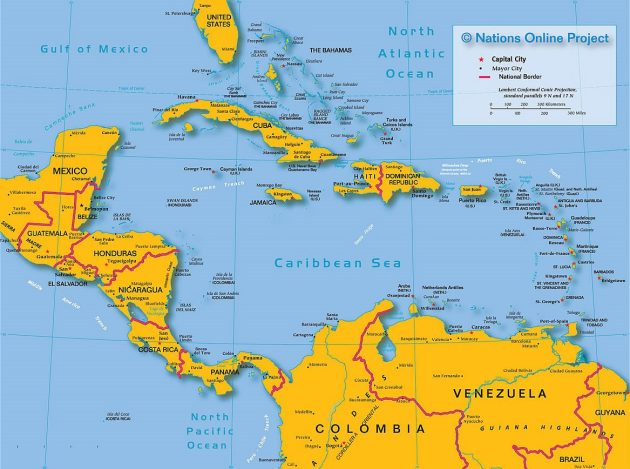
The United States does not risk losing the Western Hemisphere through dramatic defeat. It risks losing it through permanent Vietkanization, where sovereignty erodes quietly, power migrates invisibly, judicial and electoral bodies are captured under false banners, and instability becomes the region’s enduring condition.










COMMENTS