

I believe those are bay leaves the cook is adding to a big pot of rice that already has a bulb of fresh garlic in the center. They are even shown grilling green squash and talking about how it will be served with a special mayo/garlic French-style sauce. In a nice restaurant, they’d call that “aioli,” and you’d pay a premium for it.
Most importantly, when making, eating, or even talking about the food, the men seem to be genuinely happy. They have smiles on their faces, most likely because the food is a taste of home. Perhaps subconsciously, it reminds them of what they are fighting for and the life they hope to return to once their war is over. The importance of food can’t be overstated to people in trying circumstances. And it’s been that way for a long time. Seventeenth-century English Member of Parliament, an administrator of the Royal Navy, Samuel Pepys, is quoted as saying, “Englishmen, and more especially seamen, love their bellies above everything else.” Cooks were among the best-paid and most respected members of a ship’s crew.
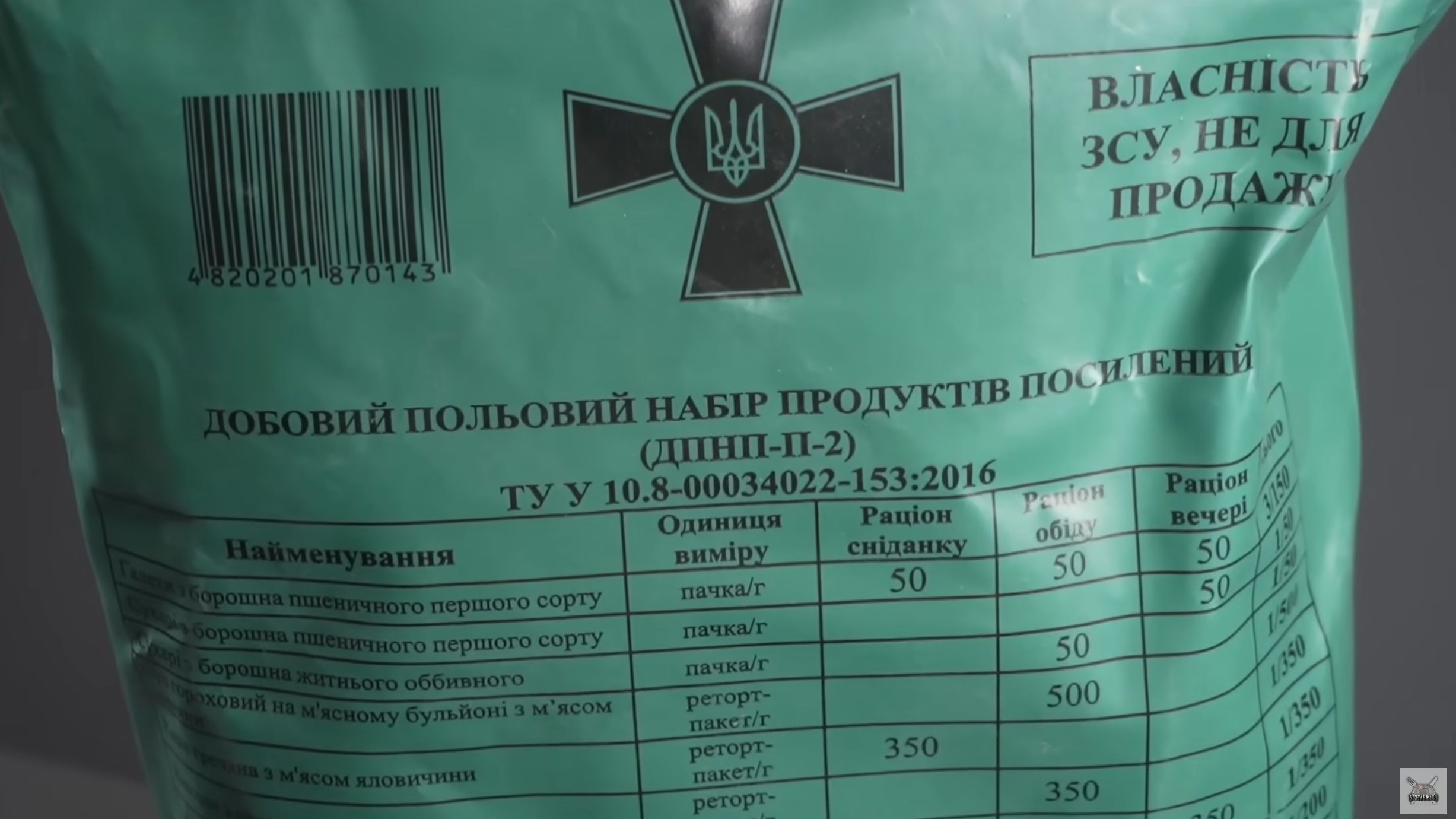
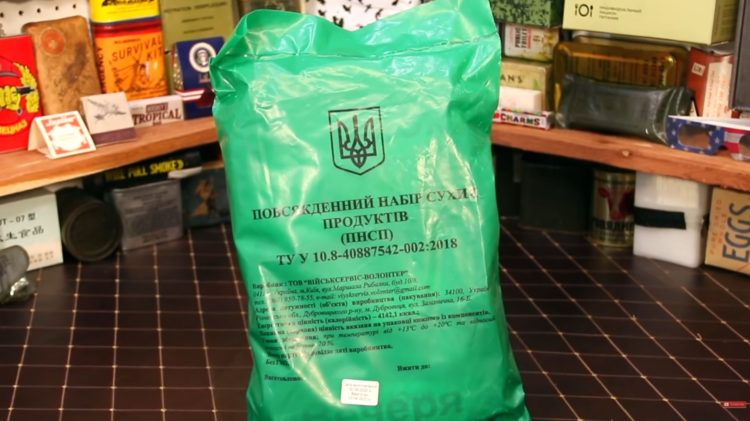
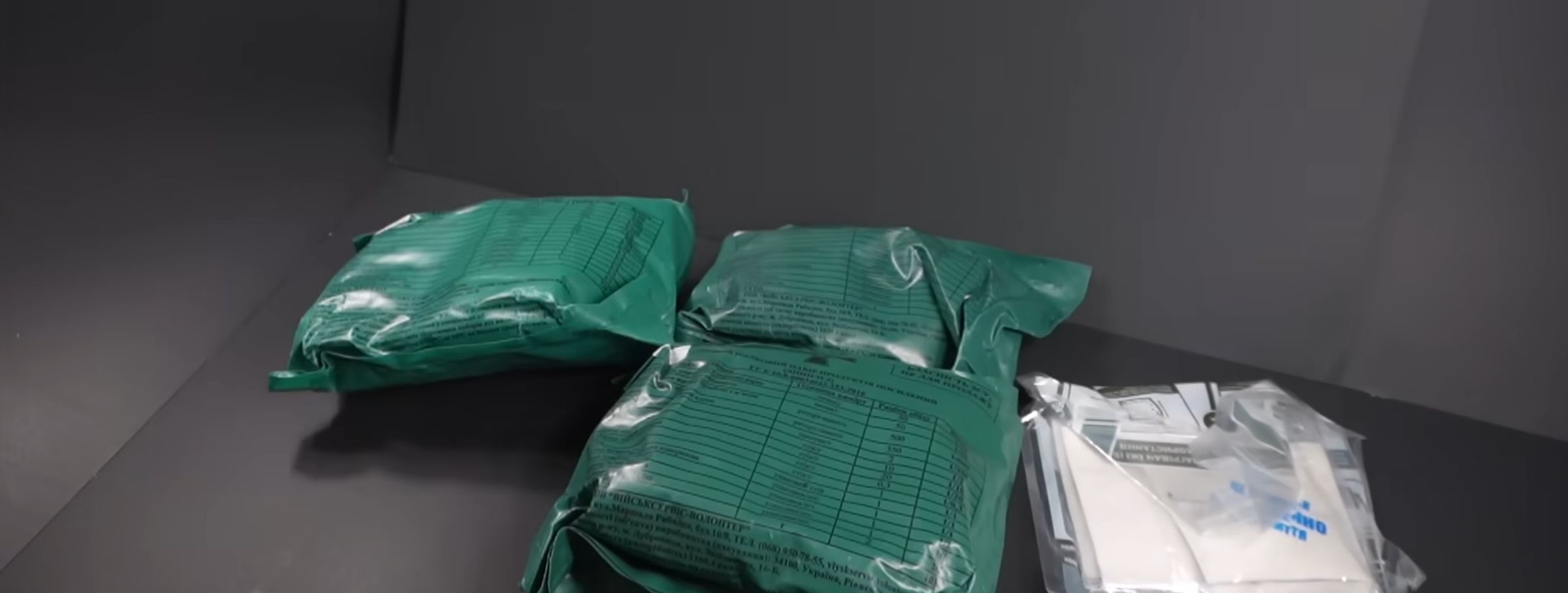
Open the outer pouch to reveal three smaller pouches inside, one each for breakfast, lunch, and dinner. The white item in the clear pouch is a flameless heater.
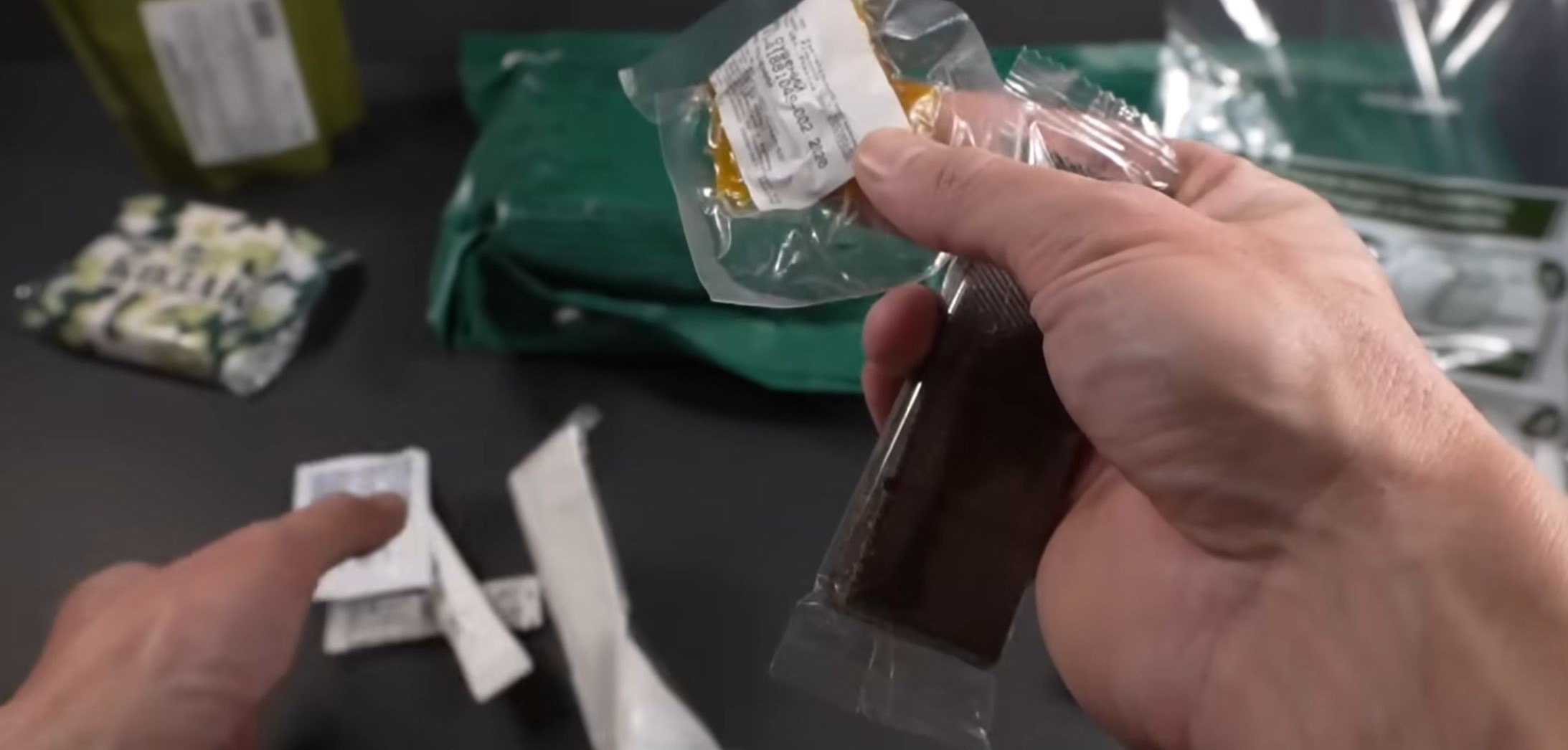
Among the contents, you’ll find a small packet of dried apricots and a dark chocolate bar. Not too shabby for field food.
Here we have the items set on a tray. The main course is heated after adding a little water to the bag containing the flameless ration heater (FRH). The FRH is composed of a mixture of magnesium, iron, and sodium chloride. A byproduct of the heat-producing reaction is hydrogen gas. After adding a little hot water to the powdered coffee, it makes a nice, dark brew.
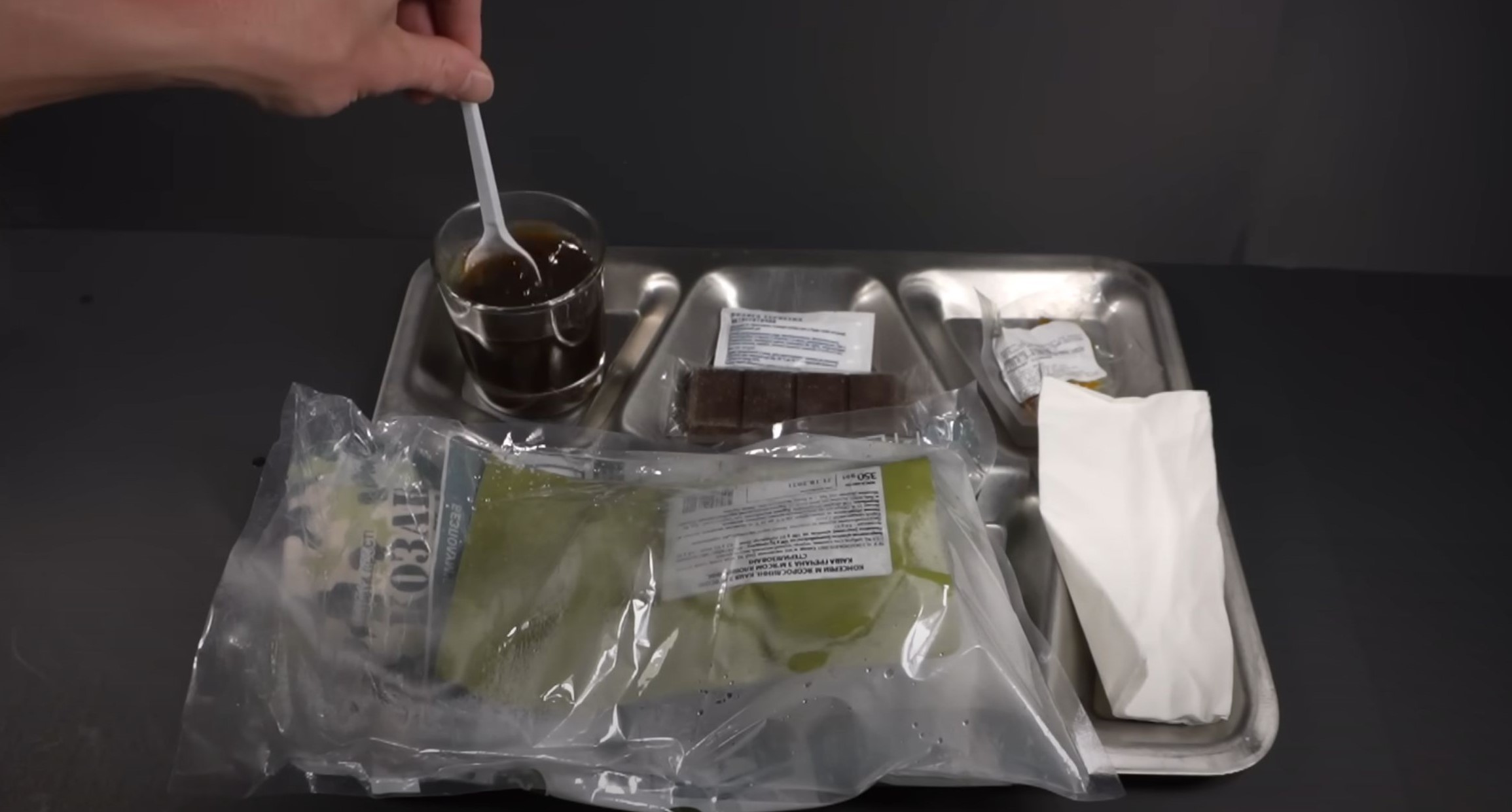
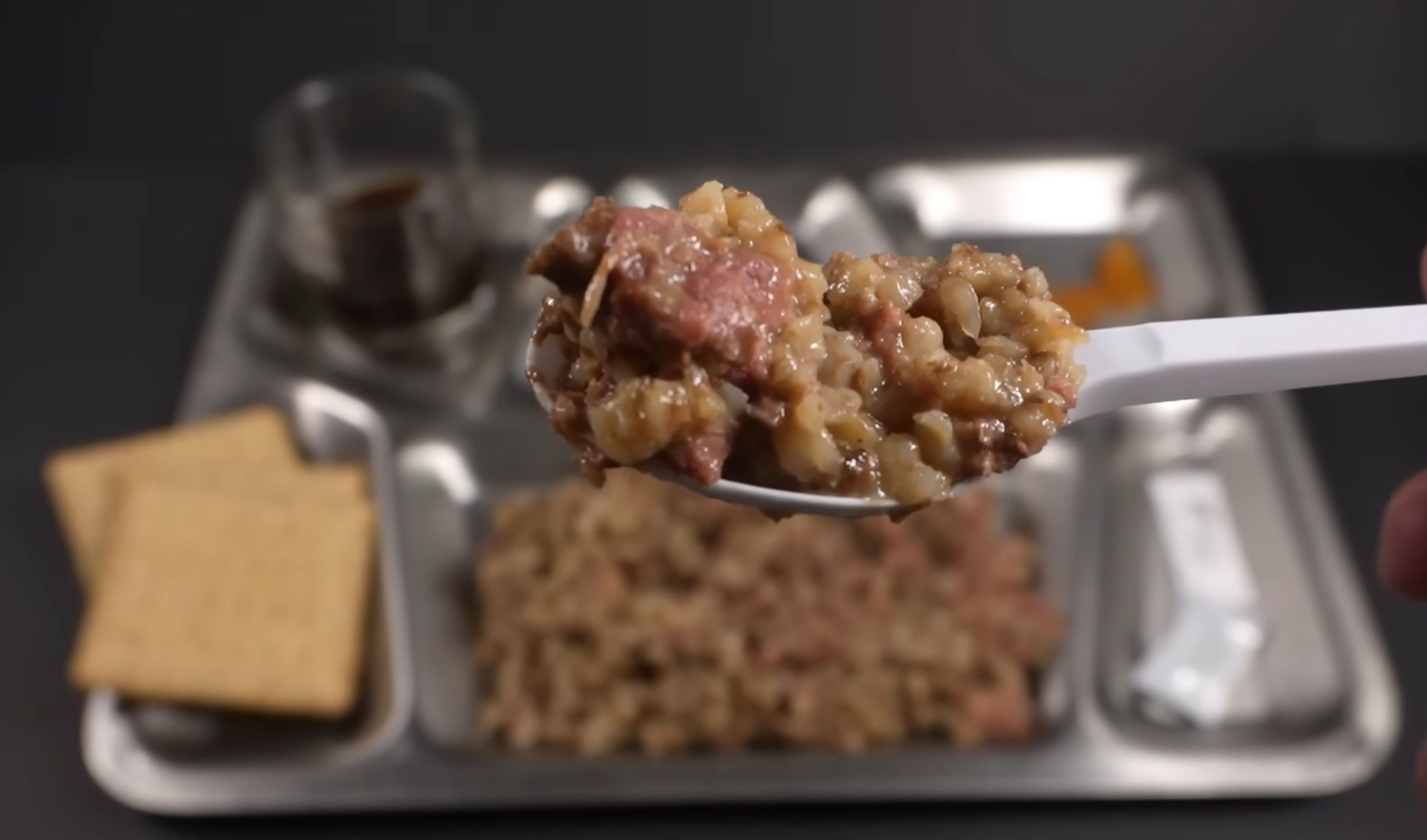
For breakfast, we are having beef and buckwheat porridge. That’s right; this is not the only hot meal number one of the day. And each of the heatable dishes comes with its own FRH. The guy sampling the dish in the video says the beef is braised and tastes mild. I’d be alternating bites of that dark chocolate bar with the apricot.
For the main course, we have chicken and vegetable stew. He also drinks the coffee, which he ranked an “Ok,” and made a cup of Ceylon tea from the MRE. It also came with the rye toast seen here and crackers upon which he has spread apple jam. What you don’t see here is the packet of split pea soup with pork that he’s heated up. He says the pork smells like bacon. You really should watch the video; it’s an amazing amount of high-quality-looking food.
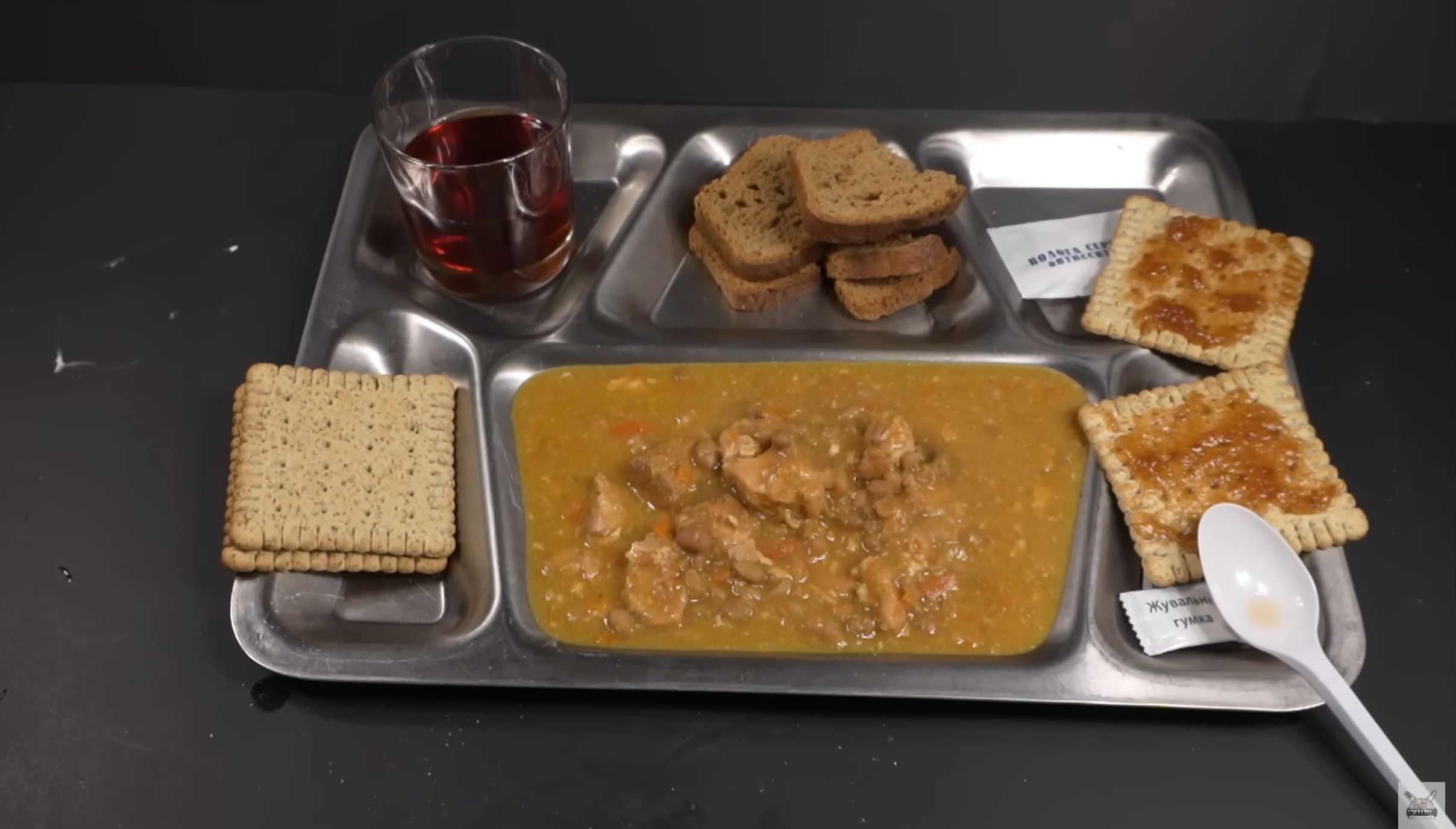
I’m going to go out on a limb here and say that this looks better than any American MRE I’ve ever had. It’s well thought out, and no expense seems to have been spared. Offering this quality of ration to their soldiers tells me that the Ukrainian government cares about them. It says that they know how far good food like this can go to boost the morale of a man whose day may otherwise be miserable.
The US military, despite the constant complaints of the troops(Who cling to long military tradition to complain about everything), goes to significant lengths to get hot chow to the troops as often as possible. It only goes on short rations for training exercises on purpose to test endurance in the field. There can and will be supply interruptions in wartime and troops have to know what that is like. It seems as if Ukraine has torn a page out of the US military’s doctrine of getting good food to the troops not just to give them the energy to fight, but as an important part of morale in fighting units. A hot meal is something to look forward to amid the horrors of war and its real importance in this way cannot be overstated.
This is the kind of food that keeps you going through hard times. I’m glad to see that Ukrainian warriors have this to look forward to every day.
Many thanks to Steve 1989MREInfo for sharing his experience with us.








COMMENTS