

A new election in Germany brought a new Chancellor, Helmut Scholz who was pressured by Poland and Ukraine not to give in to intimidation exerted by Russia to certify and open Nordstream 2. When Russia attempted to recognize Luhansk and Donbas as independent republics preparing to annex them as well, Scholz suspended certification of the pipeline permanently on February 22, 2022.
Russia invaded Ukraine two days later on February 24th.
The invasion triggered immediate US sanctions that bit into Russian gas and oil production and the US encouraged a reluctant Europe to stop importing Russian energy as a way of starving its economy. In response, Putin immediately issued threats of his own to cut Europe off from oil and gas if it paid any heed to US calls for expanded sanctions. In the months since the war began, Russia has continually used its energy production as a weapon in the conflict, cutting off Italy, Romania, Hungary, and recently Moldova. Incredibly even as Russia and Ukraine are at war, Russia continues to ship gas through Ukraine’s pipeline and pay them transit fees. With both Nordstream 1 and 2 shut down Russia has to move what gas it does send through Ukraine even as it is locked in a deadly war with the country.
On September 27th, 2022, a new gas pipeline on the bottom of the Baltic sea running from Norway to Poland was opened. This pipeline is capable of moving 10 billion cubic meters of gas, far less than the 110 billion Nordstream was capable of, but its not nothing.
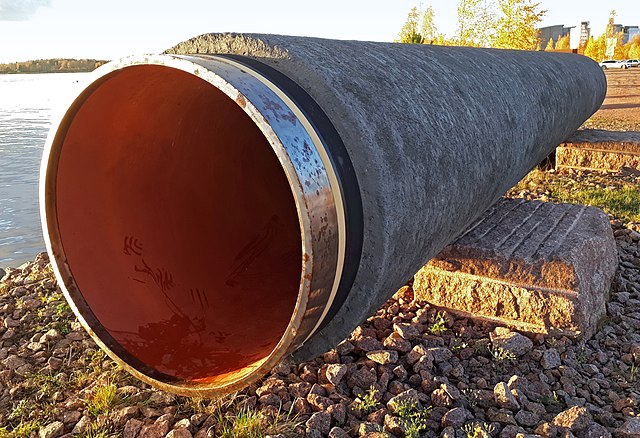
Just hours after the new pipeline opened, Nordstream 1 and 2 were both rocked by explosions that spit them wide open. In Nordstream 2, more than 150 ft of pipe was entirely missing. The damage to both is so extensive that it is not believed either can be repaired. The pipes are made of steel wrapped in concrete and the corrosion caused by saltwater intrusion renders all 760 miles of pipe useless for moving gas in the future.
Blowing up the Pipelines was “An Easy Job.”
I spoke to two former Navy SEALs about the difficulties involved in blowing up these pipelines, both agreed that it was “an easy job” and a “piece of cake.” The water depths are between 200 and 300 ft which makes them easily reachable by tethered Remotely Operated Vehicles(ROVs) carrying relatively small explosive charges, “The blast effect of explosives underwater is greatly magnified” said one, “A ten-pound shaped charge would blow a giant hole in one of those pipes.” They imagined that a small craft like a commercial fishing boat would be sufficient to deploy the ROV and could place all the charges on the pipeline in just a few hours.
Shaped charges have long been in use in underwater blasting, petroleum engineering, and military weapons in three primary modes – Shaped Charge Jet (SCJ). Jetting Projectile Charge (JPC) and Explosive Formed Projectile (EFP). These can be made to order to cut holes in things, split them open or make pretty precise cuts in metal and concrete. A recent development has been flexible linear-shaped charges that look like weather stripping and could be wrapped around the pipe like collar.
What is more, the charges could have timers on them that would allow them to go off days, weeks, or even months later to obscure when the charges were placed. The Baltic sea is heavily trafficked by cargo ships, tankers, container ships, and commercial fishing boats from various nations on the Baltic. Some 15% of the world’s shipping moves through the Baltic each year and about 2,000 ships can be found in its waters just about any day of the year. Finding the fishing boat that passed over or near these pipelines would be like trying to find a particular needle in a very big pile of needles.
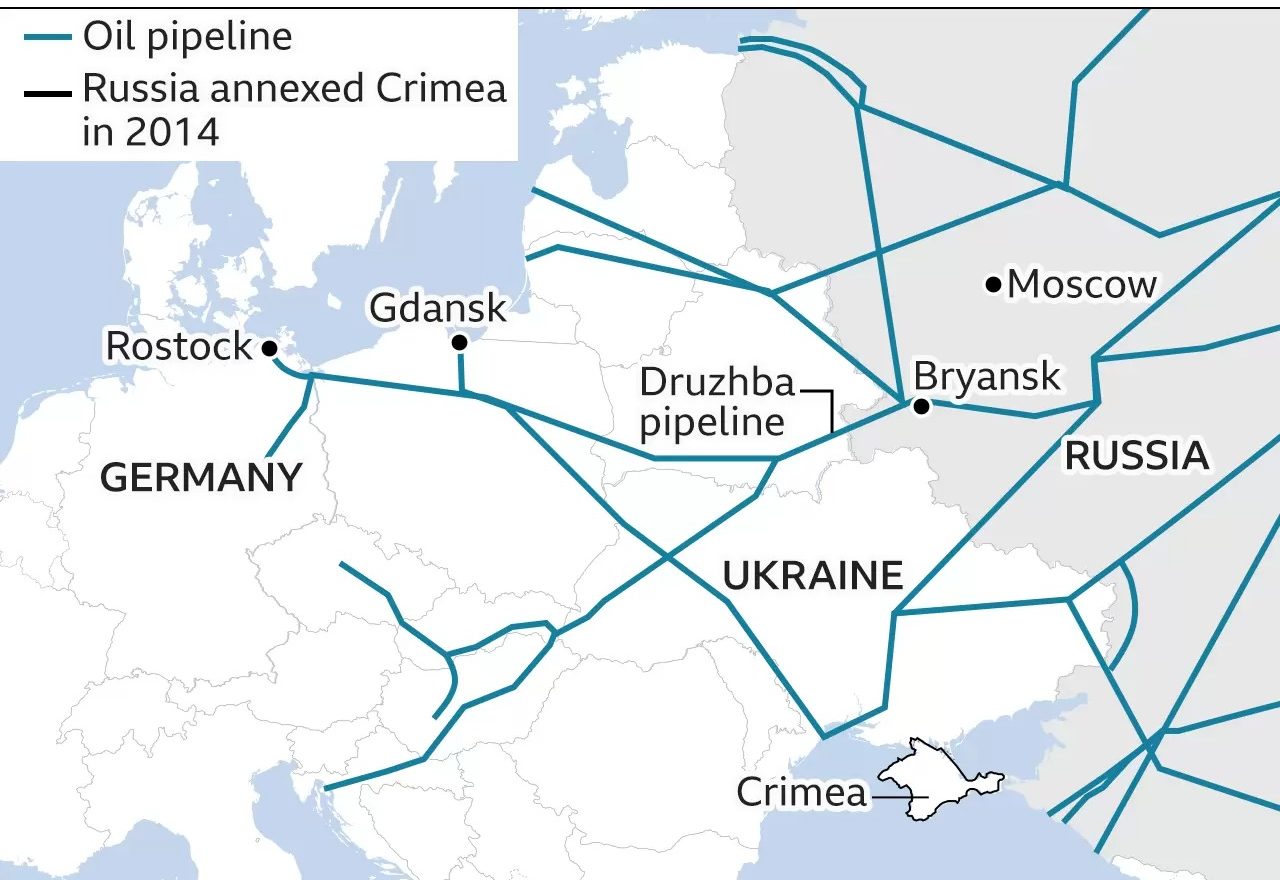
The destruction of Nordstream 1 and 2 leaves just two pipelines passing Russian gas to Europe, one passing through Poland and another passing through Ukraine. A third one passing through Turkey in the South would need to be expanded to pass up through Italy and connect to the rest of Europe and the transit fees would be enormous.
The prewar status quo of moving gas through Europe has returned.
Who Was Responsible
Investigations by the Netherlands and Sweden do not say who the saboteurs might have been, even as they revealed that samples of the severed pipelines still had explosive residue on them. No one has claimed responsibility either.
Russia was blamed right away but is unlikely to have blown it up for several reasons. First, they invested billions in the project and were using it as leverage against Europe. With both of them destroyed they are now dependent on Ukraine and Poland to move gas through.
The Russians blamed the United States, claiming it wishes to make Europe dependent on US supplies of oil and gas. This is also very unlikely. First, the US government has spent the last two years cutting our domestic production of oil and gas, not increasing it to export to Europe. Second, the US has been very careful not to directly involve itself in the conflict with combat troops. The later discovery that US forces destroyed these two pipelines would be an overtly hostile act against Russia that the current administration is very unlikely to commit.
It is also unlikely that Germany was the culprit as it was a major shareholder in the project.
Poland is a possibility, but a long shot. Its military certainly has the capability in its highly trained and competent GROM Special Operations Commandos to carry out such missions and Poland has a clear motive as it rightly believes its own existence as a country is tied to Ukraine’s, but such an act carries great risk. As in the case of the United States, it would be an overtly hostile act against Russia, an act of war. And it would be done without first getting consent from NATO. This would leave Poland on its own in dealing with the consequences of its actions. It should also be remembered that Poland seeks good relations with Germany, a major partner in Nordstream, being exposed would hurt future arms deals that Poland is trying to make with Berlin, especially to replace the 250 tanks they gifted to Ukraine recently.
Indeed, none of the NATO members are probable suspects as none would undertake an independent course of aggression against Russia without NATO’s explicit consent and backing first.
That leaves just Ukraine as the likely actor. It certainly has the motive to act. By destroying both pipelines it has taken Russian threats to cut gas to Europe all but off the table while forcing the remaining gas to move through their own country and Poland. They are now in the position to cut off Russian gas as well. The weapon Putin thought he had is now in Kyiv’s hands.
As for the opportunity, they may have had that as well.
The explosions on the Nordstream pipelines occurred on September 27th, 2022, a news item that went mostly unnoticed in the press was that a contingent of Ukrainian sailors received 3 weeks of training in the operation of unmanned underwater vehicles(UUVs) from the Royal Navy just a month before the explosions that wrecked the pipelines. The US 6th Fleet was also a participant in this training. Ukrainian naval personnel have been training in the UK since at least May of this year at an undisclosed location in Scotland.
While the evidence is circumstantial at this point, we should not expect any confessions from anyone, the damage to Nordstream is in the billions, if it were insured exclusion for damage due to armed conflict would certainly exist in that policy. Both Sweden and Denmark have conducted their own investigations since the pipelines were laid in their economic zones. Russia asked to be included in these investigations or to have the findings shared with them. Sweden has told Russia to do its own investigation and refused any cooperation with Moscow in the matter. Denmark has taken the same course of non-cooperation with Russia in this matter. Neither Sweden nor Demark are likely to issue arrest warrants for anyone in the near future.
There is also little likelihood that either Nordstream pipeline will ever be replaced now that Russia has tipped its hand and shown how it would wield an energy weapon that the EU was an active partner in funding and putting in Putin’s hands. An EU policy that tried to separate Russian foreign policy from its energy policy towards is dead and buried as well.
Who blew up Nordstream 1 and 2 may end up being the enduring mystery of the war in Ukraine long after it ends.
https://youtu.be/WwBSjsPZIA8








COMMENTS