
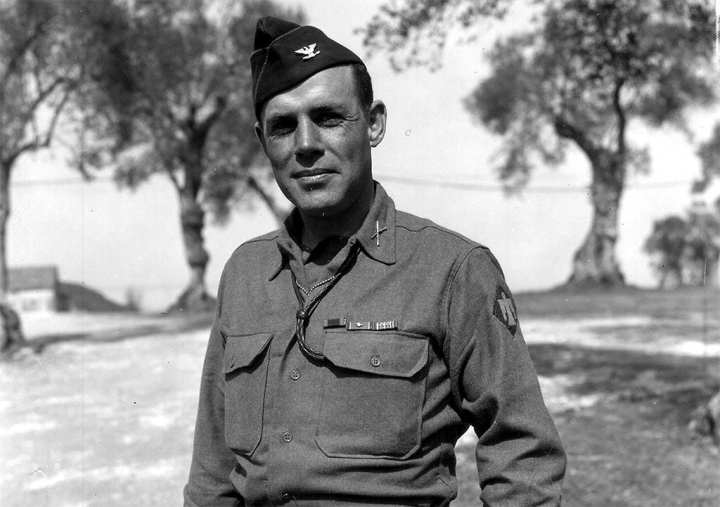
His citation read:
“Lt. Col. Darby struck with his force with complete surprise at dawn in the rear of a strongly fortified enemy position. Always conspicuously at the head of his troops, he personally led assaults against the enemy line in the face of heavy machine gun and artillery fire, establishing the fury of the Ranger attack by his skillful employment of hand grenades in close-quarter fighting. On March 22, Lt. Col. Darby directed his battalion in advance on Bon Hamean, capturing prisoners and destroying a battery of self-propelled artillery.”
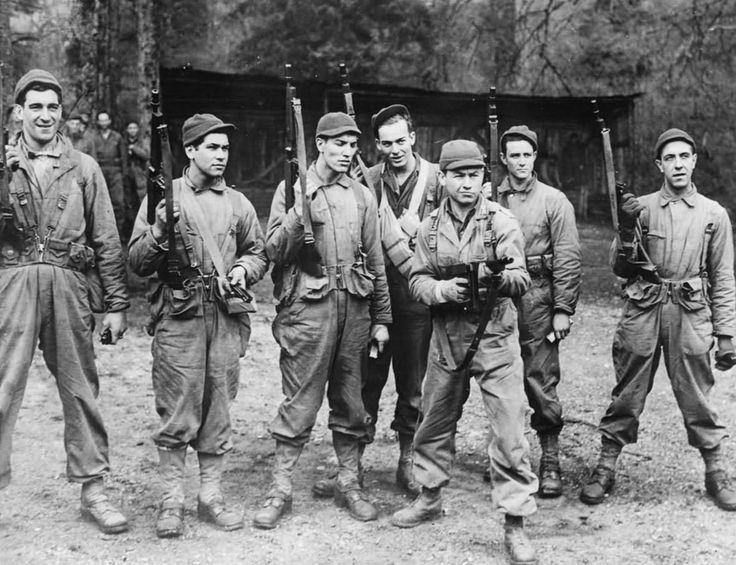
After the fall of North Africa, the Army liked what they saw in the 1st Ranger Bn., and decided to create two more, the 3rd and the 4th Battalions. The training they attempted in North Africa wasn’t quite up to the standards of the Commandos in Scotland. They, therefore, broke one of the SOF Truths that would come into being 40 years later: “SOF Units Can’t Be Mass Produced”. They had only six weeks to create, train, and prepare the men for the invasion of Sicily, Operation Husky.
Darby would be the overall commander of the Ranger force and retain the 1st Bn. command. He and the 1st Bn., along with the 3rd Bn., would land at Gela and clear the way for the 1st Division to come ashore. They captured small 37mm anti-tank guns and were successful in knocking out enemy tanks and clearing the way.
The narrative for this citation of Derby reads: “Lt. Col. Darby, with the use of one 37mm gun, which he personally manned, managed not only to repulse an enemy attack but succeeded with this weapon in destroying one tank, while two others were accounted for by well-directed hand grenade fire.”
At the end of the Sicilian campaign, the three battalions reformed in Corleone, Sicily to prepare for Operation Avalanche, the invasion of mainland Italy at Salerno.
The Rangers went ashore on the far left of the invasion force and quickly captured their assigned objectives. But the rest of the Fifth Army was moving slowly: the Germans had reacted and were slowing the advance. The lightly armed Rangers were supposed to be on the line for two days after seizing their objectives. But they remained there for two weeks.
Although the 1st and 3rd Bn. were awarded the Distinguished Unit Citation for their actions in seizing the Chiunzi Pass, casualties were high, about 10 percent of the force. Darby and his men were misused as regular line infantry in the bitter mountain fighting for the next few months.
But then the three Ranger Battalions were re-designated the 6615 Ranger Force (Provisional) with Darby as the commander. He was promoted to Colonel. His unit also consisted of a cannon company, a chemical warfare mortar battalion, engineers and the 509th Parachute Infantry Bn.
Darby was tasked to be the spearhead for Operation Shingle, the Anzio landings. This was to open the door to Rome. But the overall commander, MG John Lucas of the VI Corps was the wrong commander. This operation demanded an audacious, aggressive commander. Lucas was timid and unsure of himself, something that would end in disaster for the Rangers.
Darby and his Ranger unit accomplished their objectives easily. They came ashore quickly, seized the port, knocked out the gun batteries covering the beaches, and secured the beachhead for the remaining assault troops.
But Lucas didn’t move off the beaches thus allowing the Germans to move eight divisions on to the high ground covering the Allied advance. Soon the entire invasion was bottled up on the beach and under murderous German artillery fire.
Lucas decided to finally penetrate the German lines at Cisterna di Littoria using the 1st and 3rd Bns. with the 4th Bn. attacking to clear the main road. Because the area around Cisterna was open farmland, the 1st and 3rd Bn. would use the irrigation ditches to move.
After a break in contact between the 1st and 3rd Bns., three companies from 1st Bn. and the 3rd Bn. began their assault on the town. But they were held up short 800 meters from it. The 4th Bn. was stopped cold by German tanks and artillery.
The Germans had the 1st and 3rd Bns. pinned down and began to attack with tanks and self-propelled artillery. Cut off, the Rangers fought until they ran out of ammunition. Only eight men of the 1st and 3rd Ranger Bns. made it back to friendly lines. They had 12 killed, 36 wounded, and 743 men captured. The 4th Bn., trying to come to their aid, suffered a bloody nose with 30 killed and 58 wounded.
That was the end of the Ranger force: The remaining troops were disbanded and most were assigned to the 1st Special Service Force.
Colonel Darby would be reassigned to command the 179th Infantry Regiment in the 45th Division for two months before being sent to Washington DC for an assignment to the War Department. On April 23, BG Robinson Duff, the assistant division commander with the 10th Mountain Division was wounded and Darby was assigned there to take his place.
Seven days later on April 30, 1945, Darby was issuing orders for an attack on Trento when a German artillery shell landed right among the assembled officers and NCOs. Darby and a Sgt were killed and several others wounded. He was just 34 years old.
Darby was initially buried with the Rangers in Cisterna and post-humously promoted to Brigadier General. In 1949, his body was removed from there and interred in a cemetery in his hometown of Ft. Smith, Arkansas.
Camp Darby, where the Benning phase of Ranger School is conducted, as well as the Ranger obstacle course, are named after him.
His famous quote from the Sicily campaign is always remembered, “Onward we stagger and if the tanks come, then God help the tanks.”








COMMENTS