

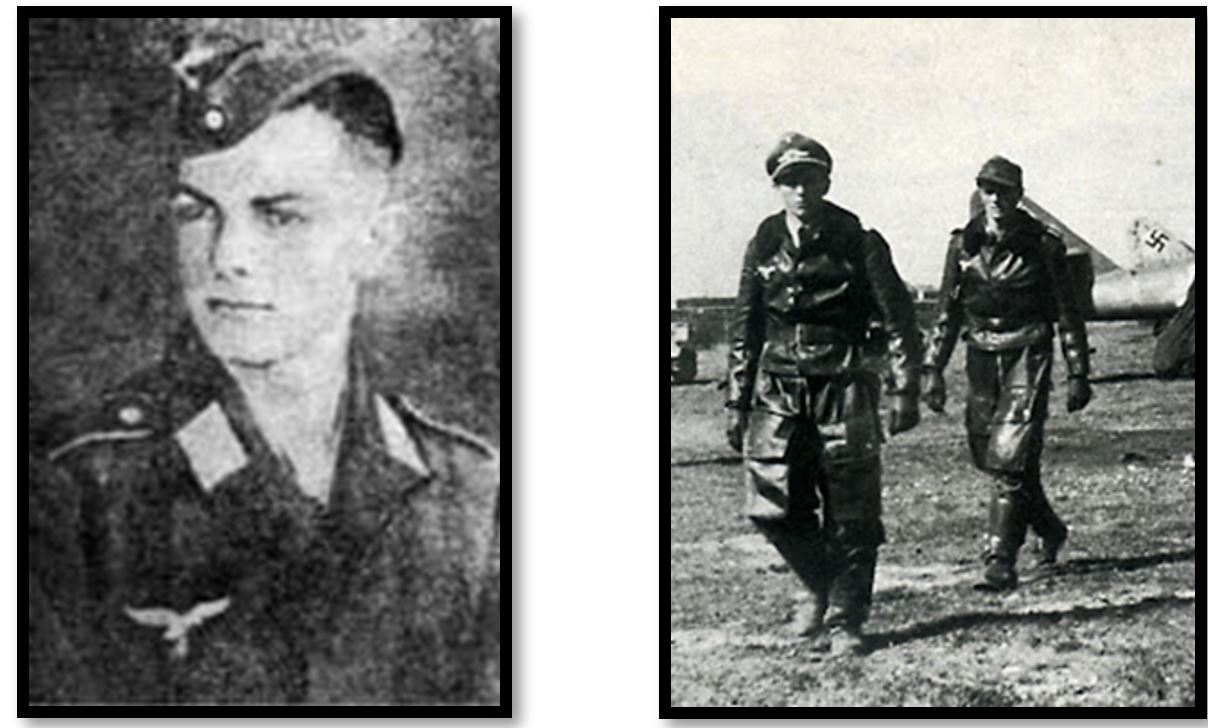
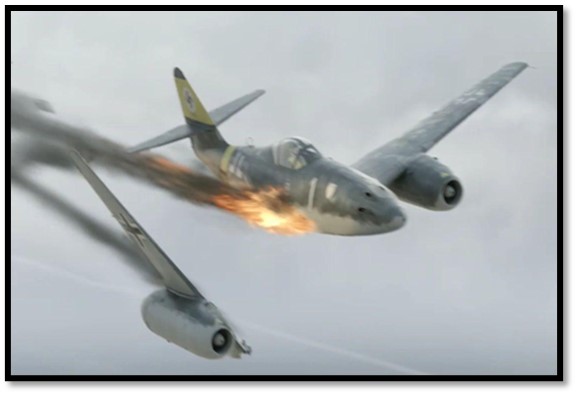
First Lieutenant Hans “Specker” Grünberg, a respected ace with 82 aerial victories in 550 missions, including five kills in the Me 262A, was also on this mission, and recounted that, “The ‘Rammer’…I think that he simply became tunnel-visioned, too focused, wanting the kill at all costs…How he survived that crash, and all the others, still puzzles me. They say that God protects drunks and fools. The Rammer was both.”
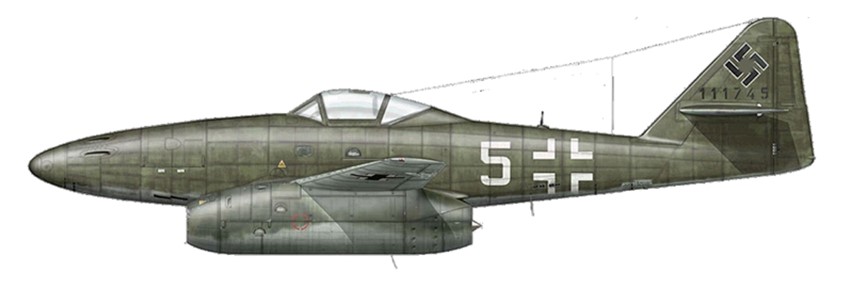
Soon after this very dramatic incident, Eduard Schallmoser was issued “White 11” as his next assigned aircraft, sometimes erroneously referred to as “White 14.”
Friday, April 20, 1945, was Adolf Hitler’s 56th and final birthday, before his suicide in Berlin, and Schallmoser, still flying as Adolf Galland’s (in “White 3”) wingman, helped to intercept a squadron of B-26F-1 Marauder bombers from the 323rd Bomb Group directly over Eduard’s own hometown of Memmingen. He was actually born in Aying, Bavaria, 74 miles farther east, as the oldest of three boys in the Schallmoser family.
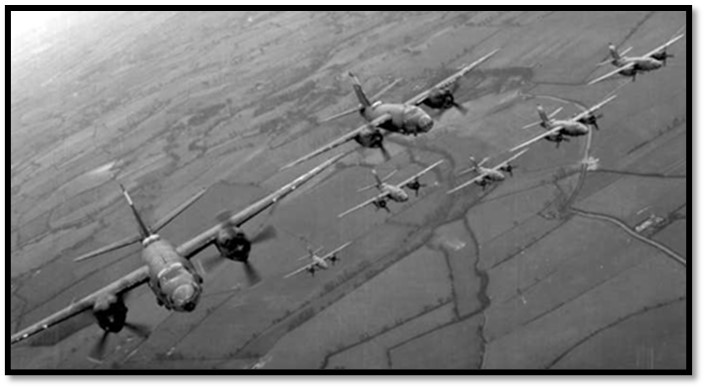
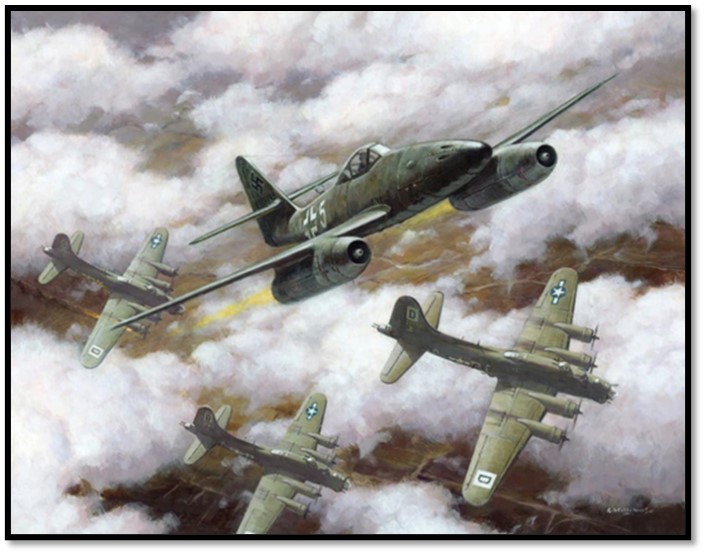
For the American B-26 crews, it was supposed to be a four-minute bombing run, flying straight and level, but Adolf Galland, Eduard Schallmoser, and one additional JV 44 jet pilot came blazing in, and the keen-eyed Galland instantly blasted one Marauder out of the sky, with no parachutes from the stricken bomber. It was Galland’s 99th aerial victory.
First Lieutenant James Vining, a B-26F-1 pilot only 20 years old, and on his 40th combat mission, fired his fixed, forward-firing, M2 .50-caliber machine guns very briefly at a Me 262 jet, striking the left engine, but then his own bomber was hit by cannon fire, and his leg was severely injured. Vining just barely made it to Uberherrn, Germany, where he crash-landed in an open field.
B-26 pilot Lieutenant Colonel Louis S. Rehr later recounted that, “All hell broke loose. Pieces of fuselage and wing were flying all around us, along with smaller pieces that looked like confetti. Three jets following one another in 10-second intervals zoomed up from the six o’clock position and then dove on the formation. The first and second jets barely cleared the lead Marauder…The third jet (Schallmoser’s) would have collided with (Lt. James M.) Hansen’s bomber, but at the last second, the German dove his jet under the Marauder’s right propeller. Half the jet’s rudder flew off, and the aircraft fell away.”
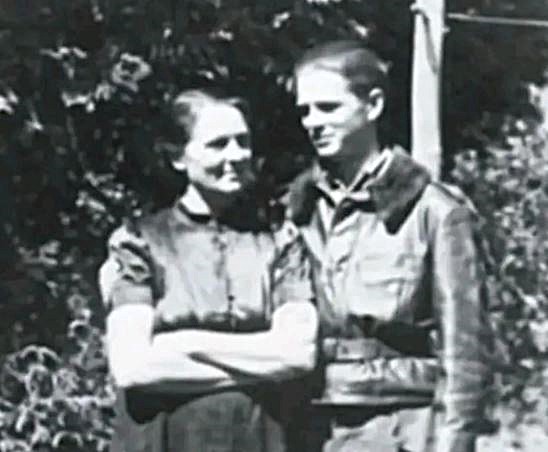
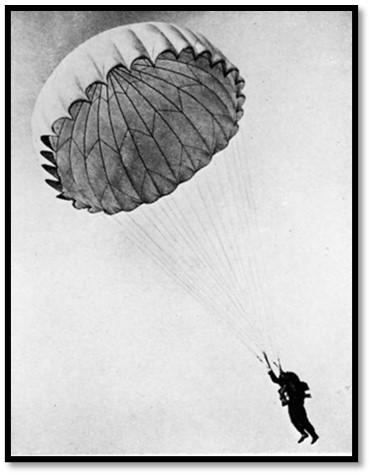
Indeed, Eduard Schallmoser’s guns jammed, and his jet was hit by .50-caliber rounds from a B-26, but he passed closely enough to clip one of the Marauder’s propellers, which tore off most of his own rudder, forcing him to bail out high over Memmingen. Incredibly enough, he landed in his own mother’s back yard, entangled in her outdoor clothesline, with an injured (sprained) knee!
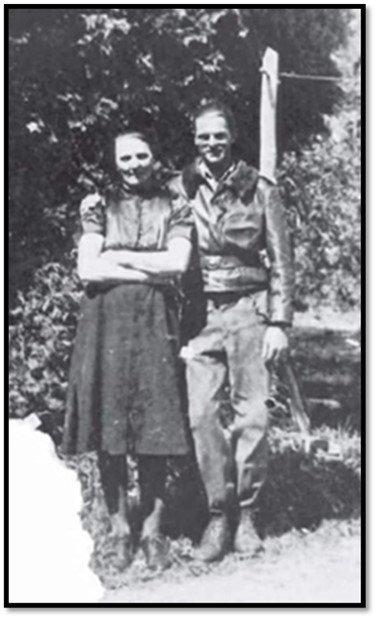
His mother, Johanna Reidmaier Schallmoser, age 44, helped him down and then tried to telephone the local hospital for help, but couldn’t get through. So, she cleaned and bandaged her son and made a large meal of pancakes to help him regain his strength. He was briefly treated at the hospital the next day and returned to his unit, JV 44, on April 25, 1945.
On the very next day, April 26, 1945, with beautiful, clear weather, Lieutenant General Adolf “Dolfo” Galland, now with 102 aerial victories to his credit, scrambled with five more jet pilots to intercept a formation of American B-26F Marauder bombers near Neuburg in his new, Me 262A-1a/R7 Schwalbe fighter (but not “White 3” this time), armed with four 30mm Mk 108 cannon and two dozen R4M Orkan (“Hurricane”) 55mm, unguided, air-to-air rockets.
One B-26 directly in front of him exploded in a blinding fireball after his initial cannon burst, and he quickly targeted a second bomber, inflicting heavy enough damage that it was unable to return home. These were his 103rd and 104th confirmed kills of the war (plus nine unconfirmed kills), and his sixth and seventh aerial kills as a jet pilot.
Young Eduard “Rammer” Schallmoser, now flying a rocket-armed Me 262A-1a/R7, also destroyed a B-26F Marauder in this same engagement, using his 55mm R4M rockets. It was his fourth and final aerial kill of the war.
Moments later, Galland’s jet was hit by .50-caliber gunfire from a stricken B-26F, just as American P-47D Thunderbolt fighters arrived on-scene, and his Me 262 was pummeled by a hail of gunfire from First Lieutenant James J. Finnegan of the 10th Fighter Squadron. After taking multiple hits from the American fighter, further damaging his right engine, then the left engine, Adolf Galland swooped down to his airfield, crash-landed under heavy gunfire with a blown nose-wheel tire, and had to leap away from his stricken aircraft into a bomb crater to avoid being strafed.
After this violent crash-landing, Galland was hospitalized at picturesque Tegernsee, 30 miles south of Munich, for his wounded knee, and Lieutenant Colonel Heinrich “Heinz” Bär (with 220 confirmed aerial kills) took over operational command of the squadron, although Galland remained officially in overall command from his hospital room until Germany surrendered.
In April 1945, B-26F Marauders bombed not only the railroad marshaling yard at Memmingen (April 20th), but nearby Memmingen Air Base, built in 1935, the home base for German Dornier Do 17Z and Heinkel He 111H-20 twin-engine bombers. It remained part of the German Luftwaffe (Air Force) until 2003, housing Tornado IDS strike fighters then. It’s currently known as the Allgäu Airport Memmingen, with the highest altitude (2,077 feet) of any commercial airport in Germany, served daily by five Boeing 737s of Ryanair, and several other airlines.
Eduard “Rammer” Schallmoser miraculously survived the war, later emigrated to Argentina, as many Germans did, and died on October 7, 1991, at Oberá, Misiones Province, in northern Argentina, at the age of 68. An excellent, Spanish-language book entitled “The Luftwaffe in Argentina” by Horacio Rivara (2008), details that, “1,000 scientists and more than 300 Luftwaffe pilots entered Argentina secretly and illegally, as part of the largest intelligence operation in the history of this country…Adolf Galland, a general at the age of 29 (until 1955, as a test pilot in Argentina), and brave enough to face Hitler…(and) Eduard Schallmoser, recruited for the war…with the stories of the protagonists’ lives more incredible than any fiction.”








COMMENTS