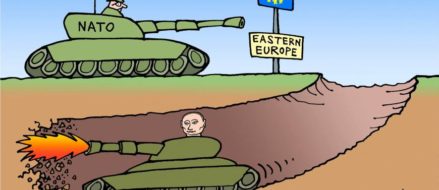
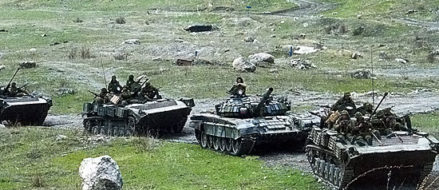
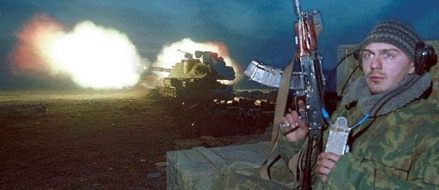
Britain said on Wednesday it will send fighter jets to Romania next year and the United States promised troops, tanks and artillery to Poland in NATO’s biggest military build-up on Russia’s borders since the Cold War. Germany, Canada and other NATO allies also pledged forces at a defense ministers meeting in Brussels on the same […]
Financial markets and their importance cannot be emphasized enough. The world nearly came to its knees in the midst the global financial crisis. The world is still as exposed as it has always been to economic calamities that can spread like wildfire. Finance is an important discipline, field of study, and plays a foundational role […]
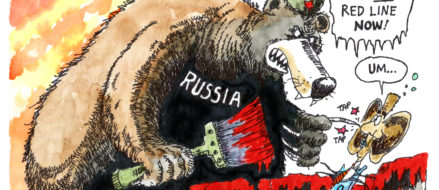
Russia is waging aggressive proxy wars in two theatres. It’s no doubt expensive, and they are the subject of ongoing sanctions. They’ve said “screw it” because they believe they’re facing a real threat. Russia feels as though the West is forcing their hand. They’re being pushed toward the brink of war and aren’t afraid to […]
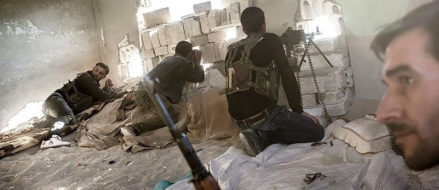
The special forces deployment comes as Washington accused Damascus of blocking aid to besieged cities and warned it will not boost military cooperation with Russia unless Moscow is able to convince President Bashar al-Assad both to halt attacks on rebel groups and allow humanitarian access.
Russia’s new, asymmetric approach is perhaps best exemplified by its state-run nuclear contractor Rosatom’s strategy of creating security vulnerabilities in Europe. A recent report from a think tank in Finland – where Rosatom partly owns a nuclear power plant being built in Pyhajoki – suggested that the Kremlin is striking deals such as these to create dependencies in other countries. Separately, Lithuania has said it may file a lawsuit over the poor-quality construction of the Astravets nuclear power plant, which is being built by Rosatom in neighboring Belarus with no supervision and at a very low cost. Lithuanian officials are worried that Rosatom is using substandard Russian security systems that are likely much weaker than their Western equivalents – a state of affairs that analysts believe could pave the way for a nuclear disaster. Recent reports that at least ten workers died in mysterious circumstances while working at Astravets, and that a 330-ton reactor shell was dropped thus triggering an emergency situation, have hardly reassured Vilnius. Outside of Europe, Rosatom is also playing a very delicate role in Iran’s nuclear program, working on the construction of the Bushehr nuclear power plant while the Obama administration tries to preserve its controversial Iran nuclear deal.
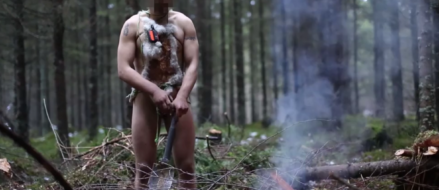
Formed in the early nineties, just after the country won its independence, the Latvian Special Forces, like those in other countries, are considered elite soldiers. Their operations include counter-terrorism, search and rescue, sea landings, underwater missions, attack and detention, and airborne operations.
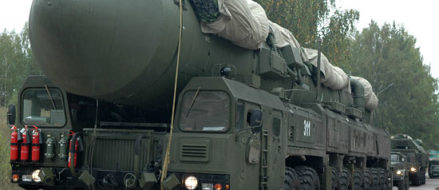
The primary aim of the missile drill was to test the ICBM’s capability to overcome advanced missile defense systems.
Russia is in the middle of modernizing its strategic and nonstrategic nuclear warheads. (…) Moscow has currently 4,500 nuclear warheads, of which roughly 1,780 strategic warheads are deployed on missiles and at bomber bases. An additional 700 strategic warheads are kept in storage along with approximately 2,000 nonstrategic warheads.
They’re taking calculated risks and creating a global narrative. They’re shaping sentiment – and, in turn, exploiting it. It’s both impressive and worrisome for the West.
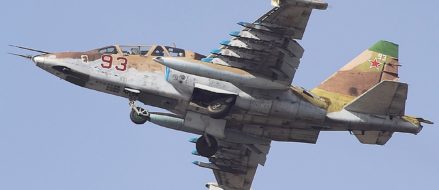
Aircraft capable of delivering punishing attacks on ground targets while retaining a good chance of surviving hits taken in return are going to remain in high demand worldwide.
Ankara views the YPG as a threat because of its close links to Kurdish militants waging a three-decade-old insurgency on its own soil. It has been alarmed by the YPG’s gains in northern Syria since the start of the Syrian civil war in 2011, fearing it could extend Kurdish control along Turkish borders and fuel the ambitions of Kurdish insurgents in Turkey.