
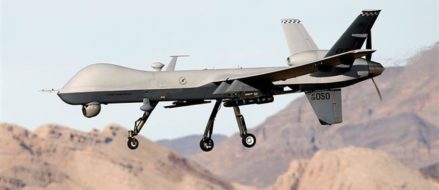
Syrian government forces target US spy drones over Syria’s Dayr al-Zawr province
Syrian government forces say they have targeted a US air force reconnaissance drone over the war-torn country’s eastern regions.
Syrian government forces say they have targeted a US air force reconnaissance drone over the war-torn country’s eastern regions.

The special forces deployment comes as Washington accused Damascus of blocking aid to besieged cities and warned it will not boost military cooperation with Russia unless Moscow is able to convince President Bashar al-Assad both to halt attacks on rebel groups and allow humanitarian access.
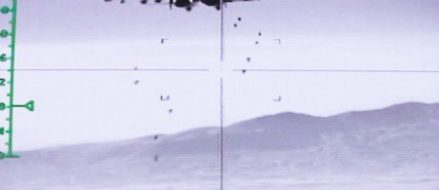
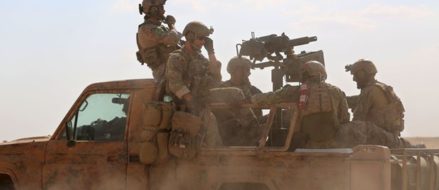
The U.S. has teams of special operations troops on the ground in Syria to support some Sunni Arab militias in fights against ISIS. Other Sunni Arab groups receive money and weapons from the U.S. In some situations, they fight alongside al Nusra militants against common enemies like ISIS.
That ambiguity will frustrate the Russians.
“The Russia would like to make it black and white, and say ‘U.S., you tell your guys to separate form Nusra.’ But I can’t see the U.S. being that black and white about it,” Lopour said.
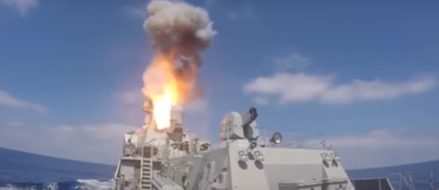
From firing positions in the Eastern part of the Mediterranean Sea, Missile Cruisers “Green Vale” and “Serpukhov” of the Russian Navy, Black Sea Fleet launched three “Caliber” cruise missile at the jihadist organization, Jabhat al Nusra in Syria.
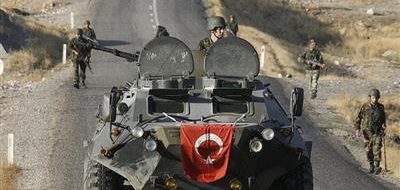
Northern Syria has always been the more difficult and violent section of Syria in the civil war. Aleppo and other cities have seen the most devastation. They’ve also witnessed the most fluid situation of occupants running the gamut of groups in Syria. According to Barbara Starr, who tweeted “US Special Operations Forces in Northern Syria […]
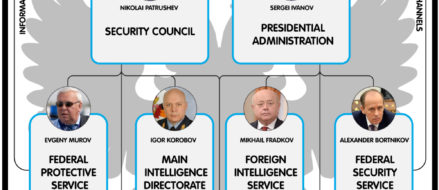
And during the time it takes to train and shift the US’s intelligence capabilities against Russia, the US remains greatly outnumbered by Russian operatives.
“The counterintelligence operation that [Moscow] runs against the US Embassy measured in the thousands,” Michael McFaul, a Stanford University professor and former US ambassador to Russia, told the Post. “It always felt, especially sitting in Moscow, of course, that we were in a counterintelligence and collection battle that was an asymmetric fight.”
CIA Director John Brennan recently addressed Russia’s “exceptionally capable and sophisticated” infiltration abilities.
“I think that we have to be very, very wary of what the Russians might be trying to do in terms of collecting information in a cyber realm, as well as what they might want to do with it,” Brennan explained on CBS.

According to Dolan, “intercepts near Russian territory” are “expected” and “in a word – commonplace.” He adds “aggressive behavior by the Iranian Revolutionary Guard Corps Navy in the Strait of Hormuz” also “is nothing new.”
Some critics, however, blame the encounters on President Obama’s foreign policy weakness, both toward Iran, with the hammering out of the Iran nuclear deal, and toward Russia, with the administration’s measured response to the 2014 illegal annexation of Crimea.
Dolan thinks, however, there’s “strategic communications” in the incidents.

The center’s airborne preparation program will be expanded to include landing with a wingsuit, a special suit with fabric between the legs and under the arms that resembles a flying squirrel, reports RIA Novosti. It will help the fighter reduce his falling speed to 45 mph and glide at a speed of 155 mph.

Hillary Clinton doesn’t need to be in good health to take it to the enemy if that’s what we need to do. That discussion is underway, and many are weighing their options. We’ve been on a war footing for a long time—since 9/11. The stress of maintaining that pace has left us with a fractured psyche here […]

Though hidden from public view, the escalation in espionage activity is part of a broader renewal of conflict and competition between the United States and Russia after a two-decade lull. Surging tensions now cut across nearly every aspect of the U.S-Russia relationship.
Russia’s new, asymmetric approach is perhaps best exemplified by its state-run nuclear contractor Rosatom’s strategy of creating security vulnerabilities in Europe. A recent report from a think tank in Finland – where Rosatom partly owns a nuclear power plant being built in Pyhajoki – suggested that the Kremlin is striking deals such as these to create dependencies in other countries. Separately, Lithuania has said it may file a lawsuit over the poor-quality construction of the Astravets nuclear power plant, which is being built by Rosatom in neighboring Belarus with no supervision and at a very low cost. Lithuanian officials are worried that Rosatom is using substandard Russian security systems that are likely much weaker than their Western equivalents – a state of affairs that analysts believe could pave the way for a nuclear disaster. Recent reports that at least ten workers died in mysterious circumstances while working at Astravets, and that a 330-ton reactor shell was dropped thus triggering an emergency situation, have hardly reassured Vilnius. Outside of Europe, Rosatom is also playing a very delicate role in Iran’s nuclear program, working on the construction of the Bushehr nuclear power plant while the Obama administration tries to preserve its controversial Iran nuclear deal.
The U.S. military will have to shift surveillance aircraft from other regions and increase the number of intelligence analysts to coordinate attacks with Russia under the Syria cease-fire deal partly in order to target militants the U.S. has largely spared, senior officials say. Senior defense and military officials told The Associated Press that they are […]

Praesidus builds rugged, American-assembled watches inspired by historic military timepieces. Designed for accuracy and tested for endurance, each watch is made for outdoor explorers, everyday adventurers, and anyone who needs reliability when it matters.

SIG Sauer is a world-class firearms manufacturer trusted by military, law enforcement, and responsible civilian shooters, delivering precision-engineered weapons, optics, and training systems while maintaining a strong commitment to veteran hiring, American manufacturing, and the professionals who rely on their gear when it matters most.

FightCamp is an at-home boxing and kickboxing training system built around real technique, structured programming, and measurable performance. Members train with fighters and professional coaches while using connected punch and kick trackers that record volume, speed, and power in every round. The result is training that builds conditioning, skill, discipline, and resilience — all from home, on your schedule.

Essential Provisions Field Fuel® meals [ready-to-eat] & sports nutrition products have been developed with the cleanest, high-quality nutrient and energy-dense ingredients available. Research has shown that the whole food nutrients contained in our products have the ability to help.

Have you ever tried to wear a fleece hoodie in bad weather? We don’t recommend it. That’s why we founded BÆRSkin in 2019 – to create the world’s best outdoor gear that’s just as comfortable at home as it is durable outdoors. “Bad fitting, bulky, and boring” is how we felt about 1000’s of regular fleece hoodies we tested.

If you’re 21 or older and use nicotine or tobacco, charge ahead with Black Buffalo, America’s only credible smokeless tobacco alternative. Black Buffalo dips just like the real thing without the tobacco leaf or stem. Find Black Buffalo in Wawa, Circle K, Sheetz, Love’s, Pilot, Racetrac, and many more retail locations across the United States.

Stay Locked In. No Matter What. NEORON is a brain-boosting beverage built for the mission: sugar-free, crash-free, and engineered for clean, tactical focus through long hours and high-stakes operations. Made for those who grind, stay sharp under pressure, and refuse to fold—if failure isn’t an option, NEORON has your six.

Our roots in shooting sports started off back in 1996 with our founder and CEO, Josh Ungier. His love of airguns took hold of our company from day one and we became the first e-commerce retailer dedicated to airguns, optics, ammo, and accessories. Over the next 25 years, customers turned to us for our unmatched product selection, great advice, education, and continued support of the sport and airgun industry.