

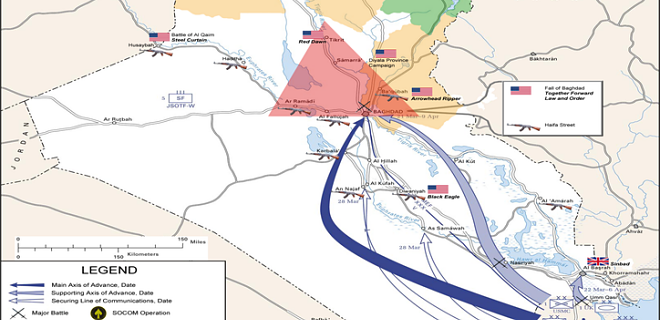
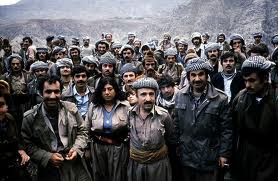
It sounded impossible, but there remained no other option for the north. In all, Cleveland commanded 3 Special Forces battalions (about 50 ODA’s), 2 from the 10th Special Forces Group and 1 from the 3rd to accomplish this.
First, he knew Anser Al-Islam beckoned. With the 280 men of Task Force Viking, along with a few thousand lightly armed Kurds, he prepared to launch an operation destined to become a classic in the annals of special warfare.
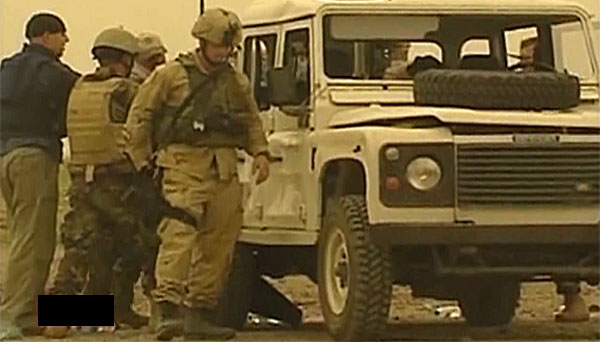
Touching down at an airbase in the north after a harrowing low level journey through a night riddled with antiaircraft fire, the men filed off, and boarded vehicles to take them to their chosen rebel units. Soon, many of the ODA’s sported beards and local attire, while others, wore their combat uniforms and retained the clean shaven, squared away look.
“We’re the army of the greatest power in the world. This is how we do things,” Lieutenant Colonel Bob Waltemeyer said.
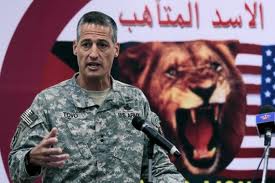
Cleveland divided the north into 2 sectors, placing Waltemeyer (10th SFG),in charge of one and Lieutenant Colonel Ken Tovo (10th SFG) ,the other. It was in Tovo’s sector that Ansar Al-Islam operated, and it would be up to the ODA’s, split from 12 men into groups of 4 and 6 to lead groups of 150 up to 1,000 rebels to crush them.
With the forces gathered, a meeting of American and Kurdish commanders occurred in Halabja. A large sand model lay before them with color coded prongs showing where each unit was to advance. This was the genesis of the Operation coined Viking Hammer, with the terrain over their march consisting of a vast plain that unfolded to the base of a mountainous region serving as the terrorists enclave.
In fact, some 160 square miles fell under Ansar Al-Islam’s control and for this; the most powerful weapon in the fight would prove not to be the AK 47, M4 or even the RPG, but the radio.
Each of the teams knew that coordinating such a large but primitive army required frequent communication in order to keep the advances from stalling and avoiding friendly fire. If they could pull it off and keep the tempo of movement steady, they stood a reasonable chance of pushing the terrorists from the mountains and freeing up forces for the bigger fight.
Viking Hammer began on March 28th, with officials at levels up to the White House monitoring reports coming from the teams as they commenced the advance across the plain toward the mountains and a valley called Sarget. Once they came into range, Al-Islam fighters rained a barrage of mortar fire from the snowy peaks into their ranks.
The Americans called in an airstrike to free the pinned down force at the base of the mountains. A pair of F-18’s roared in, plastering several mountain tops with laser guided bombs and making strafing runs. Mortars silenced, the force moved onward, firing as they fought for traction up the inclines.
All along the front, pockets of terrorists engaged more units joining the battle with automatic weapons and RPG’s. In one instant a veteran Special Forces team sergeant nicknamed “Grit” hauled a 70 pound Mark 19 grenade launcher into position and lobbed high explosive rounds at a machine gun on a nearby ridge, destroying its crew.
Team leaders kept up a steady stream of communications as the forces kept up their pace, cresting ridge after ridge slamming into of enemy positions, storming houses, blasting caves, then moving on to the next target.
There were no special tactics involved, as the Kurds were unable to understand them. Instead, it was one frontal assault after another, reminiscent of World War 1 style line abreast dashes across No Man’s Land.
This time though, it worked.
Through the next 2 days the teams veered and vectored their forces with pinpoint precision in close quarters combat, pushing the ever weakening enemy towards the Iranian border. Casualties remained light, while many Al-Islam fighters just abandoned their positions, giving up more territory, leaving hundreds of their dead comrades atop freezing mountains to be buried by a victorious army that existed only on paper a few days earlier.
With Ansar Al-Islam destroyed, Viking Hammer subsided then ended on March 30th. All enemy positions were swept clean and several towns liberated. In 2 of them, Sarget and Briya, forces found manuals and ingredients on how to make chemical weapons, antidotes, gas masks and hazard suits.
Identifications on many of the dead terrorists revealed a melting pot of fighters from all over the Arab world, with troves of documents linking Al-Islam to Al-Qaida, Hezbollah and Hamas.
Casualties among Al-Islam numbered in the hundreds including those killed in the March 21st strikes. U.S. forces suffered no casualties while Kurdish forces suffered 3 killed and 23 wounded, a testament to the effectiveness of battlefield coordination using only the spoken word.
For their actions 3 silver and 6 bronze stars were awarded
With more Kurdish fighters now joining them, Task Force Viking turned its attention to the Iraqi’s. They blew bridges, lay ambushes, and prevented them from racing south. Once units of the the 173rd Airborne descended from the sky, they linked up and secured the largest cities in the north, Kirkuk and Mosul, along with its 2 largest oil fields.
After Baghdad fell, Viking Hammer faded from memory. A growing Iraqi insurgency led to more assignments for ODA’s involved in the operation, spreading them out over the country.
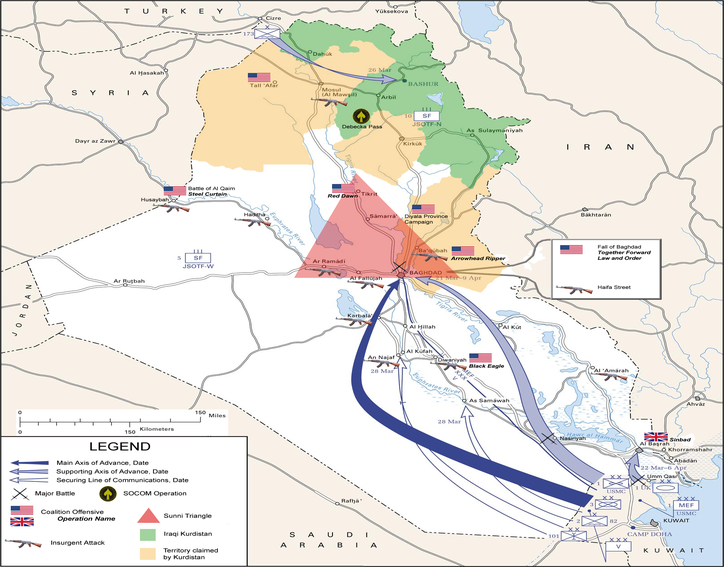
Difficult days lay ahead, but for the green berets of the ordeal, the memory of their success fills them with pride. They wiped out the world’s largest terrorist base with few losses, uncovered traces of the “Weapons of Mass Destruction”, and killed hundreds of veteran terrorists the process, leaving Ken Tovo, now a Major General, to say, perhaps, what they all felt.
“It was my most professionally satisfying mission”








COMMENTS