Aircraft capable of delivering punishing attacks on ground targets while retaining a good chance of surviving hits taken in return are going to remain in high demand worldwide.
Read the full article for more on:
Important insights and detailed analysis
Expert commentary on current events
Breaking developments and updates
Updating summary...
Russia’s A-10 Warthog: Why the Su-25 Frogfoot Is a flying tank
SOFREP News Team
Speed
1x
Listen
COMMENTS
Aircraft capable of delivering punishing attacks on ground targets while retaining a good chance of surviving hits taken in return are going to remain in high demand worldwide.
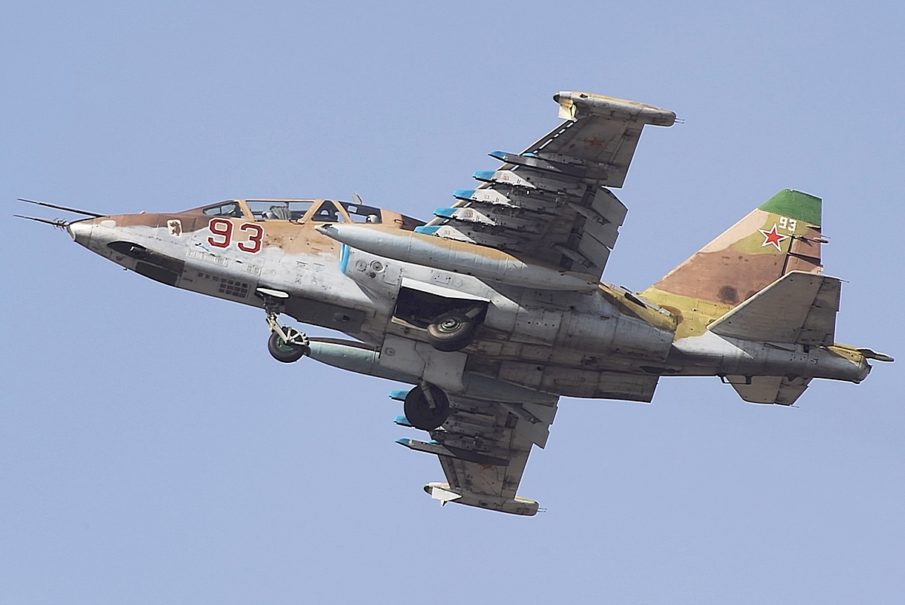
The Su-25 Frogfoot, known as the Grach or “Rook” by Russian pilots, is one of those aircraft that may not be at the cutting edge of technology, but still has seen widespread service around the world because it offers an effective and useful solution to the need to blast targets on the ground.
Also unlike the Thunderbolt, it has been disseminated it all over the world and seen action in over a dozen wars, including in the air campaigns over Syria, Iraq and Ukraine.
Advertisement
Not only has Russia had a lot of experience flying Su-25s in combat—it has shot several down as well.
Like the A-10, the Su-25 was all about winning a titanic clash between the ground forces of NATO and the Warsaw Pact by busting tanks and blasting infantry in Close Air Support missions. This meant flying low and slow to properly observe the battlefield and line up the plane for an attack run.
The Su-25 Frogfoot, known as the Grach or “Rook” by Russian pilots, is one of those aircraft that may not be at the cutting edge of technology, but still has seen widespread service around the world because it offers an effective and useful solution to the need to blast targets on the ground.
Also unlike the Thunderbolt, it has been disseminated it all over the world and seen action in over a dozen wars, including in the air campaigns over Syria, Iraq and Ukraine.
Not only has Russia had a lot of experience flying Su-25s in combat—it has shot several down as well.
Like the A-10, the Su-25 was all about winning a titanic clash between the ground forces of NATO and the Warsaw Pact by busting tanks and blasting infantry in Close Air Support missions. This meant flying low and slow to properly observe the battlefield and line up the plane for an attack run.









.jpg)
COMMENTS