
He taught patience the way monks teach faith, slow and relentless, until it lived inside you. He believed a sniper was a problem solver first, a trigger puller last. He believed that hard.
But 2010 was the year everything started fraying.
His marriage was collapsing back home, not with some dramatic bang, but the quiet drip that eats a man out from under his own feet.
He’d lose his wife over FaceTime, over missed birthdays, over another “you said you’d be home” that never held up against tasking. And on top of that, his belief in the mission and trust in military leadership was turning into quicksand.
Every month came with new rules of engagement (ROE) and new politics force-fed by the fat cats in Washington, far removed from the front lines.
Every week seemed to add another layer between the warfighter and the mission, if you could even call it that. Ask someone what America was doing in Afghanistan, and you were sure to get blank stares, like a dog staring at a ceiling fan.
That night raid was clean…on paper.
The target was a Taliban warlord named Zahir Kelmendi. Evil with a handshake. The kind of guy taking CIA cash with one hand while selling underage girls with the other.
We were staged, green-lit, ready to close. Then the radio crackled with that voice you never want to hear mid-stride.
Abort. Political sensitivities. New guidance from above.
Did Kelmendi cut a last-minute deal with the CIA? JSOC?
The extraction was a blur. Rotor wash, dust, headlamps slicing through the dark. I counted bodies in the chalk and Cal wasn’t there. Not on the ramp. Not behind the team. Not even jogging in late with that dead calm look he had when something wasn’t right.
He was simply gone.
Command didn’t call it desertion. They called it missing. Missing buys time to sort out the dirty laundry. Desertion buys headlines. I watched the brass choose the word they could control.
Next morning they summoned me to the tactical ops center (TOC).
“Reed,” the TOC commander said, using the name Cal used when he was teaching. “You’re going to find him. Bring him home if you can. Stop him if you have to. We can’t let this become a scandal.”
That’s the kind of order that makes your mouth go dry. You plan your whole career around targets, not mentors.
I just nodded and knew I had to go where they told me.
A quiet personal hell that few out of uniform would ever understand.
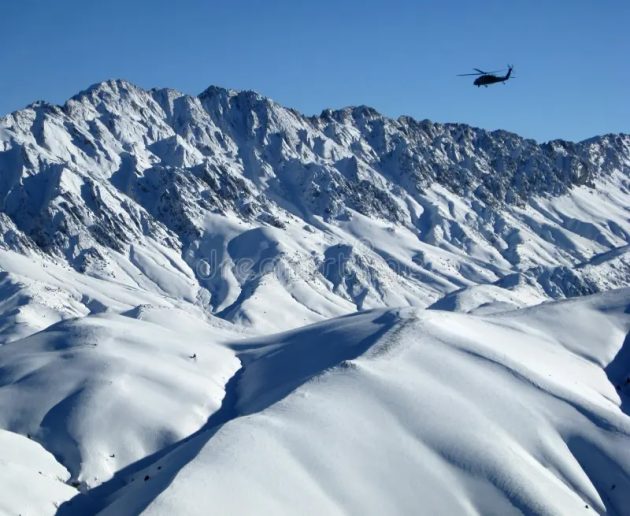
I inserted with two TF-160 little birds alone into the foothills of the Hindu Kush just before dawn.
Cold enough to crack your kneecaps. Air thin enough to hum in your ears. The ridgelines above were razor sharp and the snow caps looked like hounds teeth. I moved slow, letting the terrain settle, because Cal had always said the mountain decides whether you belong. You don’t conquer it. You negotiate with it.
By day two I was on his trail.
Cal walked with economy. Nothing wasted. His tracks were faint but there if you knew what to look for. A melted depression in snow where he’d slept. A stone turned at a slight wrong angle that meant “wind shift.” A carved notch on a tree trunk that meant “eyes on village.” They weren’t breadcrumbs. They were habits. The kind you can’t shut off even when you’re trying to disappear.
The trail led north. Higher. Toward the borderlands of Pakistan, where maps become rumors.

Down below, the war was eating itself from the inside.
Fuel trucks were just one of the Taliban’s side hustles.
Afghan commanders kept ghost soldiers on payroll, whole platoons that existed only on rosters so somebody could skim salaries.
Contractors paid protection money to the Taliban so convoys could roll unhit, which meant U.S. dollars were funding the same guys planting pressure plates on Route Ice.
The hawala markets in Kabul moved cash faster than any bank in the world. You’d hand over a stack and a password at Sarai Shahzada, pay a fee, and two hours later someone could pick up the same money in Dubai, Frankfurt, or Karachi. Legit for families and business. Also a perfect artery for laundering war money.
Everybody knew it. Everybody used it.
Even our side wasn’t immune. I’d watched regular soldiers sell their issued laptops to locals for beer money, claim the gear was “broken,” then pull brand-new replacements next supply cycle. Petty hustles in a giant river. But the river flows one direction.
And at the top end of that river, even Tier One guys in TEAM 6 weren’t saints.
You hit enough targets in a country like that and you start finding things that don’t go on any manifest. Gold bars tucked into false walls. Jewelry rolled inside prayer mats. Cash bricks hidden in goat sheds. When the war mattered, you’d turn it in, but that ship sailed many moons ago. You’d now see it get quietly traded. I heard about guys walking into Kabul, meeting a hawala broker behind a steel door, and swapping captured gold for U.S. cash at a “fair rate,” no receipts, no questions. Like if Lockheed and Raytheon can eat, why not the guys doing the killing? That’s not me defending it. That’s me describing the gravity.
The grey war pulls on everybody eventually.
You live in that long enough and your moral compass doesn’t snap. It spins. The needle goes wild and you stop trusting north.
The compass was long broken.
By day three the wind went dead calm. Too calm. I crested a ridge and saw Kelmendi’s compound down in the valley. A cluster of buildings tucked into the land like they’d been smuggled there. Smoke curling from a single chimney. No movement. No noise. Too clean for a village. Too deliberate for a tribal outpost.
I knew whose nest it was.
Zahir Kelmendi didn’t look like the movies. He looked like a businessman playing war because war was the best market in town. Trim beard. Pressed tunic. Eyes that didn’t waste movement. The briefing books called him a “local strongman.” Translation: he was dangerous in ways that don’t require gunfire. Fuel fraud, intel trafficking to both the Taliban and us, protection deals, and the kind of human trafficking that makes your stomach feel weak when you see it up close.
He was soft spoken, charming, and careful. That’s why he survived. Western journalists loved men like him because he could quote poetry and talk about peace. That veneer bought him time and legitimacy.
I low-crawled down the backside of the ridge, hugging the earth, and using dead space to stay concealed. I didn’t hear the man behind me until it was too late.
I’d been set up, but by who?
When I woke up, my wrists were tied tight enough that my fingers were numb, and my head ached from being smacked unconscious with the admin side of an AK-47.
The room was wrong in a way that rattled me.
Warm carpets layered thick. Lanterns glowing soft. The air smelled like cinnamon and cedar. The kind of comfort that makes your brain question whether you’re still in Afghanistan. Psychological warfare doesn’t start with pain. It starts with disorientation. I learned this at prisoner-of-war school.
Kelmendi sat across from me in a wooden chair with his legs calmly crossed like we were about to negotiate a land deal.
“You are looking for someone?,” he said in English better than half the officers I’d met. “The one who still believes there is a clean line.”
I didn’t answer. Silence is the only currency you control when you’re tied to a chair.
He poured chai tea and talked in a tone I’d expect from a banker. Calm. Reasonable. Not begging to be believed. Certain he was right.
He laid the war out like a ledger. Fuel trucks blown for reimbursements. Ghost soldiers padding payroll. Contractors paying the Taliban. Hawala money washing everything into clean hands before anyone could trace it. He spoke as if he was explaining gravity.
Then he brought in his guest.
Lila Hart walked in with a two-man camera crew and that polished confidence you see on talk shows. Celebrity journalist, activist, Taliban sympathizer, whatever label you want.
She’d built a career flying into conflict zones to narrate suffering for people who watched from couches. She believed she was documenting civilian misery. She believed Kelmendi was a complicated local leader caught between empires. He was hosting her, staging for her, and using her like a shield.
She looked at me like I was a stray animal in somebody else’s house. Kelmendi looked at her like she was proof of legitimacy.
“Tell her,” he said softly. “Tell her why you are here.”
I stayed quiet.
He stepped closer until I could smell his strong cologne. Not tribal. Imported. The businessman in him was real. That’s what made him scary. Crazy men are predictable. Rational predators are not.
“You will not be harmed,” he said. “Not yet. I want you to watch the truth with open eyes. Then you can return to your commanders and explain the war to them.”
He spoke like he was offering me a scholarship.
Outside, somewhere beyond the compound walls, I heard a dull thump. A distant bloom of light. Another staged convoy strike. Another reimbursement check being born in the dark.
Kelmendi smiled faintly, listening to it like a man listening to a cash register.
Then the air changed.
A muffled crack snapped through the night. Suppressed. Close.
Then another.
Then a long quiet that felt like the world holding its breath.
Kelmendi froze for half a heartbeat and tilted his head, not afraid, just curious. He knew what that sound meant.
The door behind him opened.
Cal Harlow stepped into the lantern light.
He looked thinner, mountain-sculpted, eyes clear and flat the way they got when he was working a problem. No adrenaline. No hesitation.
Lila sucked in a breath. She knew that face from stories, not from reality. Stories never teach you what it looks like when one predator walks into another predator’s house.
Cal didn’t look at me first. He looked at Kelmendi.
“Meeting is over,” Cal said.
Kelmendi smiled a small, almost respectful smile, like this was a meeting he’d anticipated.
“Master Chief,” Kelmendi said. “Your unit has made quite the mess in my region.”
Cal raised his rifle.
Kelmendi’s smile didn’t move.
“You will shoot me,” he said calmly, “and your student will walk away believing in you again. Or you will lower the weapon and listen to what I offer. Either way, you and I are the same kind of man now. We both live outside the story.”
Cal’s finger settled on the trigger.
I was still tied to the chair, watching two men who understood the war’s real math decide which version of it would survive.
The lantern flame trembled in a draft. Outside, the valley went quiet. And Cal’s rifle didn’t move.
Not yet.
(Short fiction by Brandon Webb. If you enjoyed this please let me know in the comments below.)
—
** Editor’s Note: Thinking about subscribing to SOFREP? You can do it now for only $1 for your first year. Pull the trigger on this amazing offer HERE. – GDM








COMMENTS