
The Clash With Hegseth
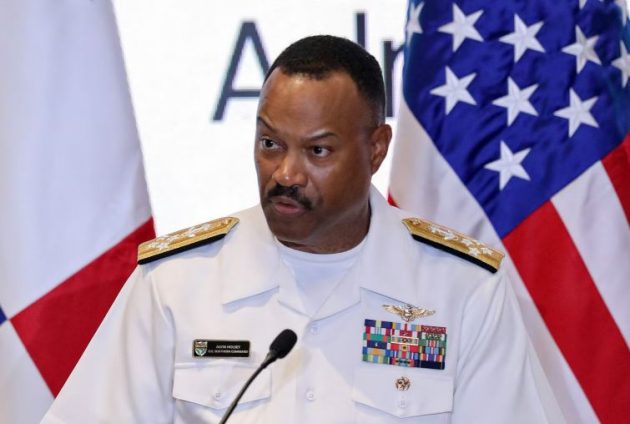
Several outlets quoting the Journal describe one exchange in which Hegseth allegedly told Holsey that he was either on the team or not and that when orders are given, you move quickly rather than question them. It is a reported account, not a transcript, but it fits with Hegseth’s broader pattern of action.
Since taking office, he has publicly warned that he intends to make leadership changes across the services. He has already removed or reassigned several senior officers. At the same time, he is under scrutiny for handling sensitive targeting information on an unsecured messaging app and for his role in shaping the very maritime campaign that has drawn international legal concern.
Civilian control of the military is essential. Civilian officials issue policy. Senior commanders execute it. But for the system to function, four-star officers must be able to raise legal or strategic concerns without risking the end of their careers. When a combatant commander leaves early after reportedly expressing caution about a campaign under global scrutiny, the silence that follows is not neutrality. It is instruction.
Why Candor at the Top Matters
Senior military leaders sit at the junction between civilian authority and the armed forces, and their responsibilities go beyond carrying out orders.
Civilian officials in the United States set policy and strategy, but their decisions only work as intended when they are informed by accurate military advice.
Generals and admirals are expected to provide unfiltered assessments of operational reality, legal and ethical implications, and risk calculations that civilian leaders cannot generate on their own. When they hesitate to speak candidly out of fear for their careers, civilian control still exists in form, but it operates without the benefit of full military expertise.
Their oath is to the Constitution rather than to any individual president or secretary, and that oath carries specific obligations. Senior officers are expected to follow lawful orders, refuse unlawful ones, and raise concerns when the legality or practicality of a directive is uncertain. Silence meant to avoid personal consequences does not protect the institution. Instead, it increases the danger for junior personnel who must execute decisions at sea, in the air, or on the ground and who may bear the legal and moral weight if those decisions cross a line.
Lessons from History and the Culture Below
History offers multiple examples where incomplete or muted military advice contributed to strategic failure, from escalation in Vietnam to misjudged operations like the Bay of Pigs and the planning for the 2003 Iraq invasion. In each case, there were officers who saw risks more clearly than the political narrative surrounding them, but whose warnings either were not pressed firmly or were softened to avoid conflict with civilian superiors. When those closest to the operational reality stop speaking frankly, outcomes become harder to control and harder to explain.
The behavior of senior leaders also shapes the culture beneath them. If four-star officers appear reluctant to raise concerns, officers at lower levels quickly absorb the lesson that candor is dangerous. Over time, a military that avoids hard truths begins to function like a cautious bureaucracy rather than a professional force trusted to manage lethal power.
Healthy civil–military relations depend on an ongoing, sometimes uncomfortable tension between civilian intent, military expertise, legal boundaries, and operational realities. That tension is expected and often useful. Fear and self-censorship are not.
Speaking Up as a Safeguard
Seen in that light, senior commanders who voice concerns are not automatically defying civilian leadership. In many cases, they are performing a core part of their role: advising, warning, and helping elected leaders avoid missteps that could damage national interests, strain alliances, or violate the law. Their willingness to speak up is not a courtesy. It is one of the safeguards that keeps the larger system functioning as designed.
And this is not me saying that I am against taking out the narco terrorist boats leaving Venezuela. Not at all.
It is me saying that senior officers should not be afraid to engage in respectful dialogue with their superiors. It is not insubordination; it is a professional responsibility. I have done this in both my military and civilian careers with varying degrees of success. It is not easy to maintain the courage of one’s convictions, but it must be done if one is to be true to oneself.
Why This Story Matters Now
The region is volatile. Venezuela has mobilized forces. Smuggling networks are shifting to avoid U.S. patrols. Caribbean governments are watching for signs that Washington can manage force without tipping into wider confrontation. Removing the top U.S. commander in the hemisphere at such a moment was not a small step.
If the Journal’s reporting is accurate, Holsey’s caution collided with an administration intent on speed and decisive force. In that collision, only one of the two men kept his job. The message to every senior officer was unmistakable.
This is more than a personnel change. It is a live test of whether the military’s senior leaders can still voice concerns when the legal and strategic picture becomes cloudy. The stakes are not theoretical. They are playing out on fast boats, in contested waters, and in decisions made in Washington that carry real consequences for both the hemisphere and the world at large.
When a commander steps aside under pressure in the middle of an active campaign, the question is no longer whether the operation will continue. It is whether the guardrails meant to govern it are still strong enough to matter.








COMMENTS