


So yes, Machado got out. Big deal, historically and politically. But the real story for SOFREP door kickers is Bryan Stern and Grey Bull Rescue doing what they always do. They go into contested space, solve problems, and leave before the smoke clears.
For these guys, the more dangerous the better. Not because it is fun, but because that is where people get stuck and where hesitation kills.
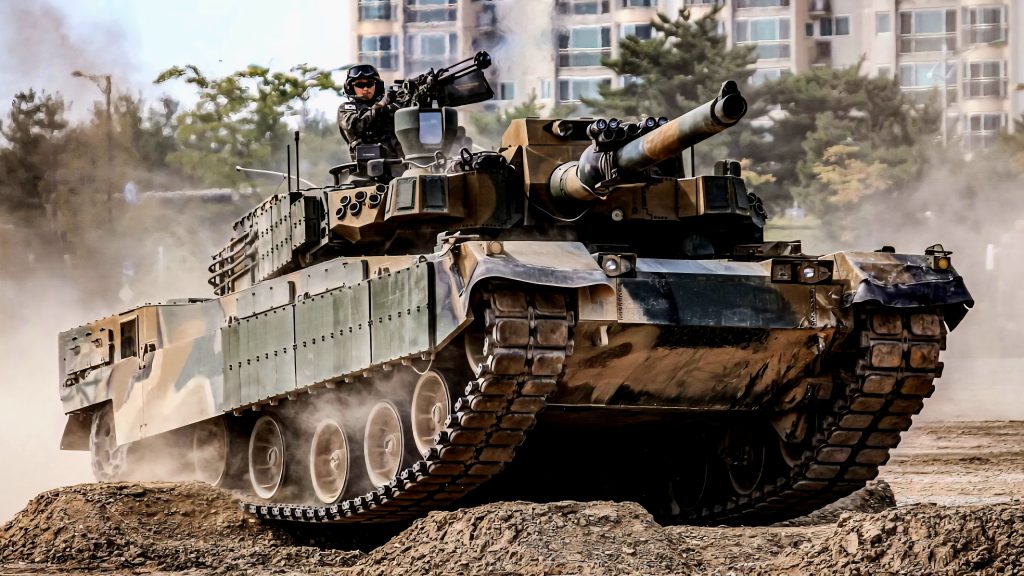
Peru Buys a War Plan: Tanks from Korea
Peru’s decision to buy nearly 200 Korean armored vehicles is the kind of move that looks responsible on a procurement slide deck and a little reckless when you zoom out. While the world is already choking on crises, Lima is leaning into a very old South American habit: gearing up for the war nobody says out loud, but everybody keeps planning for.
Peru’s new Korean armor
Peru has a framework deal with South Korea for roughly 195 vehicles, including about fifty-plus K2 Black Panther main battle tanks and more than a hundred K808 wheeled armored vehicles. The goal is to replace its worn-out T-55s and other Cold War leftovers.
The K2 is a modern 120 mm main gun tank with digital fire control, modern sensors, and the kind of protection and battlefield awareness you buy when you expect to face real armor, real anti-tank weapons, and real combined-arms formations. Put K2s into Peruvian units that train for the Andes and the main routes that actually shape maneuver in the region, and the signal is plain: the army wants to be able to fight a modern ground war, not just roll heavy metal to intimidate criminals or handle internal unrest.
Officials will call it “modernization,” “interoperability,” and all the usual calming language. Strip away the buzzwords, and you’re left with this: Peru is buying first-tier armor in a neighborhood that has history, grudges, and borders that have gotten hot before.
Defense cooperation between South Korea and Peru is accelerating.
Peru has officially expressed its decision to procure the K2 main battle tank. On December 10, the South Korean government announced that a Framework Agreement had been signed to supply 54 K2 tanks and 141 K808… pic.twitter.com/cd6JL1Td5p
— 360ANAVY (@NavyWor) December 9, 2025
Two-front ghosts: Chile and Ecuador
Peru’s map has Chile to the south and Ecuador to the north. Peruvian planners have spent generations treating that as a potential two-front problem.
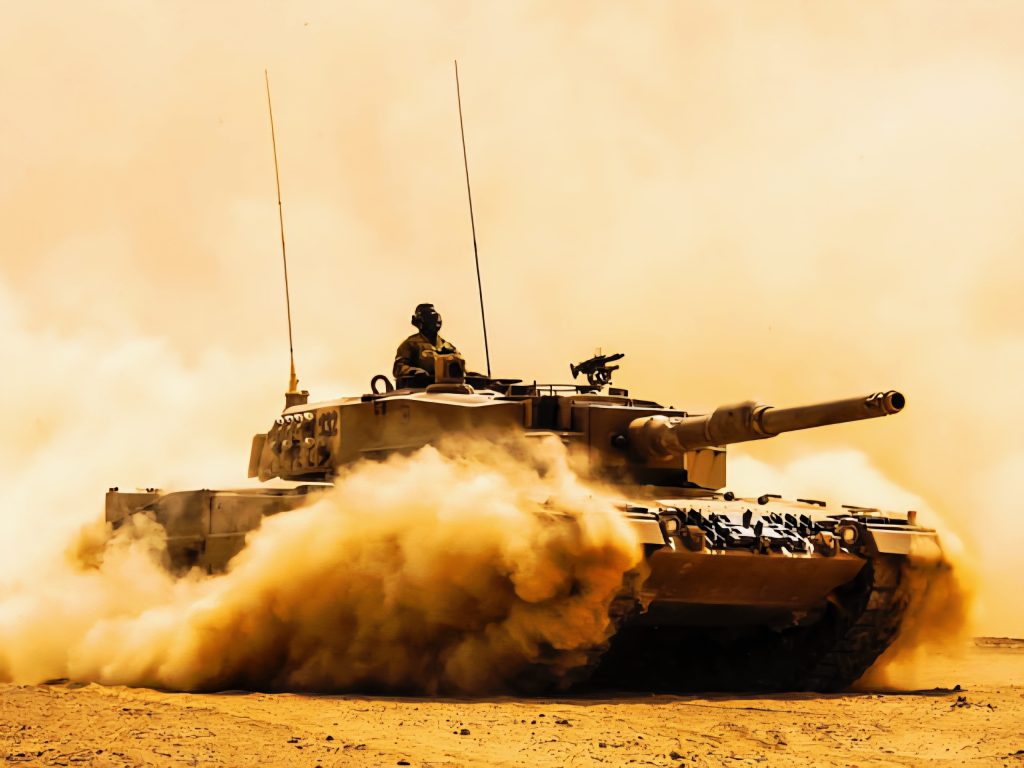
Chile is the deep scar. The War of the Pacific (1879–1883) ended with Chile occupying Lima and Peru losing territory. That defeat never fully faded from Peruvian doctrine or political memory. Chile today fields one of the sharper armored forces in Latin America, built around Leopard 2A4CHL tanks and supported by older Leopard 1-based platforms and modern infantry fighting vehicles. Santiago has kept its Leopard fleet relevant with upgrades to sights, fire control, and protection. In blunt terms, Peru has lived for decades with one ugly planning question: if Chile ever comes calling again, are we outgunned before the first shot?
Ecuador is the persistent northern headache. Peru and Ecuador exchanged fire more than once over disputed borders, most recently in the 1990s. Ecuador’s armor has generally been lighter and older, but geography makes that less comforting than it sounds. In narrow valleys, mountain passes, and jungle approaches, mobility and mass can beat expensive hardware if the fight is forced into ugly terrain. Peruvian doctrine has long assumed it might need credible strength on both fronts. Buying K2s fits that logic.
Everyone is “modernizing,” nobody is de-escalating
Chile is not standing still. It has continued upgrades across its ground and air forces, including sustaining its Leopard fleet and keeping its F-16 force credible. Brazil has its own armor and artillery programs. Colombia focuses more on internal security, but it modernizes too. Ecuador, even while getting hammered by criminal violence and economic stress, is investing in armored vehicles for internal operations.
Nobody will say, “We’re preparing to smash our neighbor.” But that is what main battle tanks are built for. There is no realistic cartel problem that requires a 55-ton MBT with hunter-killer sights and modern fire control. These are state-on-state tools, whether the mission is deterrence or use.
The irritation under the numbers
On one level, Peru’s move is logical. Its old tanks are done. Chile has better armor. Ecuador has fought it before. A professional staff officer reading that balance sheet is going to ask for newer steel and better sensors.
On another level, it’s hard not to notice the timing and the priorities. These are not wealthy countries. Peru is dealing with political instability, poverty, and crime. Ecuador is fighting something that looks like a criminal insurgency. Chile has its own domestic pressures. Yet the regional reflex remains: keep the border war option modern and ready, just in case.
Peru’s Korean tanks will not start a war by themselves. But they do add another brick to a wall Latin America keeps rebuilding: a region that insists it’s peaceful while quietly refreshing the equipment that makes the next border crisis deadly instead of loud. And in a year when the rest of the planet is already overloaded with conflict, that contradiction lands with a sharp edge.
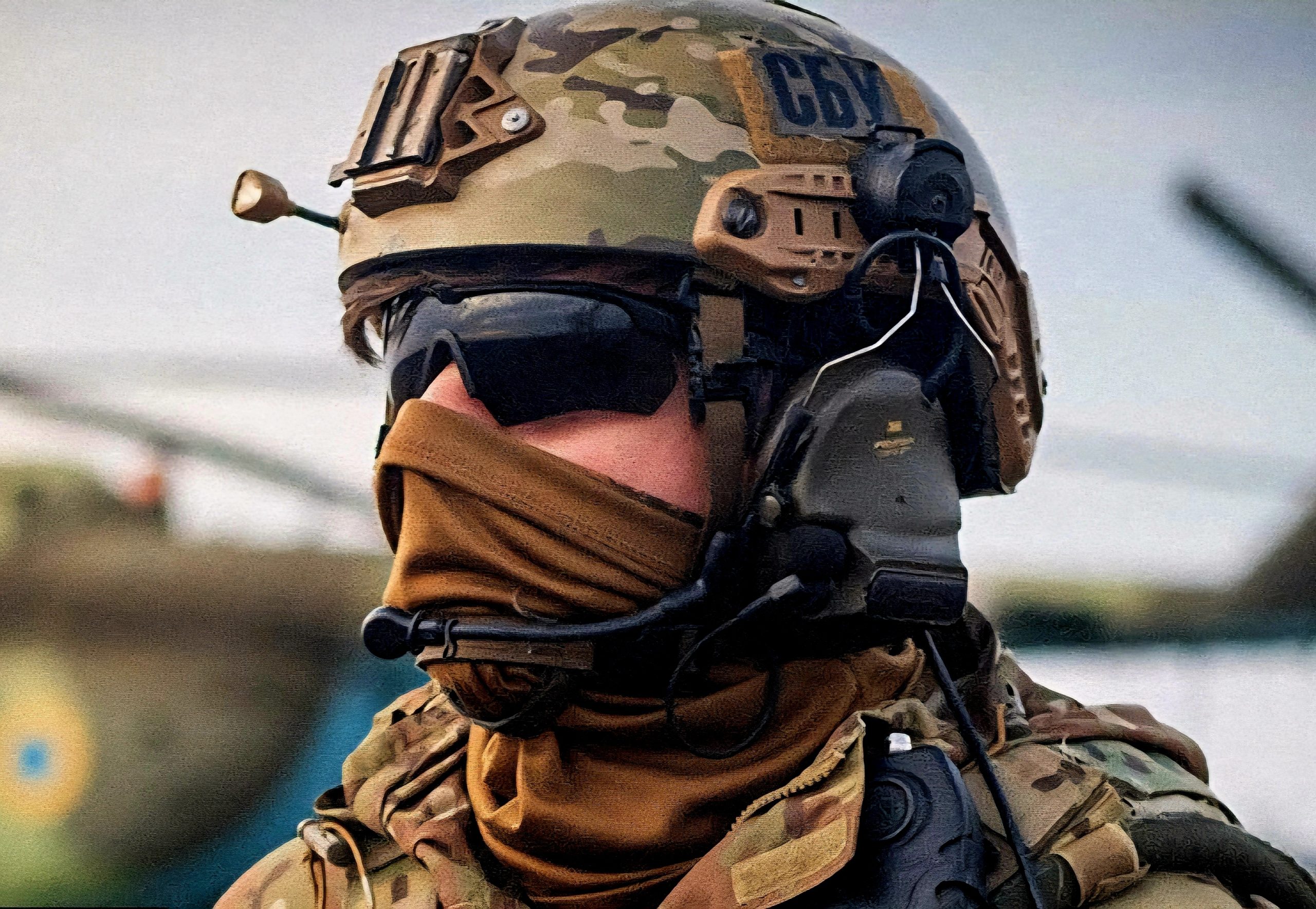
Ukraine’s Caspian Strike Wasn’t About Drones. It Was About Operators.
Strip away the headlines and the hardware, and the reported Ukrainian strike on Russia’s Caspian oil infrastructure reads like a familiar story to anyone who has kicked doors for a living. This was not a tech demo. It was access, planning, and people willing to push into places the enemy assumes are safe.
Open-source reporting says Ukraine’s Security Service (SBU) used long-range drones to hit the Filanovsky field in the Caspian Sea around December 10–11. Reuters and Bloomberg both reported the claim while noting key limits: neither outlet could independently verify the damage, and Lukoil did not confirm.
Some reports include a second platform. Reuters cited an SBU official who claimed drones also struck the Korchagin facility and later referenced a further claimed strike, but those add-ons remain unverified in open sources and are not consistently repeated across reporting. For credibility, the cleanest, best-supported focus is Filanovsky, with any additional targets treated as claimed.
Now the part door kickers should care about: who can pull something like this off.
Ukrainian outlet Ukrinform attributed the operation to the SBU’s Alpha Special Operations Center. Alpha is not a desk unit. It is built for the overlap of intelligence and direct action, the zone where planning, tradecraft, and violence all touch.
The Caspian is more than 700 kilometers from Ukraine’s nearest border. That distance is the story. It means somebody solved routing, timing, signatures, and defenses. Somebody studied Russian radar coverage, maritime patterns, and internal security assumptions, then found seams. That is operator work, even if the final punch came from an unmanned system.
🚨🇷🇺🇺🇦 UKRAINE HITS RUSSIAN SHIPS INSIDE THE CASPIAN WITH LOCAL RESISTANCE HELP
Ukraine just claimed one of its boldest long-range ops yet: striking two Russian military cargo ships in the Caspian Sea using intel and support from resistance forces inside the region.
The ships… pic.twitter.com/vrbFRmt8aA
— Mario Nawfal (@MarioNawfal) December 12, 2025
Filanovsky is not a throwaway target. Lukoil lists recoverable reserves of about 129 million tonnes of oil and 30 billion cubic meters of gas for the project. If Bloomberg’s sourcing is accurate, the platform took at least four hits, and output from more than 20 wells was halted, though that assessment also remains unverified independently.
Ukraine has spent 2025 hitting Russian energy nodes to squeeze revenue and logistics. Reuters analysis earlier this year showed those strikes could temporarily knock large portions of refining capacity offline during peak disruption windows. Offshore infrastructure is a harder problem set: isolated, specialized, and expensive to defend without thinning coverage elsewhere.
There is no independently authenticated drone approach footage tied to this incident, and Russia has not publicly offered a detailed Caspian damage assessment in the reporting cited here.
For door kickers, the takeaway is simple: “rear area” is a comfort story commanders tell themselves. When you’ve got a unit that can plan deep and move fast, distance is just another obstacle to breach.
—
** Editor’s Note: Thinking about subscribing to SOFREP? You can support Veteran Journalism & do it now for only $1 for your first year. Pull the trigger on this amazing offer HERE. – GDM








COMMENTS