Military

Who Is the 11th Airborne Division and Why Was It Put on Alert for Minnesota

The reactivated 11th Airborne Division, Alaska-based and built for Arctic warfighting, was placed on standby for Minnesota because it offers fast-deploying Title 10 combat power with cold-weather mobility and a high-end escalation signal even though many readers know far more about the 82nd and 101st.

When the Pentagon put roughly 1,500 active-duty Army soldiers on standby for a potential deployment to Minnesota, the unit named was not the 82nd Airborne or the 101st Airborne. It was the 11th Airborne Division, a formation most Americans have barely heard of.

Advertisement

The modern 11th Airborne Division, nicknamed the Arctic Angels, is headquartered at Joint Base Elmendorf-Richardson in Alaska. It was formally reactivated on June 6, 2022, after being inactive for more than six decades. The division exists for one purpose: fighting and winning in extreme cold, austere terrain, and high-threat environments tied to Russian and Chinese activity in the Arctic and the Pacific.

Historically, the 11th Airborne earned its reputation in World War II, fighting as a combined airborne and light infantry division in the Pacific. It conducted jungle operations and airborne assaults in New Guinea and the Philippines, including the famous 1945 jump at Tagaytay Ridge. After the war and a short post-Korea existence, the division was inactivated in 1958. From that point until 2022, the 11th Airborne existed only as lineage and honors.

Because of that long dormancy, the division had no combat deployments during the Global War on Terror. While the 82nd and 101st rotated repeatedly through Iraq and Afghanistan, the 11th Airborne did not deploy as a division because it did not exist as an operational headquarters. That often leads to confusion.

Advertisement

The soldiers themselves are not inexperienced. The battalions placed on standby for Minnesota come primarily from the 1st Brigade Combat Team, which includes infantry units that previously served under the 25th Infantry Division.

Those same battalions deployed to Iraq and Afghanistan during the GWOT era, just wearing different patches. The experience is there, even if the division patch is new.

Advertisement

What is new is the mission. The reactivated 11th Airborne is the Department of War’s designated Arctic warfare force. Its units train to operate in temperatures below minus 60 degrees, move over snow and ice, build ice bridges, conduct air assaults in whiteout conditions, and survive without infrastructure. They train for long-range movement, isolation, and command and control under stress. This is not crowd-control training. This is combat preparation.

This is where the division’s selection stands out.

Placing an Arctic, Pacific-focused, Title 10 combat division on prepare-to-deploy orders for a domestic contingency sends a deliberate signal. It tells state leadership and protest organizers that the federal government is not just leaning on local law enforcement or the National Guard. It is signaling readiness to escalate to forces built for worst-case scenarios if legal thresholds are crossed.

Advertisement

The 11th Airborne has not conducted domestic security operations since World War II-era homeland defense missions. Its current soldiers train for peer conflict, not riot lines. Using them as a standby force is about leverage and deterrence.

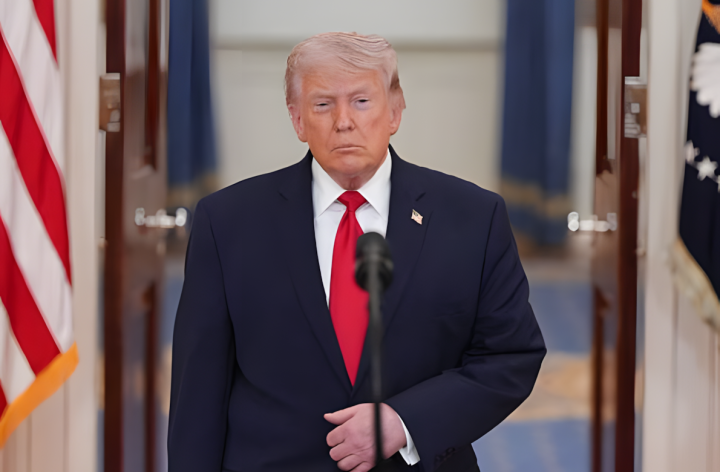
In plain terms, the Trump administration selected the 11th Airborne because it brings rapid-response combat power, winter mobility, and Title 10 readiness – for scenarios far beyond riot control.

That alone tells you how high the stakes are. To be clear on what “far beyond riot control” actually means, this refers to the legal and operational leap from standard civil disturbance response to full Insurrection Act authority under 10 U.S.C. §§ 251-255. Regular Army units like the 11th Airborne operate under Title 10, which bars direct law enforcement on U.S. soil unless the President invokes the Insurrection Act. That unlocks arrest powers, searches, seizures, and rules of engagement including deadly force against armed insurrectionists – powers the National Guard lacks without federal activation. The 11th Airborne is not a military police unit. Its paratroopers train for jungle assaults, arctic patrols, and peer-level combat against Russian or Chinese forces, not de-escalating crowds with batons. Deploying them signals readiness for block-by-block urban clearing, Stryker-mounted advances through barricades, and sustained ops against heavily armed threats –scenarios echoing their WWII Philippines campaigns, not 2020 protest lines. Historical precedent underscores the stakes. In Little Rock (1957), Eisenhower sent the 101st Airborne under Insurrection Act to enforce court orders against armed resistance. During the 1992 LA Riots, Marines and regular Army units took direct action. Selecting Alaska’s Arctic Angels, whose last domestic mission was WWII coastal defense, tells governors, protesters, and militias alike: federal combat power stands ready if thresholds cross from unrest to rebellion.  
Advertisement

What readers are saying

Generating a quick summary of the conversation...

This summary is AI-generated. AI can make mistakes and this summary is not a replacement for reading the comments.