News

Morning Brief: Saudi Air Defenses, LA Anti‑ICE Protests, Nigeria Drone Fight, Syria SDF Claim, MS‑13 Killer Freed

Saudi air defenses can’t realistically stop massed Iranian missile salvos, anti‑ICE protests in LA are escalating into physical attacks, Nigeria is urgently countering terrorist drones, Damascus blames the SDF for a major FPV drone strike near Kobani, and a Nevada federal judge just ordered the release of a convicted MS‑13 murderer from ICE custody, reigniting the immigration enforcement‑due process clash.

Saudi Arabia’s Patriot Buy Won’t Stop Iran’s Missiles

Saudi Arabia’s decision to spend roughly $9 billion on additional Patriot missile systems is being framed as a major step toward strengthening its air defenses. In reality, it is more about reassurance than solving the core military problem posed by Iran’s missile and drone arsenal.

Advertisement

After receiving a masterclass in missile warfare from one of our esteemed contributors, I have drastically changed my tone in regards to the threat Iran poses.

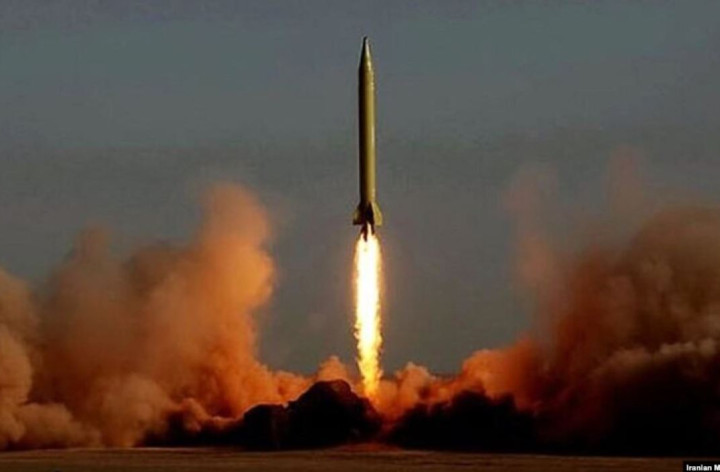
Iran fields one of the largest missile forces in the region, with thousands of short‑ and medium‑range ballistic missiles, a growing cruise missile inventory, and large numbers of one‑way attack drones. These systems are designed to be mobile, launched in waves, and mixed with decoys to overwhelm air defenses rather than fight them head‑to‑head.

Patriot PAC‑3 and PAC‑3 MSE interceptors are capable systems. They perform well against limited numbers of incoming targets and have proven effective when defending specific sites. What they are not built for is stopping massed salvos. A Patriot battery carries a finite number of interceptors, and each engagement burns through missiles quickly. Even a large Saudi purchase cannot create the magazine depth needed to defend airfields, ports, oil facilities, and cities against a sustained Iranian strike.

Advertisement

Iranian doctrine does not require total destruction to succeed. It only needs enough missiles to get through. Cratering runways, disrupting logistics hubs, or damaging energy infrastructure would achieve strategic effects long before air defenses run dry. In that context, Patriot systems function as localized shields, useful for protecting a handful of high‑value targets but unable to provide broad coverage across the kingdom.

Saudi leadership understands this reality.

Advertisement

The Patriot buy sends a message of alliance strength and continued U.S. backing. It also buys some protection against limited attacks or isolated strikes. What it does not buy is immunity.

For military professionals, the lesson is familiar. Defense is expensive, offense is scalable, and missile defense always runs out of interceptors before the attacker runs out of launchers. If Iran ever chose to fully employ its missile and drone capabilities, no realistic number of Patriot systems would stop it. Saudi Arabia would once again be relying on deterrence, diplomacy, and the hope that escalation never reaches that point.


Advertisement
Anti-Immigration and Customs Enforcement protest in Los Angeles. Image Credit: Hawkcentral

Dumpster Incident Highlights Escalation in Anti-ICE Protests in Los Angeles

Video and photos circulating from downtown Los Angeles show a large crowd pushing a commercial dumpster marked with “F— ICE” toward a line of law enforcement officers. The incident occurred during protests tied to immigration enforcement and federal presence in the city, and it reflects a familiar pattern seen in recent years where demonstrations shift from symbolic protest to physical confrontation.

From a tactical standpoint, when crowds lack weapons or organized equipment, they turn to what is immediately available. Dumpsters, barricades, shopping carts, and construction materials are heavy, mobile, and difficult to stop once momentum builds.

Used this way, the object becomes both a moving barrier for protesters and a blunt-force threat to officers holding a line.

For law enforcement, that moment represents a clear escalation. Once a crowd begins maneuvering heavy objects toward officers, the situation moves out of the realm of protected speech and into active public safety risk. At that point, police responses typically shift toward creating distance through baton lines, mounted units, or less-lethal munitions to prevent a breach that could injure officers or people in the crowd.

The message on the dumpster is aimed squarely at Immigration and Customs Enforcement, but the confrontation itself is less about a single agency than about resistance to enforcement authority in general. ICE often serves as a focal point for broader anger over federal immigration policy, even when local law enforcement is the force physically present.

Scenes like this show how quickly protests can cross into disorder when emotions run high. Regardless of one’s views on immigration policy, pushing heavy objects toward officers in a dense urban environment creates real risk. Once that line is crossed, control of the street becomes the priority, and outcomes are driven less by slogans than by physics, crowd behavior, and the need to restore order.


Military working with the Federal Government to make communities safe and allowing displaced people to return home. Image Credit: Daily Post

Nigeria Moves to Counter Terrorist Drone Threat Amid Escalating Attacks

Nigeria’s Defence Headquarters in Abuja has confirmed that the military is intensifying efforts to identify and cut off terrorists’ access to unmaned aerial systems as violence in the northeast continues to evolve. Defence officials say probes into the supply and use of hostile drones have reached an advanced stage, and that inter‑agency cooperation is focused on tracing procurement channels and disrupting their deployment by non‑state actors.

In recent months, Islamist militants including Boko Haram and the Islamic State West Africa Province (ISWAP) have increasingly incorporated commercial drones into their operations. These UAVs have been used for reconnaissance and, in some attacks, to deliver improvised explosives against military positions.

Nigerian governors and security officials have publicly warned that the proliferation of armed drones represents a significant escalation in insurgent tactics, exposing vulnerabilities in the nation’s airspace security architecture.

The Nigerian military acknowledges growing concern over drones being adapted for hostile use across conflict‑affected regions of Borno, Yobe, and adjoining states.

Some recent assaults in the northeast have involved militants employing small unmanned systems in conjunction with ground attacks on army formations. Against this backdrop, Abuja is tightening controls on critical import and supply networks while enhancing its own defensive capabilities.

Part of the response includes investment in counter‑UAV systems and electronic‑warfare equipment designed to detect, jam, or otherwise neutralise hostile drones before they can strike troops or civilians. Nigerian forces have previously fielded systems such as the EDM4S “SkyWiper,” a portable jammer capable of interrupting drone control links.

As terrorists adopt low‑cost drone technology to bypass traditional air defences, Nigeria’s strategy emphasizes both interdiction of supply and integration of counter‑drone measures into ongoing counter‑insurgency operations.

The evolving threat underscores the need for adaptive tactics and technological solutions to confront non‑state actors leveraging unmanned systems in asymmetric warfare.


Richard F. Boulware II is a U.S. District Judge for the District of Nevada, appointed by President Barack Obama on June 10, 2014. Image Credit: Wikipedia

Federal Judge Orders Release of Convicted MS‑13 Murderer from ICE Custody

A federal judge in Nevada has ordered the release of a convicted murderer and documented MS‑13 gang member from immigration detention, reigniting debate over public safety, deportation authority, and the limits of immigration custody.

U.S. District Judge Richard F. Boulware II ruled that Harvey Laureano-Rosales, a 54-year-old El Salvadoran national, could not be lawfully held by Immigration and Customs Enforcement after more than two and a half years in detention under a final order of removal. Laureano-Rosales was convicted in the 1990s of first-degree murder, attempted murder, and multiple gang-related weapons offenses, serving roughly 25 years in prison before being paroled in late 2022.

Upon release from state custody, ICE immediately detained him and sought removal. Because Laureano-Rosales claims he would face torture or death if returned to El Salvador, the government attempted removal to Mexico as a third country. Those efforts stalled, leading the judge to rule that continued detention without a clear path to removal violated due process protections.

In his January 21, 2026 order, Judge Boulware directed DHS to release Laureano-Rosales under supervision and temporarily blocked deportation to Mexico until his claims under the Convention Against Torture are fully reviewed. The court acknowledged his violent criminal history and MS‑13 ties but noted prison records indicating he had debriefed from gang activity and completed his sentence.

Federal prosecutors strongly oppose the ruling. The U.S. Attorney’s Office for the District of Nevada argues that releasing a convicted MS‑13 murderer with a final removal order poses a serious public-safety risk and undermines immigration enforcement. Detention in these cases exists specifically to prevent dangerous offenders from reentering the community while removal is pending.

This case highlights the ongoing clash between aggressive deportation of criminal aliens and federal courts applying due process and humanitarian standards to limit indefinite detention. For cities like Las Vegas, the impact of such rulings is immediate and local. It affects public safety and the operational challenges of law enforcement.

Advertisement

What readers are saying

Generating a quick summary of the conversation...

This summary is AI-generated. AI can make mistakes and this summary is not a replacement for reading the comments.