On the battlefield, satellite internet services have played a critical role in maintaining connectivity for Ukrainian forces. Russian forces have sought to disrupt or degrade those systems through electronic warfare and other means. Analysts say control of communications networks has become a contested domain alongside land, air, and maritime operations.
Russian units, particularly volunteer formations and mobilized personnel, have relied heavily on commercial messaging platforms such as Telegram for coordination and information sharing. Any sustained technical restrictions could complicate the flow of unofficial battlefield reporting and internal commentary that has at times diverged from official Defense Ministry narratives.
At the same time, the Kremlin has moved to centralize wartime messaging. Western social media platforms including Facebook and Instagram have been restricted inside Russia. Domestic alternatives operate under closer state supervision. Telegram has remained accessible, occupying a distinct position in the Russian information ecosystem.
Independent reporting has cited users describing intermittent slowdowns and access issues. Russian officials have not announced a formal block, but Roskomnadzor has authority to impose bandwidth restrictions and require removal of content deemed unlawful under national security statutes.
Durov, who left Russia in 2014 and now holds multiple citizenships, has said Telegram removes explicit incitement to violence but does not engage in political censorship. He has positioned the company as an international platform operating beyond the jurisdiction of any single state.
The dispute reflects the increasing convergence of battlefield operations and digital information control. As the war in Ukraine continues, access to secure and rapid communications remains a strategic asset. Moves affecting Telegram’s functionality inside Russia could influence both domestic wartime discourse and the operational information environment relied upon by military personnel.

Trump Warns Iran of Consequences as U.S. Expands Military Presence
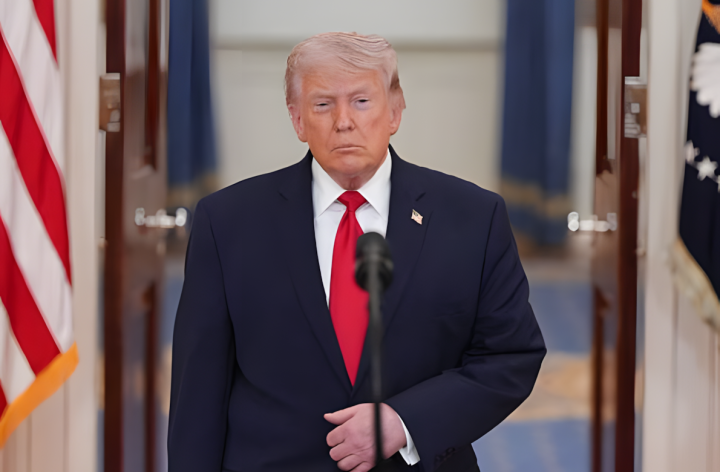
President Donald Trump warned Iran on Tuesday that the United States would impose “something very tough” if Tehran does not meet U.S. demands, as Washington strengthens its military posture in the Middle East.
Trump did not specify what actions would follow, but said the United States would respond decisively if Iran refused to comply. His remarks come as U.S. naval forces remain positioned in the region amid elevated tensions linked to Gaza and concerns over Iran-backed groups.
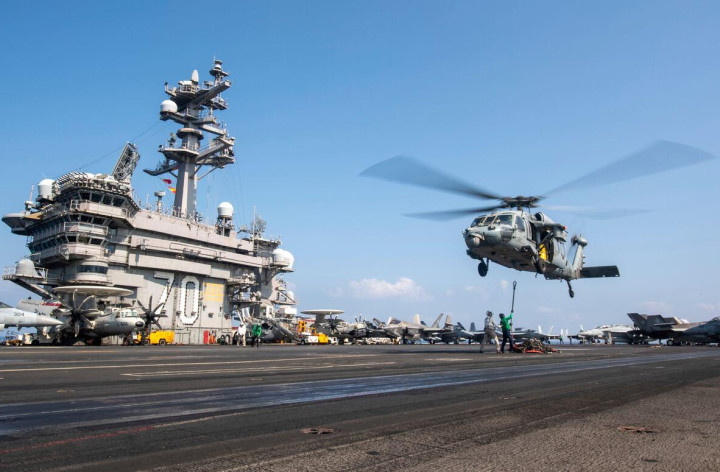
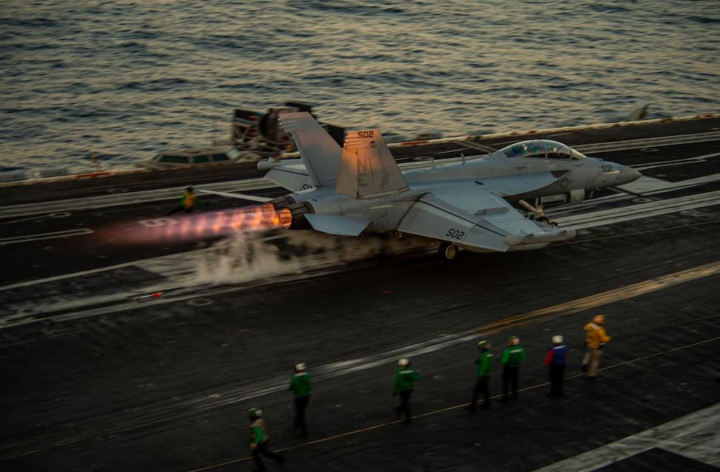
U.S. defense officials confirmed that an aircraft carrier strike group is operating in regional waters. Additional naval assets have been repositioned in recent weeks. The Pentagon described the deployments as precautionary and aimed at deterrence.
Diplomacy and Deterrence
The warning coincides with indirect diplomatic contacts between Washington and Tehran, including discussions facilitated by Oman. Officials from both sides have indicated that talks remain possible, though no agreement has been announced.
Iranian officials have said their nuclear program is peaceful and have rejected broader U.S. demands related to missile development and regional activity. Washington has maintained that Iran must curb its nuclear activities and address concerns over support for armed groups.
Israeli Prime Minister Benjamin Netanyahu is expected to meet with Trump in Washington, where Iran and the war in Gaza are anticipated to be central topics. Israeli officials have long advocated for increased pressure on Tehran.
U.S. officials said current force deployments are intended to deter escalation and protect American personnel and allies. No new sanctions or military operations have been formally announced.

Grand Jury Rejects Bid to Indict Democrats Over “Illegal Orders” Video
Federal prosecutors in Washington sought and failed to secure an indictment against six Democratic members of Congress who appeared in a video urging active-duty military and intelligence personnel to refuse unlawful orders, according to people familiar with the matter.
The effort was initiated by the U.S. attorney’s office in Washington, led by Jeanine Pirro, a longtime Trump ally, and asked the grand jury to consider felony charges under a law that criminalizes interference with military loyalty and morale, Reuters reported.
The lawmakers involved include Sens. Mark Kelly and Elissa Slotkin and Reps. Jason Crow, Maggie Goodlander, Chris Deluzio, and Chrissy Houlahan, all of whom have prior military or national security backgrounds.
Investigation Followed Trump Backlash
The case grew out of a video released months earlier in which the lawmakers cited existing military law and doctrine requiring service members to disobey unlawful orders. After the video circulated, Trump denounced it publicly and characterized it as an attack on military discipline, according to reporting describing his reaction.
After the grand jury declined to indict, the lawmakers and their allies described the prosecution effort as politically motivated. The Justice Department has not publicly detailed its rationale for pursuing the case.

Ethiopia Hosting RSF Training Site, Sources Say, as Sudan War Draws in Regional Backers
Ethiopia is hosting a covert camp to train thousands of fighters for Sudan’s Rapid Support Forces, according to a Reuters investigation that cited Ethiopian officials, diplomats, and satellite imagery showing an expanding site near the Sudan border.
Reuters reported the camp is in Ethiopia’s western Benishangul-Gumuz region, in a district called Menge, about 32 kilometers from the Sudan border, and that activity accelerated in October with the arrival of vehicles, heavy trucks, RSF units, and what a diplomatic cable described as UAE trainers.
Eight sources, including a senior Ethiopian government official, told Reuters the United Arab Emirates financed construction of the camp and provided trainers and logistical support; Reuters said it could not independently verify UAE involvement or the purpose of the camp. The UAE foreign ministry denied being party to the conflict or involved in hostilities.
An internal Ethiopian security note seen by Reuters said about 4,300 RSF fighters were undergoing training at the site as of early January and that their logistical and military supplies were being provided by the UAE.
Airfield Upgrades and Drone Infrastructure
Reuters also reported new construction at Asosa airport, about 53 kilometers from the camp, including a new hangar and paved aprons, plus infrastructure that experts identified as consistent with a UAV ground control station and a satellite antenna. A diplomatic source told Reuters the airfield work aligned with an Ethiopian military plan to shift aerial basing toward the western flank, with regional officials voicing concern about the proximity to the Grand Ethiopian Renaissance Dam.
Reuters cited a Western military analyst and other sources who said the airport had become instrumental in supplying the RSF across the border. Reuters also reported claims from a senior Ethiopian official and a security analyst that the UAE paid for the airport refurbishment, which Reuters said it could not independently verify.
Why It Matters to the War in Sudan
The reported training pipeline would provide the RSF a sustained flow of personnel as fighting spreads in Sudan’s south, including Blue Nile state, where officials told Reuters some trainees were expected to deploy and that hundreds may already have crossed in recent weeks.
Sudan’s war began in April 2023 after a power struggle between the Sudanese Armed Forces and the RSF derailed a planned transition to civilian rule. The conflict has produced mass displacement, famine conditions in parts of the country, and widespread reports of atrocities.
The Reuters findings add detail to long-running accusations that external backers are fueling the war with money, arms, and training. Reuters noted Sudan’s army has accused the UAE of supplying the RSF, an allegation Abu Dhabi has denied, and said U.N. experts and U.S. lawmakers have previously found the claim credible.
U.N. Rights Chief Calls for Wider Arms Embargo
U.N. High Commissioner for Human Rights Volker Türk told member states in Geneva that the international community must act urgently to prevent further atrocities and pressed for extending an existing arms embargo from Darfur to all of Sudan, citing what he called a “continuous inflow of weapons.”
Türk described survivor testimony from El Fasher in North Darfur, including accounts of mass killings and summary executions, sexual violence, arbitrary detention, and ethnic targeting. He said drone strikes by both sides have disrupted power and water supplies and cited damage to the Merowe dam and hydroelectric facility, which he said once supplied a large share of Sudan’s electricity.
Türk warned that advanced drone systems are increasingly shaping the conflict and that civilians remain at risk as fighting expands beyond Darfur into other regions.


COMMENTS