

Neither side has signaled a shift in stated objectives. Russian officials maintain that operations will continue until strategic goals are achieved. Zelenskyy has reiterated that any eventual settlement must preserve Ukraine’s sovereignty and territorial integrity.
SBU Warns of Russian Attempts to Disrupt Starlink Communications
Ukraine’s Security Service (SBU) said it has issued warnings to holders of Ukrainian phone numbers about Russian attempts to recruit civilians to interfere with Starlink satellite terminals.
According to the SBU, Russian operatives have offered financial incentives to register, relocate, or block Starlink terminals in occupied or frontline-adjacent areas. The agency said such actions could disrupt military communications and expose Ukrainian unit positions.
Starlink systems, operated by SpaceX, were activated in Ukraine shortly after Russia’s full-scale invasion in 2022 and have become central to battlefield coordination, supporting drone operations, fire control, and command communications.
SpaceX has stated that it works to prevent Russian military use of the system and has restricted service in certain occupied territories. Russian forces have previously attempted to acquire terminals through intermediaries and have used electronic warfare to jam or locate signals.
The SBU described the alleged recruitment effort as part of a broader attempt to degrade Ukraine’s communications infrastructure by exploiting civilians. Officials urged citizens to report suspicious contacts and warned that cooperation could carry criminal liability under Ukrainian law.
Long-Range Strikes and Infrastructure Targeting Continue
Russian forces launched about 20 Iskander-M ballistic missiles overnight, targeting Kyiv, Dnipro, Pavlohrad and Lozova, according to reports. pic.twitter.com/f9dAoUIQ8Y
— Geopoliti𝕏 Monitor (@GeopolitixM) February 12, 2026
Overnight exchanges of drones and missiles continued.
Ukrainian authorities reported that Russian forces launched waves of drones and missiles targeting energy facilities and industrial infrastructure in several regions. Air defense systems intercepted many incoming projectiles, though some strikes caused localized damage and temporary disruptions.
In parallel, Ukrainian officials reported drone strikes targeting Russian ammunition depots and fuel storage sites in occupied territory. Russian regional authorities confirmed several drone incursions and stated that air defenses intercepted most systems.
Prisoner exchanges proceeded in limited numbers during the reporting period. Ukrainian authorities confirmed the return of captured service members in a mediated swap. Moscow acknowledged the exchange without providing detailed figures.
Civilian evacuations continued from frontline settlements in Donetsk and Kharkiv regions as artillery and drone strikes persisted. Local administrations reported casualties and structural damage.
As the war moves deeper into its fourth year, Ukraine’s electoral timetable remains directly linked to the duration of martial law and the trajectory of combat operations. On Day 1450, the operational pattern remains defined by sustained artillery pressure, incremental ground assaults, expanding drone warfare, and the continued strain of prolonged conflict.
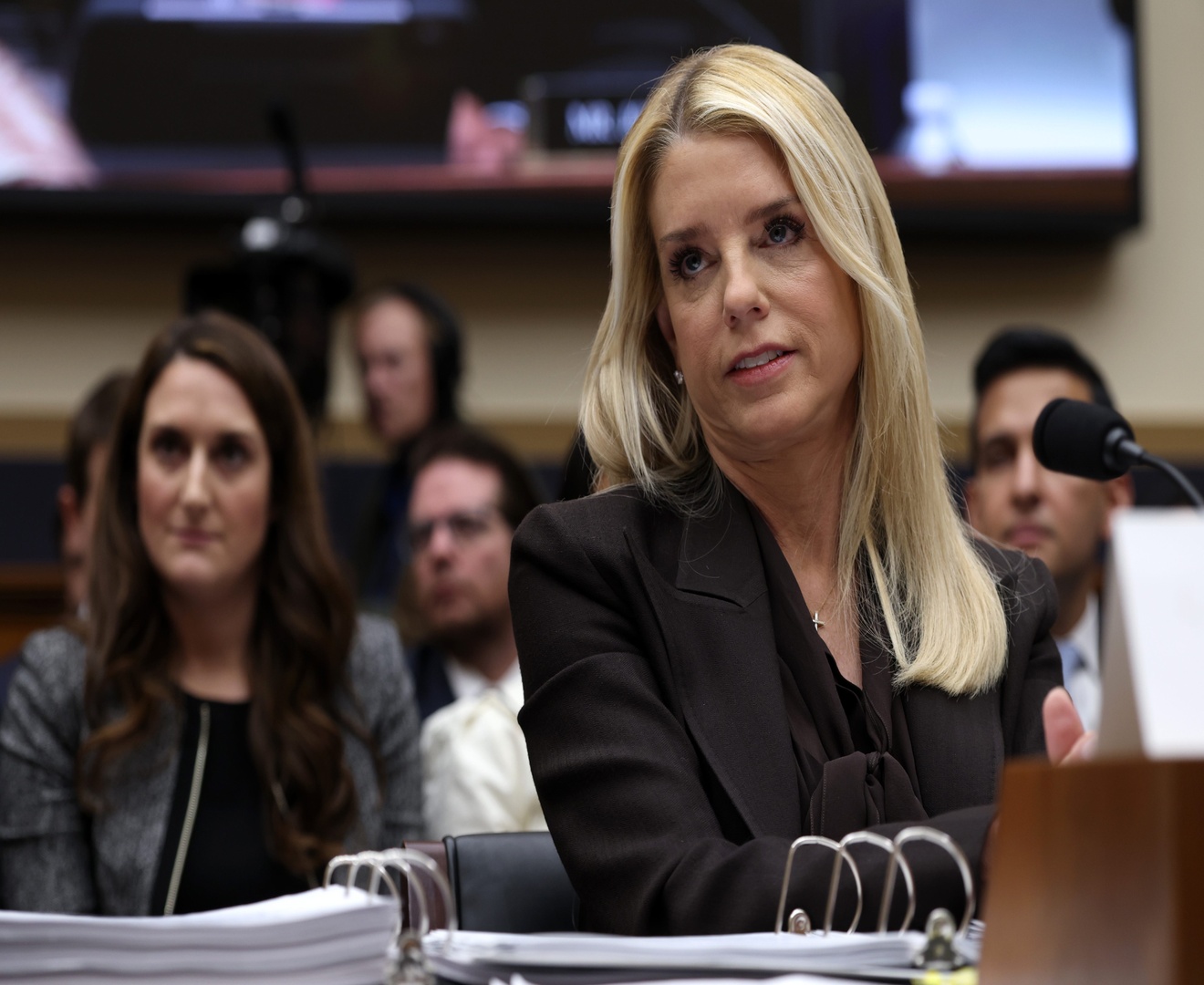
Bondi Faces House Scrutiny Over DOJ Handling of Epstein Files
U.S. Attorney General Pam Bondi testified before the U.S. House Judiciary Committee on Feb. 11, facing bipartisan questioning over the Justice Department’s handling and release of records tied to convicted sex offender Jeffrey Epstein.
Lawmakers focused on the Department of Justice’s recent disclosure of millions of pages of Epstein-related documents, including delays in release, redactions, and allegations that sensitive victim information appeared in publicly accessible materials. Members of both parties pressed Bondi on whether the department complied fully with statutory transparency requirements.
The hearing followed enactment of legislation mandating broader release of Epstein-related files. Several lawmakers said the department failed to meet disclosure deadlines and questioned whether redactions were applied consistently.
Bondi defended the department’s actions, stating that officials acted within legal parameters while balancing transparency requirements with privacy protections and ongoing investigative considerations. She said the department released materials in accordance with federal law and court orders.
BREAKING:
🇺🇸 Pam Bondi appears to have just lied under oath.
Ted Lieu caught her in a lie and called for her resignation pic.twitter.com/xuO0TEcfGA
— Megatron (@Megatron_ron) February 11, 2026
Bipartisan Pressure Over Transparency and Victim Protections
Committee members raised concerns about how the document release process affected victims. Some lawmakers cited complaints that personal information appeared in released materials while names of certain individuals associated with Epstein remained redacted.
Democratic members questioned whether the department had adequately consulted victims prior to publication. Republican members pressed Bondi on whether the department exercised appropriate oversight in reviewing materials before release.
Bondi expressed sympathy for victims and stated that the department would continue to follow legal standards governing disclosure. She did not announce new corrective measures during the hearing.
Broader Oversight of DOJ Conduct
Although Epstein-related files dominated questioning, lawmakers also addressed broader concerns about departmental transparency and oversight practices. Members of the committee framed the session as part of ongoing congressional review of Justice Department decision-making processes.
The hearing marked one of several congressional engagements tied to renewed scrutiny of Epstein-related records. Lawmakers indicated that additional document requests and follow-up inquiries may continue as oversight efforts proceed.

Trump Administration Faces Questions Over Temporary El Paso Airspace Closure
The Trump administration is facing congressional and public scrutiny following a temporary closure of airspace over El Paso, Texas, that disrupted civilian flights and raised questions about federal coordination and transparency.
According to federal officials, the Federal Aviation Administration (FAA) issued a short-term flight restriction over parts of the El Paso region, affecting commercial and private aircraft operations. The restriction was lifted after several hours, but the move prompted inquiries from lawmakers and aviation stakeholders regarding its justification and communication process.
Administration officials said the closure was related to national security considerations but did not immediately provide detailed public explanation. The lack of specificity led members of Congress to seek clarification on what triggered the restriction and whether appropriate protocols were followed.
Lawmakers Seek Clarity on National Security Justification
Several lawmakers called for a formal briefing, asking whether the restriction was tied to intelligence assessments, border-related security concerns, or other federal operations.
The Department of Homeland Security and the Department of Defense did not publicly confirm operational details. Officials emphasized that temporary flight restrictions can be imposed under federal authority when security conditions warrant.
Aviation experts noted that while temporary airspace closures are not uncommon, they are typically associated with presidential travel, emergency incidents, or clearly defined security events. The absence of immediate explanation in the El Paso case contributed to heightened scrutiny.
Impact on Commercial and Regional Aviation
Airlines operating in and out of El Paso International Airport experienced delays and rerouting during the restricted period. Regional carriers and general aviation flights were also affected.
Local officials said they were notified of the restriction but were not provided with detailed operational context. Airport authorities confirmed that normal flight operations resumed once the restriction expired.
The incident comes amid broader debates over border security and federal enforcement activity in the region. El Paso has remained a focal point for immigration enforcement operations and national security discussions.
Members of Congress indicated that additional oversight hearings or document requests may follow as lawmakers seek further clarity on decision-making processes and interagency coordination.








COMMENTS