

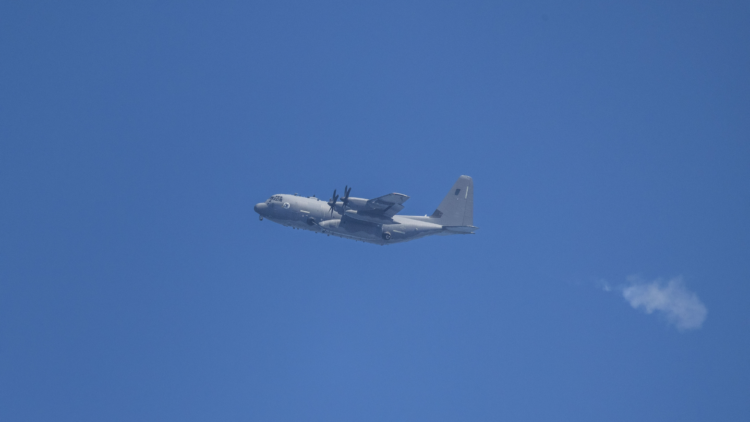
Imagine a storm cloud spitting thunderbolts; that’s the fearsome image the Ghostrider evokes as it rains down high-explosive and armor-piercing shells.
But the Ghostrider isn’t a one-trick pony.
A 30mm GAU-23/A cannon provides a withering hail of smaller caliber rounds, shredding through enemy formations and lighter armored vehicles.
This fearsome combination ensures both brute force and surgical precision, allowing the Ghostrider to adapt its attack to the specific threat on the ground.
Furthermore, the Ghostrider isn’t limited to just ballistic weaponry. Its cavernous underbelly can house a formidable arsenal of guided missiles, transforming it into a long-range hunter-killer.
The AGM-114 Hellfire, a laser-guided missile renowned for its armor-piercing capabilities, allows the Ghostrider to eliminate heavily fortified targets with pinpoint accuracy.
For wider area saturation or engaging targets obscured by smoke or darkness, the GBU-39 Small Diameter Bomb offers a devastating solution.
This diverse payload ensures the Ghostrider can adapt to any battlefield scenario, a crucial advantage in modern warfare’s unpredictable landscape.
From Counterinsurgency to Contested Seas: The Ghostrider’s Operational Evolution
The AC-130J’s baptism by fire came in the unforgiving deserts of the Middle East, where its close air support capabilities proved invaluable in the fight against insurgents.
Its cannon fire and hellfire missiles provided a critical advantage for ground troops, turning the tide in countless engagements.
However, recent military exercises like Balikatan 24, a joint US-Philippines endeavor, paint a different picture.
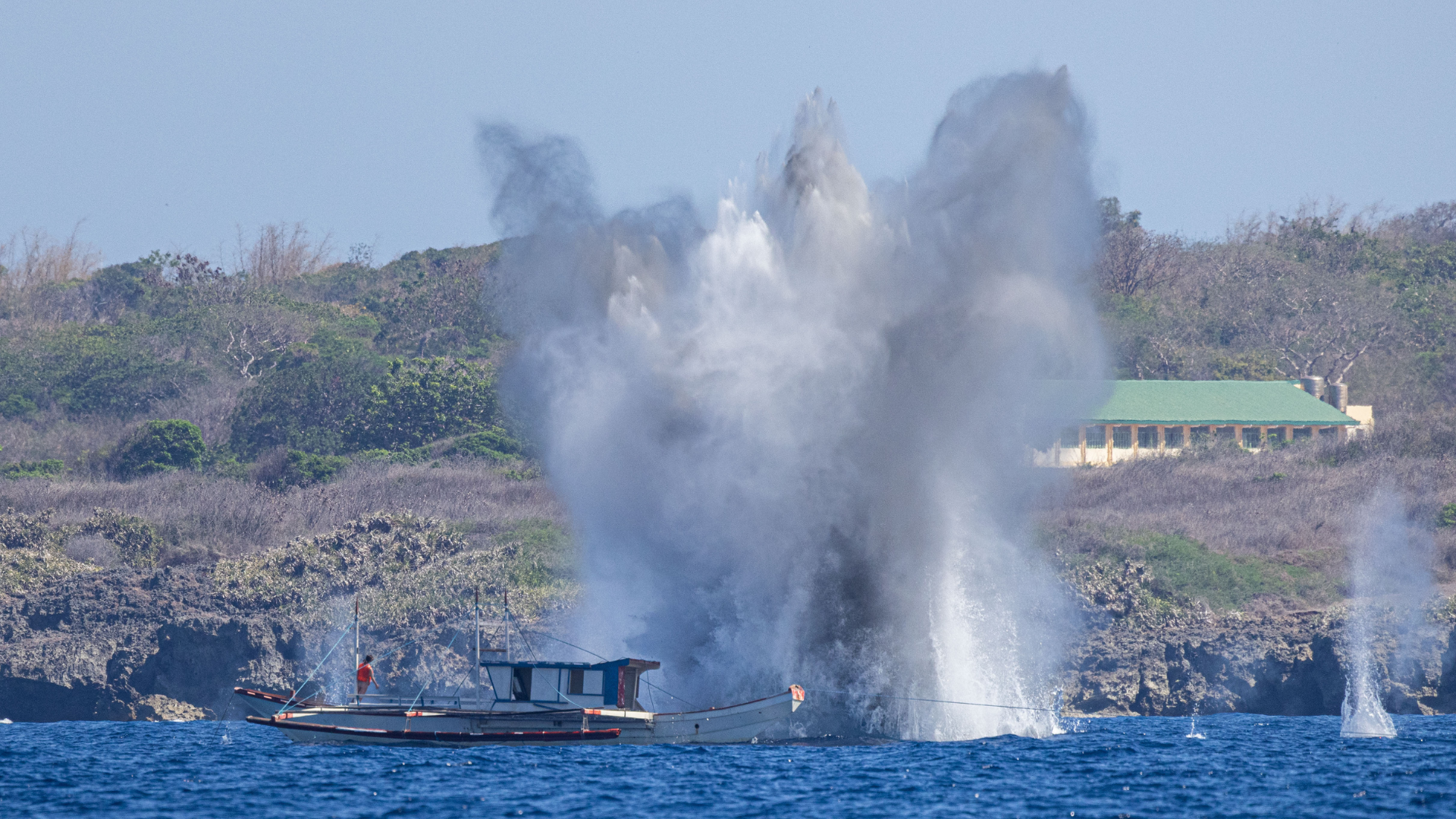
The use of the Ghostrider to simulate an attack on a vessel – a vessel suspiciously resembling a Chinese fishing boat – underscores a subtle but significant shift in the Ghostrider’s operational focus.
A Bulwark Against Gray Zone Tactics: The Ghostrider’s Role in the South China Sea
China’s growing use of fishing vessels to bolster its maritime claims in the South China Sea is a well-documented tactic.
These seemingly innocuous vessels serve a dual purpose.
On the surface, they engage in seemingly civilian activities like fishing.
However, beneath the facade, they can be used for surveillance, reconnaissance, and logistical support, blurring the lines between civilian and military activity.
This “gray zone” strategy allows China to project maritime influence without resorting to overt military action.
The Ghostrider’s ability to precisely engage these vessels, if deemed necessary, sends a clear message: the United States possesses the capability and resolve to uphold freedom of navigation in the region. Its very presence serves as a stark deterrent, reminding China that any attempt to disrupt the status quo will be met with swift and decisive action.
The AC-130J Ghostrider is not just a gunship; it’s a symbol of American airpower’s adaptability.
As the strategic landscape in the South China Sea continues to evolve, the Ghostrider stands ready, a potent deterrent against those who would challenge the rules-based international order.
Its haunting presence serves as a stark reminder that some specters are best left undisturbed.








COMMENTS