

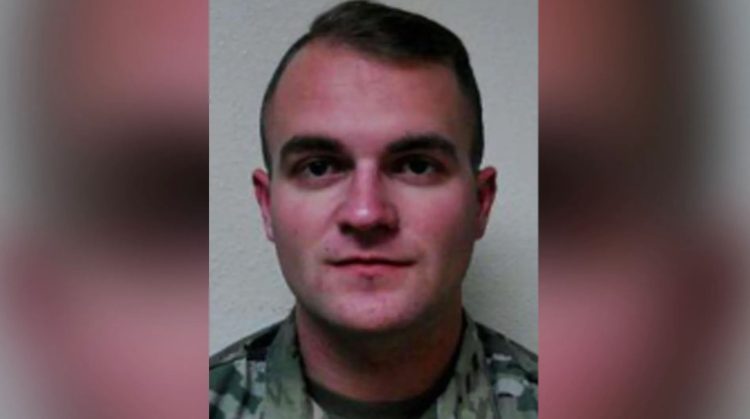
Background on the Soldier
Public records indicate Lee joined the Army in March 2021 and previously served in South Korea before his posting to Fort Bliss. No official statements have addressed his motives beyond the apparent goal of gaining Russian citizenship. The criminal complaint makes no mention of financial incentives, ideological leanings, or coercion, leaving motive speculation for future proceedings.
Why This Case Matters
The M1A2 Abrams is the U.S. Army’s premier main battle tank—fielded for decades, but continually upgraded with classified armor composites, targeting systems, communications gear, and battlefield management software. A technical compromise could offer adversaries like Russia valuable insight into vulnerabilities and counter-tactics.
Brig. Gen. Sean F. Stinchon, commanding general of Army Counterintelligence Command, described the case as “an alarming reminder of the serious threat facing our U.S. Army.” The FBI’s statement reinforced that betraying one’s oath for a foreign power will be met with swift action and prosecution.
Not an Isolated Incident
Lee’s arrest is the latest in a series of espionage or insider-threat cases involving U.S. service members:
- Jack Teixeira, Massachusetts Air National Guard, sentenced to 15 years in 2024 for leaking classified intelligence documents online.
- Wenheng “Thomas” Zhao, U.S. Navy, sentenced in 2024 to 27 months for transmitting sensitive military information to a Chinese intelligence officer.
- Jinchao “Patrick” Wei, U.S. Navy, arrested in 2023 in a China-linked espionage case still pending.
- Outside the uniformed services, former U.S. Ambassador Victor Manuel Rocha pled guilty in 2024 to acting as an agent of Cuba.
Each of these cases reinforces that insider threats are not theoretical—they are active, diverse, and ongoing.
What Comes Next
Lee’s legal journey will likely include lengthy pre-trial detention, Classified Information Procedures Act (CIPA) hearings to determine how evidence will be handled, and expert testimony on the technical nature and sensitivity of the Abrams data. The trial, if it proceeds, will be closely watched by military and intelligence communities alike.
For now, the most significant fact remains: the FBI and Army Counterintelligence intercepted the alleged transfer before classified material could be delivered to an actual foreign adversary. That interception may have preserved not only technical advantages on the battlefield but also the lives of U.S. and allied soldiers who depend on them.
Analysis
From an operational security standpoint, this case underlines a hard truth: the most advanced weapon systems in the world are only as secure as the people granted access to them. A 22-year-old with TS/SCI clearance and hands-on exposure to classified systems represents a concentrated vulnerability if personal loyalty wavers. The Abrams’ armor composition, fire-control algorithms, and electronic warfare countermeasures are closely guarded for good reason—compromise them, and you don’t just weaken a machine, you shift the balance of battlefield survivability.
The progression of Lee’s alleged actions—from initial outreach to online data transfer, physical media exchange, and finally hardware delivery—matches patterns seen in past espionage cases. The longer the window between the first compromise and intervention, the greater the risk of irreparable damage. In this instance, the FBI and Army CI moved decisively, but the timeline suggests multiple points at which the operation could have gone disastrously wrong if surveillance had lagged.
For leaders, the takeaway is twofold: robust insider-threat monitoring must be paired with cultural reinforcement of the oath and mission. For adversaries, the case is confirmation that even well-trained, well-vetted personnel can be tempted—or convinced—to turn. For the rest of us, it’s a reminder that the fight to keep America’s most lethal capabilities out of enemy hands is fought not only on distant battlefields, but in offices, motor pools, and secure facilities here at home.








COMMENTS