Giunta’s story is what valor looks like when it is not polished for the cameras, because in the Korengal he moved into fire again and again for one reason only: to get his people home.
Read the full article for more on:
Important insights and detailed analysis
Expert commentary on current events
Breaking developments and updates
Updating summary...
Medal of Honor Monday: Salvatore Giunta’s Korengal Valley Stand
Guy D. McCardle
Speed
1x
Listen
COMMENTS
Giunta’s story is what valor looks like when it is not polished for the cameras, because in the Korengal he moved into fire again and again for one reason only: to get his people home.
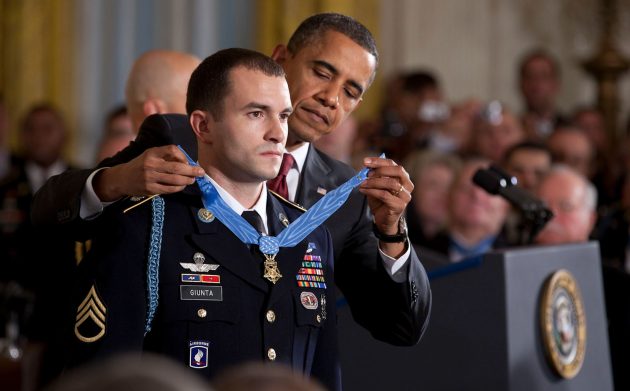
President Obama presents the Medal of Honor to Salvatore Giunta during a White House ceremony in 2010. Image Credit: Chuck Kennedy, White House Photographer
Early Life in Iowa
Salvatore “Sal” Giunta was born in Clinton, Iowa, and grew up in the Cedar Rapids and Hiawatha area. His upbringing was unremarkable in the best sense of the word. He came from a close family, held ordinary jobs, and was known as steady and reliable rather than flashy or restless.
Advertisement
As a teenager in the early 2000s, Giunta reached the age where service became an option rather than an abstraction. In that post-September 11 era, with the United States already at war, he made the decision to enlist. At 17 years old, while working a civilian job, he joined the Army with the intention of becoming an infantryman. It was a choice rooted in responsibility rather than any expectation of recognition.
Joining the Army and the Path to Combat
Giunta entered the United States Army and trained as an 11B infantryman. He was eventually assigned to Company B, 2nd Battalion (Airborne), 503rd Infantry Regiment, part of the 173rd Airborne Brigade Combat Team. The brigade was among the Army’s most frequently deployed light infantry formations and had already seen heavy combat by the time Giunta arrived.
By 2007, Giunta had deployed to Afghanistan and was serving as a rifle team leader. At the time, his rank was Specialist. The role placed him directly in the fight and made him directly responsible for the soldiers beside him. In eastern Afghanistan, particularly in the Korengal Valley, patrols routinely faced coordinated ambushes in steep terrain that favored insurgent fighters.
Advertisement
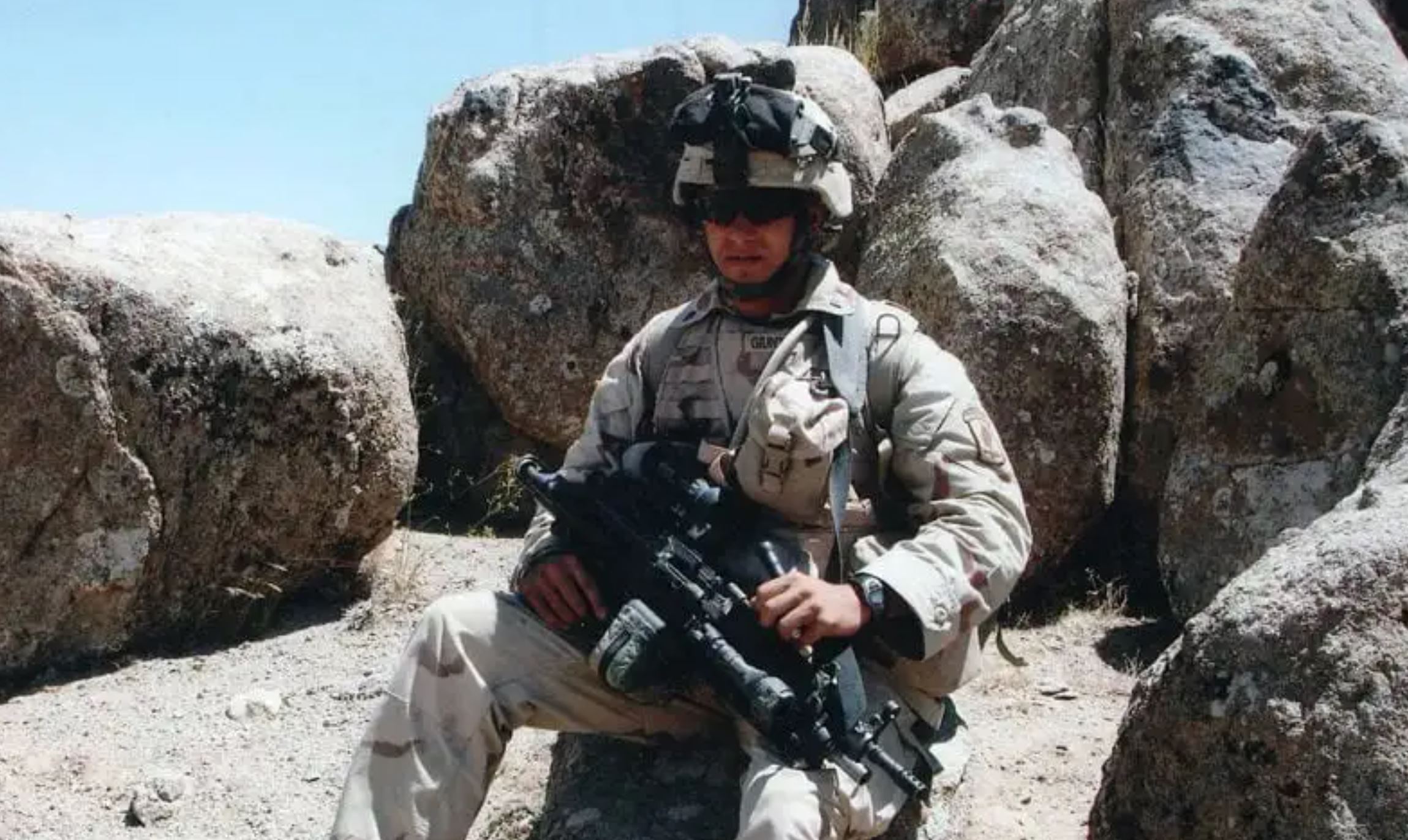
Giunta in Afghanistan during a 2005 deployment. Image Credit: US Army
The Battle in the Korengal Valley
On October 25, 2007, Giunta’s platoon was conducting a nighttime patrol near the village of Korengal when Taliban fighters launched a coordinated ambush. Enemy forces opened fire from multiple positions with small arms, machine guns, and rocket-propelled grenades. Several American soldiers were wounded early in the engagement.
Giunta moved forward under heavy fire to reach injured teammates. He repeatedly exposed himself to enemy fire while providing covering fire and helping move wounded soldiers to more secure positions. During the fight, he was struck by shrapnel from an exploding rocket-propelled grenade, but he continued to engage the enemy and direct his team.
Advertisement
At one point, Giunta saw two insurgents carrying a wounded American soldier away from the battlefield. Acting alone and without waiting for support, he charged toward them under fire. He closed the distance and killed both fighters at close range, preventing his teammate from being taken by the enemy. Giunta then returned to the fight, continued providing aid and security, and remained engaged until the enemy assault was broken.
The engagement lasted for an extended period under intense conditions. Giunta’s actions were not confined to a single moment. They reflected sustained leadership, repeated movement under fire, and an unwillingness to disengage while others were still at risk.
The Medal of Honor
On November 16, 2010, Giunta was awarded the Medal of Honor for gallantry and intrepidity above and beyond the call of duty. He became the first living recipient of the nation’s highest military decoration since the Vietnam War.
Advertisement
At the ceremony, Giunta avoided personal acclaim. He emphasized the soldiers he served with and those who did not return from Afghanistan. He described his actions as what any soldier would want done for them in the same situation, framing the fight as a collective effort rather than an individual achievement.
His citation formally recognized what happened in the Korengal Valley, but Giunta’s own account remained simple and matter-of-fact. He acted as a team leader protecting his people under fire, not as a man seeking distinction. Like so many heroes, he was just doing his job.
Giunta continued serving in the Army after receiving the Medal of Honor and later transitioned to civilian life in 2011. Like many combat veterans, the shift came with challenges. He has spoken publicly about survivor’s guilt, the burden of public attention, and the responsibility that accompanies the Medal long after the ceremony ends.
He enrolled at Colorado State University, where he studied and began shaping a post-military life grounded in education and service. In 2013, he published a memoir, Living with Honor, which focused less on battlefield heroics and more on the enduring impact of combat and leadership.
In 2017, Giunta made the decision to place his Medal of Honor on display with the 173rd Airborne Brigade in Vicenza, Italy. He stated that the medal belonged with the unit and the soldiers whose actions made the award possible.
Where He Is Today
Today, Salvatore Giunta remains closely connected to the veteran community while maintaining a relatively private personal life. He continues to speak about leadership, responsibility, and the realities of modern combat, particularly the long-term effects of war that persist after uniforms are put away.
He avoids political spectacle and resists being treated as a symbol rather than a soldier. His public presence reflects the same restraint that characterized his response to the Medal of Honor itself.
Giunta’s story endures because it reflects what modern valor looks like when stripped of mythology. It is rooted in small-unit combat, loyalty to teammates, and decisions made under pressure with little margin for error. In the Korengal Valley, he did not act for recognition. He acted because one of his own was in danger, and there was no one else close enough to intervene.
That decision remains a clear example of what the Medal of Honor exists to recognize, and it is why we remember him today.
—
** Editor’s Note: Thinking about subscribing to SOFREP? You can support Veteran Journalism & do it now for only $1 for your first year. Pull the trigger on this amazing offer HERE. – GDM
Advertisement
What readers are saying
Generating a quick summary of the conversation...
This summary is AI-generated. AI can make mistakes and this summary is not a replacement for reading the comments.









COMMENTS