

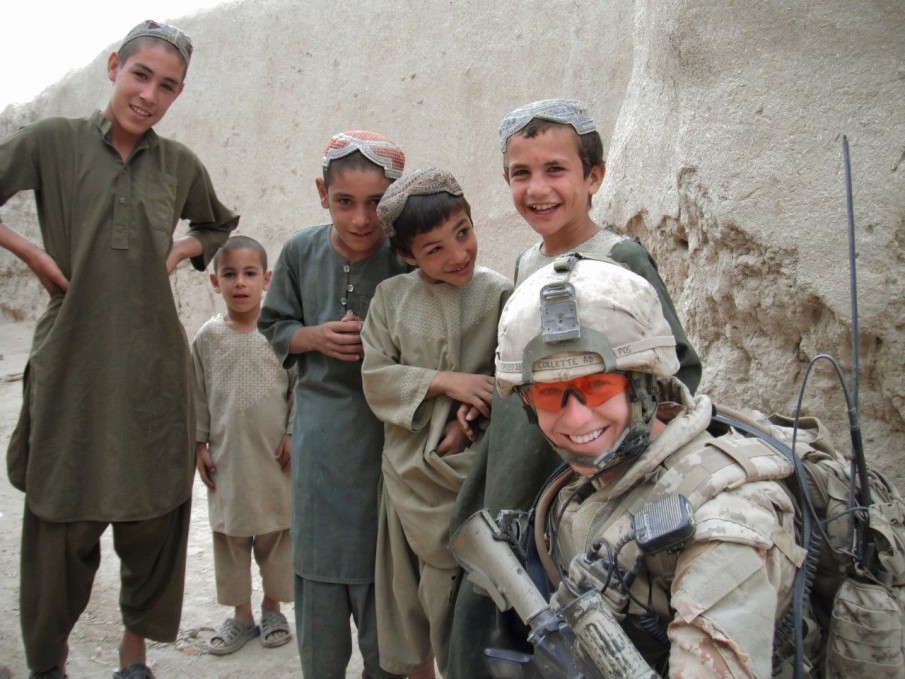
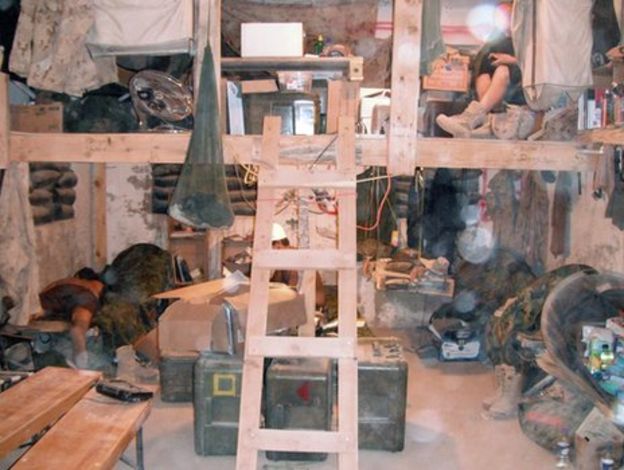
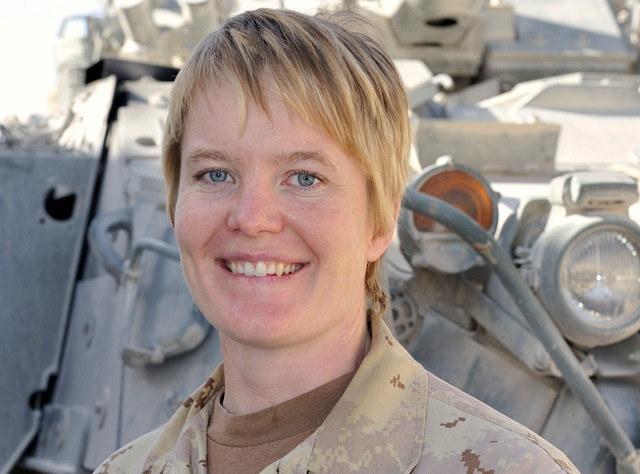
Some will bring problems. Sexual dimorphism (differences between sexes, not some weird fetish) is a real thing, and average body size and composition is indeed different and a complicating factor. Generally speaking, women underperform men in virtually every measurable sport (with the exception of ultramarathon) by an average of 10 percent. On average, females must exert themselves much more in carrying out routine military tasks for a specific output, and fatigue faster than males. This overexertion, unsurprisingly, leads to more injuries. Cardiopulmonary endurance, the ability to perform continuous physical activity, is generally between 15–30 percent lower in trained females as compared to trained males.
For high-intensity/short-duration tasks typical in combat, such as sprinting, load carriage, and lifting, women have an average of 40 percent less strength than men for both upper and lower body. Women do have greater endurance relative to body size, which accounts for their equal performance in ultra-distance marathons, however this is negated in a military context (load carriage) where men have greater endurance due to their greater muscle mass. Women are at a 1.2–10 percent greater risk for musculoskeletal injury during basic training, and stress fractures are 1.5–9.5 times more prevalent (Y. Epstein, 2012).
Although those figures are all averages, and can be mitigated by training and better equipment such as rucksacks and helmets properly designed for the feminine physique, it still points to long odds of many women qualifying for the more intensive demands of dismounted infantry combat. And those that do may have short careers due to a higher injury rate. The numbers would appear to bear this out. Canada, as one of the first Western countries to admit women into combat trades, is perhaps the best gauge of what to expect in the near future for women in combat trades. Currently, women make up 2.4 percent of combat trades (infantry, armour, artillery, combat engineer) in the Regular Forces (active duty) and 5.6 percent in the Reserves (Government of Canada, 2014). Considering it is now 26 years after first opening up these positions, and despite ambitious recruiting targets, it appears unlikely that these statistics will change substantially.
So what of the other big issue that keeps being dragged out—unit cohesion? This is another odd argument, and one that comes to hand quite easily, but it’s been used over and over with little effect. Women have been integrated into the military already and we’ve adjusted. One of the keys has been the professionalization of the military culture, where technical competence is just as valued as personal relationships. Think about it: Did you like everybody in your platoon? Did you get the job done anyway? Shared hardship has a way of bringing disparate groups together. While sexual assault is a very real problem, it’s one that’s far more prevalent in large bases rather than the FOB, COP, or PB where most of the infantry will find themselves (King, 2013).
One highly positive aspect that has been repeated has been “as long as they qualify and meet the standards” they will be allowed to contribute. Hopefully this means some of the painful lessons of America’s allies have already been heeded. As promising as the statement about meeting standards is, it is probably obvious to most of us it is also a loaded statement. Which standards? Are they going to be changed to ensure goals are met? The Canadian Armed Forces (CAF) has some painful lessons to offer in this regard.
There were many unofficial fitness standards used back in the late ’80s and early ’90s at the battle schools used to assess recruits that were not well thought out and were eventually dropped and replaced with far inferior minimum standards—emphasis on “minimum.” The PT 400 was a score-based fitness test similar to the Cooper’s Test, and as such, it was good—as a measure of the ability to run, do push-ups, sit-ups, and pull-ups. But what was not clear was how it related to one’s ability to do the job.
Standards have since been changed from general fitness tests to “job-specific testing” or JSTs. Here in Canada, standards must be capable of surviving a court challenge of discrimination, and JSTs are far more robust in this regard. It is the exact same revolution that police fitness standards went through at the time, from arbitrary measures such as height, weight, and sex to measures of “occupational fitness” that were “objective, realistic, and non-discriminatory.” (J. Bonneau, 1995)
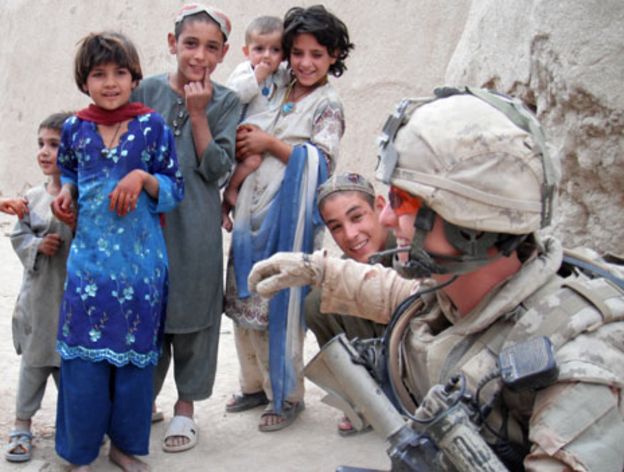
Police forces have been here before and they definitely have a lot of lessons learned as there are thousands of different police forces that have individually implemented occupational fitness standards subject to challenge and review. The actual results aren’t as important as the methods. Police work is varied; in fact, the majority of it is sedentary, but so is a lifeguard’s 99 percent of the time. But if a lifeguard or police officer can’t perform during that one percent incident, they have no business being employed in that job (A. Trottier, 1994). All kinds of standards are being thrown around, the hauling of casualties, rucksack, ammunition, etc., as reasons for exclusion, and they may or may not be legitimate.
A careful task analysis has to be conducted and validated in order to come up with a legitimate JST. CANSOF has gone through this, and is implementing the new JSTs for its units. They’re not without their teething problems, and will likely need updating from time to time, but I believe they are well worth it as they fulfill the requirement to be objective, realistic, and non-discriminatory. The process for JSTs are well established beginning with a task analysis.
This is where the “fit for what?” question is asked. What are the essential tasks required? This is often established by questionnaire and direct observation. Then, common tasks are identified, and then broken down into their physical abilities (strength, flexibility, power, etc.). With this information, a test of these required physical abilities can be developed, and ideally feedback will be sought throughout the process (A. Trottier, 1994). In fact, this is exactly what is going on in the U.S. military right now, with the various services having just completing a “blue ribbon” panel on military physical performance testing with the National Strength and Conditioning Association (Nindl, 2015).
Once the task standards are established, continued research in fitness, physiology, and ergonomics will be needed to increase the numbers of females who are able to serve. Innovation in physical training is long overdue, with many studies showing too much reliance on “field-expedient”-style training over the more effective individualized training that would much more efficiently enhance readiness and reduce musculoskeletal injuries that are of particular concern for female soldiers (Nindl B. , 2015) (Y. Epstein, 2012).
So while it may seem that I’m a cheerleader for integration, I think the truth is we’ve simply moved on up here. I can’t picture it being reversed, so I don’t find it productive to waste time and mental effort raging against it. While I agree that the focus on everything the military does should relate to combat effectiveness, it’s always been a wash. Military procurement has been hijacked by political concerns since at least Caesar’s times (I’m sure they had “buy Roman” legislation), bases are opened or closed based on votes, so I’m hardly shocked or particularly bothered by politics in other areas outside my control.
My own personal experience has been mixed. There was a female combat engineer on my tour in Afghanistan who was bounced around from section to section, endangering lives because no one wanted to be accused of discrimination in dealing with her. Is she the majority? No. Is Maj. Taylor, who was described by those she led in the Pioneer Platoon in 1 RCR as the best platoon commander they ever had going to be more representative? No. Most who make it will eventually settle somewhere in the middle. The sky won’t likely fall, and the younger soldiers who take our place will wonder what the big deal was.
(Images courtesy of bbc.com, foxnews.com, and o.canada.com)
References
Trottier, J. B. (1994). Police Health: A Physician’s Guide for the Assessment of Police Officers. Ottawa: Canada Communications Group.
Day, A. (2007, September 1). Operation Medusa: The Battle For Panjwai. Legion Magazine.
Fisher, M. (2013, January 26). News. Canada.com. Retrieved from http://o.canada.com/news/war-experienced-canadian-maj-eleanor-taylor-advised-u-s-brass-on-females-in-combat
Government of Canada. (2014, March 6). National Defence and The Canadian Armed Forces. Women in the Canadian Armed Forces. Retrieved from http://www.forces.gc.ca/en/news/article.page?doc=women-in-the-canadian-armed-forces/hie8w7rm
Bonneau, J. B. (1995). Physical Ability, Fitness, and Police Work. Journal of Clinical Forensic Medicine, 2, 157-164.
King, A. (2013). Women in Combat. The RUSI Journal, 1(158), 4 – 11.
Kremer, W. (2013, October 23). BBC News Magazine. BBC.com. Retrieved from http://www.bbc.com/news/magazine-24622762
Matthew Rosenberg, D. P. (2015, December 3). Politics. The New York Times. Retrieved from: http://www.nytimes.com/2015/12/04/us/politics/combat-military-women-ash-carter.html?_r=1
Nindl, B. (2015, November). Physical Training Strategies for Military Women’s Performance Optimization in Combat-Centric Occupations. The Journal of Strength & Conditioning Research, 29(11), S101 – S106.
Nindl, B. A. (2015). Executive Summary From the National Strength and Conditioning Association’s Second Blue Ribbon Panel on Military Physical Readiness: Military Physical Performance Testing. The Journal of Strength & Conditioning Research, 29, S216 – S220.
Wikipedia. (2015, June 29). Wikipedia. Retrieved from Thomas J. Hudner Jr: https://en.wikipedia.org/wiki/Thomas_J._Hudner,_Jr.
Epstein, R. Y. (2012). Physiological employment standards IV: integration of women in combat units physiological and medical considerations. European Journal of Applied Physiology, 113(11).








COMMENTS