Military

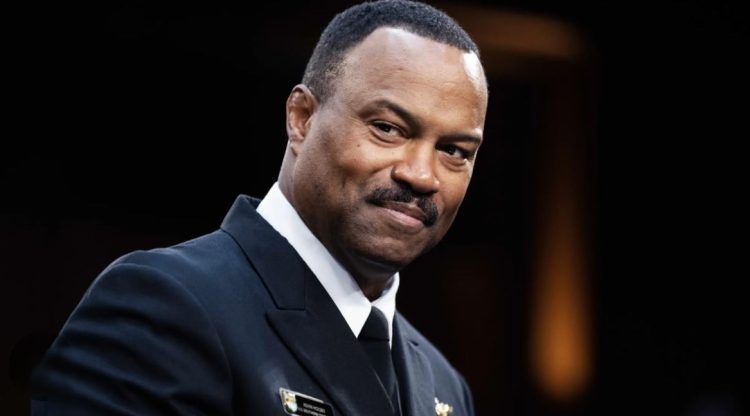
Admiral Alvin Holsey Is Stepping Down From US Southern Command. Here’s What It Means

Admiral Holsey’s retirement hits as the seas as the situation in Venezuela begins to boil, leaving Washington to decide whether it wants a steady hand on the helm or a heavier fist on the throttle.

Admiral Alvin “Bull” Holsey will retire at the end of 2025, cutting short what is typically a three-year tour as commander of U.S. Southern Command. Defense Secretary Pete Hegseth announced the move, praising Holsey’s 37 years of service. The decision lands in the middle of an aggressive counter-drug campaign at sea near Venezuela that has sunk multiple boats and raised the political temperature across the Caribbean.

Advertisement

Multiple outlets report friction between Holsey and Hegseth over how those maritime strikes are being run. The backdrop is a wider buildup around Venezuela and talk in Washington about options that go beyond the shoreline. Whatever the private disagreements, the public line is simple. Holsey will finish the year and retire.

A quick read on Holsey’s career

Holsey took command of SOUTHCOM on November 7, 2024, after serving as its military deputy. He was promoted to four stars the day he assumed the job. Before that he led Navy Personnel Command, commanded Carrier Strike Group One, and flew as a naval aviator. His resume reads like a travel log through some of the Navy’s hardest billets.

The admiral built a reputation for mentorship and institutional reform. In 2020, he led Task Force One Navy, the service’s effort to study readiness issues tied to culture and talent. That experience potentially shaped how he approached partner engagement in Latin America. One part coach, one part quarterback, all while minding the clock.

Advertisement

SOUTHCOM 101

U.S. Southern Command covers 31 countries in Latin America and the Caribbean. It works daily with regional militaries, law enforcement, and interagency partners to disrupt transnational criminal organizations, counter malign state actors, and respond to disasters. Think of it as a busy air traffic control tower for the Western Hemisphere south of Key West. The command is based in Doral, Florida, and synchronizes components across the services, including U.S. Naval Forces Southern Command and 4th Fleet, Air Forces Southern, U.S. Army South, Marine Forces South, and Special Operations Command South.

In 2024 and 2025, SOUTHCOM also warned about expanding Chinese tech influence across the region, including the spread of Huawei networks that complicate secure military cooperation. That is not a headline grabber, but it shapes the real work of the command.

Advertisement

Why step down now

The timing aligns with Washington’s sharpened focus on drug-smuggling networks tied to Venezuela and a spate of lethal interdictions at sea. Reports point to policy and execution debates between Hegseth and Holsey about the tempo and authorities for those strikes. Congress is already signaling concern about any drift toward a wider confrontation. In short, politics met command climate, and the result is an early exit.

Who is likely to replace him

The cleanest option is the current military deputy, Air Force Lt. Gen. Evan L. Pettus, who would be positioned to serve in an acting role and is a logical nominee for the job. Pettus has been active across the theater this year, including participation at the Tradewinds exercise in Trinidad and Tobago. Other viable names come from the component ranks, such as Rear Adm. Carlos Sardiello at U.S. Naval Forces Southern Command and Maj. Gen. David Mineau at Air Forces Southern. Final selection rests with the Secretary of Defense and the President.

What this means for the Caribbean and Venezuela

Operations will not pause. SOUTHCOM is built for continuity. Component commanders and the interagency machine already have their tasking. The administration’s strategy drives the pace more than any single four-star. Expect maritime interdictions to continue and perhaps expand in coordination with the 4th Fleet and partner navies, which have just wrapped up planning for UNITAS 2025. The risk here is possible miscalculation at sea, where a fast boat and a faster trigger finger can turn a police action into an international incident.

Advertisement

Inside Venezuela, the Maduro government has mobilized forces and militia networks in response to U.S. actions and has used the strikes to stoke nationalism. If Washington adds more pressure without a political track, the region could see more migrant flows, more proxy logistics, and more attempts by criminal groups to shift routes into weaker seams in the Caribbean. That is where SOUTHCOM’s quiet work with island partners matters most. Think of the map as a sponge. Squeeze one corner and the water moves. It does not disappear.

Bottom line

Holsey’s early departure removes a seasoned hand at a sensitive moment. But the bench is deep. The mission endures.

The Caribbean will feel the weight of policy choices made in Washington far more than the name tag on the door in Doral. Still, leadership style can change how hard the rudder bites. With a steady deputy ready to bridge and components already in motion, the next few months will show whether the campaign stays precise or drifts toward something nobody wants. 
Advertisement

You must become a subscriber or login to view or post comments on this article.