


Sometimes, though, it’s a black van with tinted windows. Security guard watches it closely to see what it does. Maybe he turns on some other lights in the parking lot. Van leaves and security guard notes it in the log to turn over to day shift. What he probably does not do, however, is put loads of exclamation points in the log, and tell everyone how he feared for his life throughout the whole ordeal because “Holy Cow! did you see how tinted those windows were?!?!?”
They’re HEEEERE!
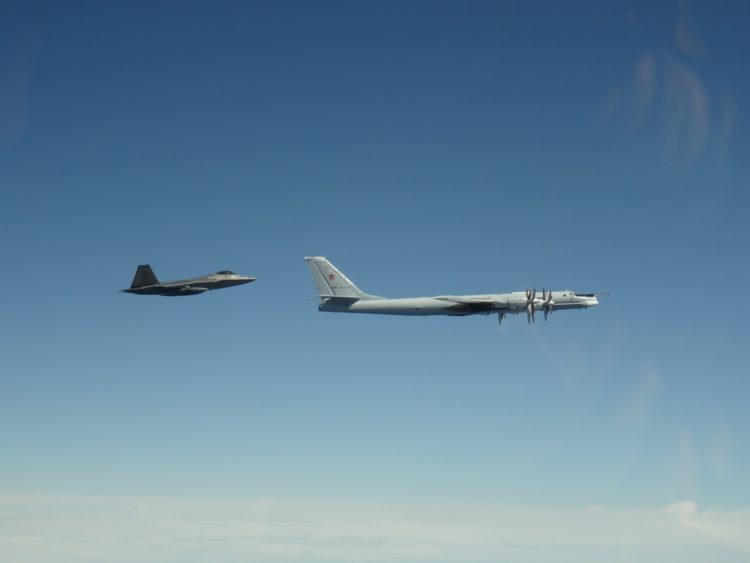
That is what headlines like the above are like. In October 2020, Stars and Stripes published a story that stated the U.S. had intercepted Russian bombers off the coast of Alaska 14 times that year. Fourteen times. Were those Russian bombers over Alaska or Canada? No, they were over neutral waters, flying training sorties. Whether that training included testing American defenses or not is unknown, but I would bet my new Z-turn mower that it did.
The point is, Russia is always flying near the U.S., and China is always flying near Taiwan and Japan, and the U.S. is always flying near Russia, China, and any other country we may have cause to worry about. That’s how we train. Do football coaches put untested players in and tell them to go for the Hail Mary every time? No, they practice, and scrimmage against other teams, testing and probing for weaknesses and strengths to learn how to overcome or exploit them.
Routine Coverage
In the same Stars and Stripes article, the author states that the incursions were “categorized as routine,” and that NORAD averages six or seven ADIZ incursions and interceptions a year. Two paragraphs later, Russia is shown as the interceptors, responding to U.S. aircraft in its ADIZ. It’s part of what we do. And I, personally, appreciate all the practice. When and if the time comes, I want our guys to have been so used to responding that it will be their second nature. Train as you fight, right?
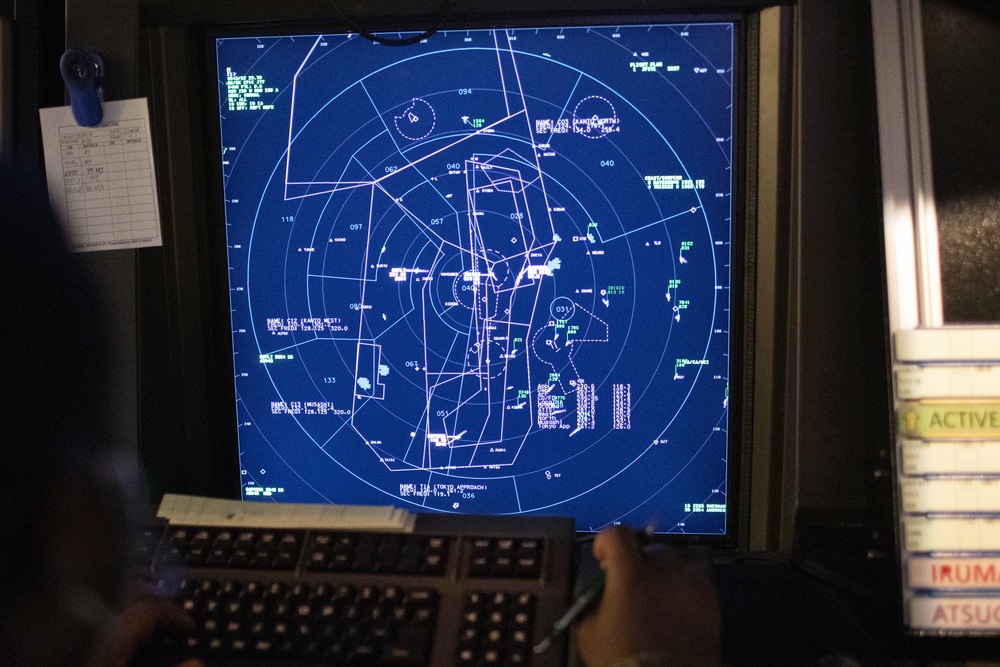
While it may seem like an unfair advantage, the other guys get to train as well. Both for offense and defense. Incursions are going to happen. In fact, some air force jet right now is probably painted on a radar operator’s scope and not squawking ident. For the non-pointy-heads out there, aircraft have transponders that automatically show their identification, along with other pertinent aircraft and flight data. Turn off the transponder and you turn off the ident. Military aircraft also have special, secret squirrel transponders that transmit and receive a whole host of other data, but that’s secret squirrel stuff, not suitable for this article.
UFOs Are Real
That radar operator with the unidentified jet on the screen (technically a UFO because it’s unidentified) will notify the tower, and someone from there will attempt to hail the UFO. Usually, someone answers, apologies are made, and the UFO becomes an IFO. Sometimes the U remains, and fighters are scrambled to put eyes on it. Not to engage it, force it down, or go inverted and make universal gestures at it. Most of the time, crews make ID, verify that the UFO is transiting to some other location, and fly near to gauge the reaction. They wag fingers at each other (Oh, You!) and part ways.
Both sides have learned something, though: How quickly will this country respond to my getting close? How close did they get before we noticed them and responded? How was the response handled, by both sides? Did that new radar upgrade give us better situational awareness? Did the new communications system live up to the manufacturer’s promises? We all gotta learn, people, and this is how we do it.








COMMENTS