Al Mar, a prominent figure in American knife history, created high-performance knives influenced by his deep ties to the Special Forces community. His designs, particularly the Al Mar Pathfinder and SERE knives, reflect a commitment to utility and survival training, earning him recognition in the knife industry.
Key points from this article:
The Al Mar Pathfinder, a knife that captivated the author during their Army service, now sells for around $1,500 on eBay, highlighting its enduring value.
How Al Mar's collaboration with Colonel James 'Nick' Rowe led to the design of the SERE knife, which became essential for survival training in the U.S. military.
Why Al Mar's legacy is significant in both the knife industry and military history, as he maintained close relationships with Special Forces and was recognized in multiple knife halls of fame.
Updating summary...
Al Mar, Nick Rowe, and the Knives Built for SERE
Galen Fries
Speed
1x
Listen
COMMENTS
A junior soldier’s first Al Mar purchase becomes the entry point into how Al Mar’s Special Forces ties, friendship with Nick Rowe, and SERE-driven design priorities shaped some of the most respected knives in the tactical world.
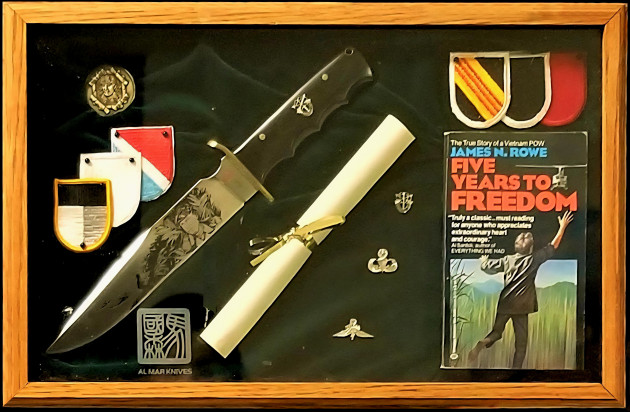
Set #2 of the limited edition from Al Mar in honor of his friend, Nick Rowe. Image Credit: Greg Walker
I was introduced to Al Mar knives soon after I joined the active duty Army in 1989. I was an E-3, and there was a cutlery shop in the Tacoma Mall just up the freeway from Fort Lewis, now JBLM.
Advertisement
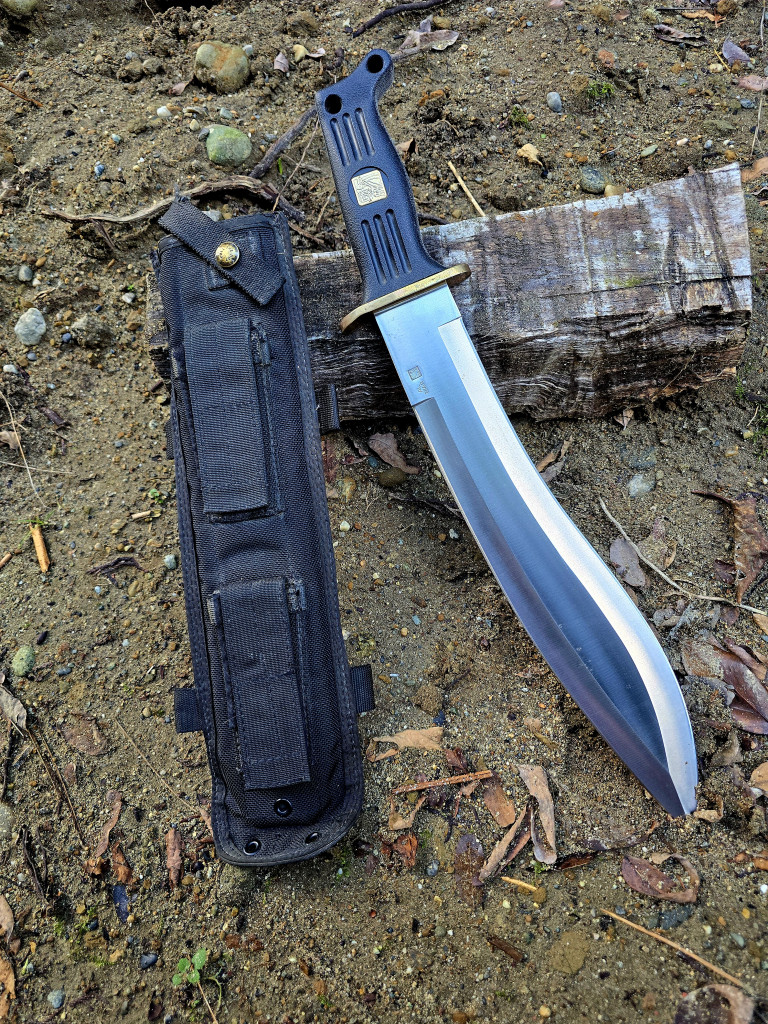
I would drool over the knives every time I went there. The one that took center stage was the Al Mar Pathfinder with its mirror polished 14 inches of kurki blade – double sided and scalpel sharp.
At around $250, it felt completely out of reach. We were scraping by on junior enlisted pay and barely covering rent on a one-bedroom apartment.
Christmas came, and Santa very was good to me.
Advertisement
Al Mar Pathfinder with a 14 inch kurki style blade. Image Credit: the author
Today, used Pathfinders sell for around $1,500 on eBay. This one sits in brand-new, near museum-quality condition.
Al Mar holds a unique place in American knife history because his work grew out of direct, long-term involvement with the Special Forces community. He belonged to the same generation as the Green Berets who shaped early Vietnam-era Special Forces culture, and he remained closely tied to that world throughout his life. His knife designs reflect that proximity, particularly through his collaboration with Colonel James “Nick” Rowe and the SERE program Rowe built after Vietnam.
Advertisement
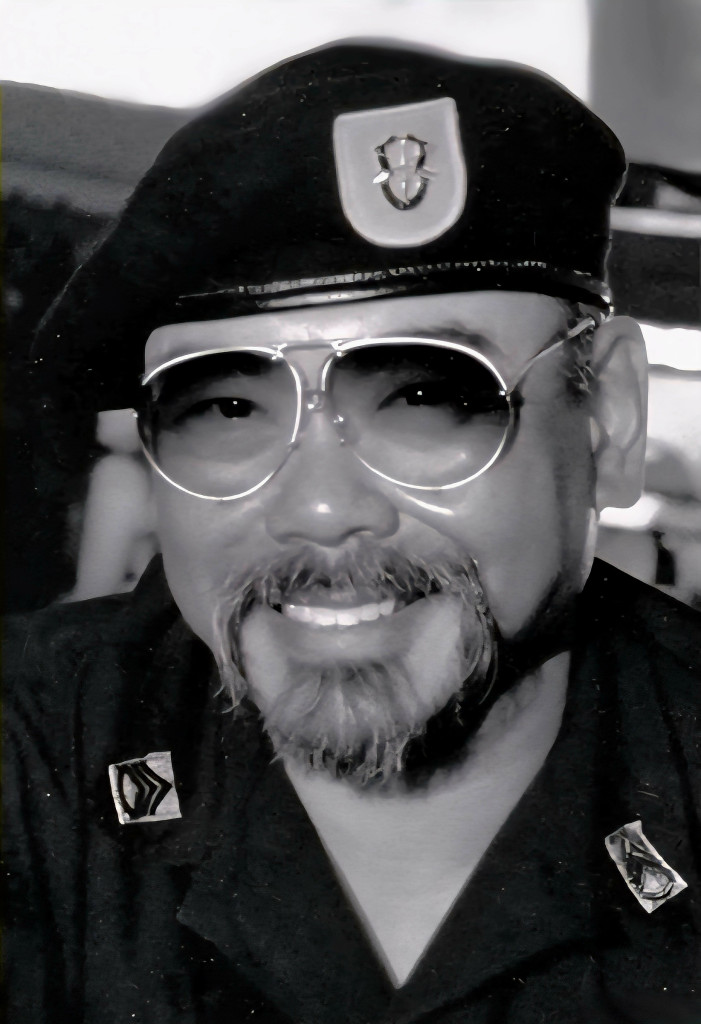
Al Mar. Image Credit: AAPK
Mar was born in the United States to Chinese immigrant parents and came of age during the formative years of Special Forces.
He served in a Special Forces Reserve unit and volunteered for early Vietnam-era special projects involving all-Asian Special Forces personnel. Public records do not detail specific unit assignments, which is common for short-lived programs of that period. His standing inside the community was reinforced by life membership in the Special Forces Association and the Special Operations Association, along with decades-long relationships with senior Green Berets.
Advertisement
After his military service, Mar trained as an industrial designer at the Art Center College of Design in Los Angeles. He joined Gerber Legendary Blades and rose to head of knife design, gaining experience turning functional concepts into durable production tools. He was also a dedicated martial artist with black belt ranks in judo and kendo, disciplines that shaped his focus on balance, grip security, and control under stress.
When he founded AL MAR Knives in 1979, his goal was consistent professional-grade performance rather than novelty.
Mar’s most consequential professional relationship was with Colonel Nick Rowe. Rowe, a former prisoner of war in Vietnam, became the driving force behind the modern Survival, Evasion, Resistance, and Escape program. As he built the SERE Instructor School at Camp Mackall in North Carolina, he required equipment that held up during realistic training for worst-case scenarios. For edged tools, he turned to Mar.
The original Al Mar SERE fixed blade was designed as a working survival and defensive knife for instructors. Its blade geometry emphasized strength and utility, and its handle focused on retention in wet, cold, and degraded conditions. The knife was intended for field use during demanding training cycles. It was formally accepted for use by the SERE Instructor School, establishing a direct institutional link between Mar’s designs and one of the Department of War’s most demanding training environments.
After Rowe’s assassination in 1989, Mar designed an extremely limited commemorative knife set in his honor, reportedly fewer than 50 examples. Presented in a shadow box with a booklet detailing Rowe’s life and service, the set reflected a personal tribute rather than a commercial effort.
Mar’s later knives continued to reflect his connection to Special Forces history. His MACV-SOG Model 4008 Bowie and associated Green Beret commemorative editions were built as functional knives and tributes to Vietnam-era Special Forces and MACV-SOG veterans. Made by skilled Seki City craftsmen, they combined working geometry with presentation-grade finish.
Throughout his life, Mar remained close to operational communities and also served as a reserve deputy sheriff. His induction into the Fighting Knives Magazine Hall of Fame and the Blade Magazine Cutlery Hall of Fame reflected industry recognition of his influence. Within Special Forces and serious knife circles, his reputation rests on disciplined design, personal integrity, and service to the same community from a different angle.
Advertisement
What readers are saying
Generating a quick summary of the conversation...
This summary is AI-generated. AI can make mistakes and this summary is not a replacement for reading the comments.










COMMENTS