

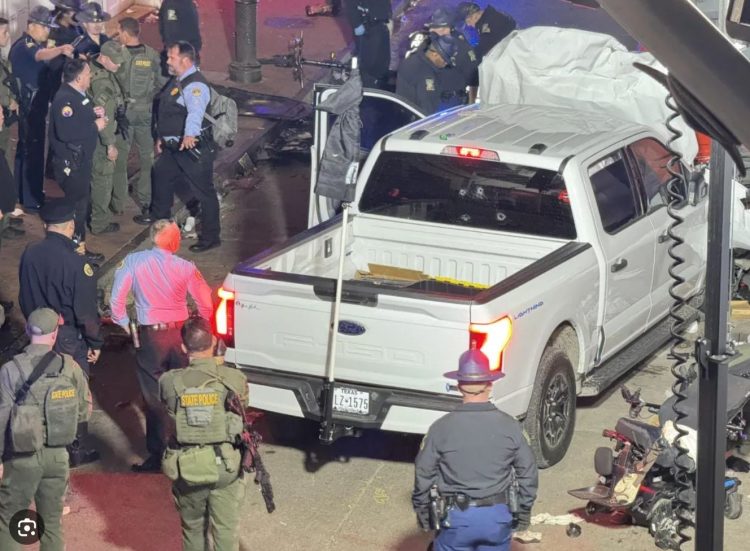
Community Impact and Official Statements
The New Orleans truck attack has profoundly impacted the community, leaving residents and visitors in shock and mourning. Most of the victims were local residents, making the tragedy even more personal for the city. The timing of the incident, just hours before the Sugar Bowl, added another layer of complexity. Despite the tragedy, at the time of writing, authorities decided to proceed with the game as scheduled, implementing heightened security measures to ensure public safety. A clear bag policy is in effect, limiting the size and type of bags allowed into the stadium. Attendees must pass through walk-through metal detectors and have their bags checked before entering. Prohibited items, such as backpacks, large bags, weapons, and drones, are not permitted to ensure the safety of everyone present.
President Joe Biden has been briefed on the situation, highlighting the national significance of the tragedy. Local authorities, including over 300 officers who were already on duty in the area for New Year’s celebrations, have mobilized to respond to the crisis. Emergency services have been working tirelessly to treat and transport the injured to hospitals across the city. Medical teams continue to work on the wounded.
This devastating event has reignited discussions about the security of large public gatherings, especially in light of previous warnings about the threat of vehicle ramming attacks at high-profile outdoor events. The tragedy serves as a sobering reminder of the importance of vigilance and preparedness in protecting communities during times of celebration.
Security Measures and Public Safety
In response to the tragic New Year’s Day attack in New Orleans, authorities have implemented enhanced security measures to protect both Sugar Bowl attendees and the city at large. The Sugar Bowl, a major event drawing large crowds, is proceeding as scheduled but with stricter safety protocols.
Citywide, New Orleans authorities have ramped up security efforts. Over 300 officers from various partner agencies had already been deployed for the New Year’s celebrations, and this increased presence is expected to continue. Marked and unmarked police vehicles are now more visible throughout the city to deter any potential threats. The FBI remains actively involved in the investigation, particularly regarding the suspected improvised explosive device found at the attack site.
Public safety remains a top priority, and officials are urging both residents and visitors to remain vigilant. Citizens are encouraged to report any suspicious activity immediately. NOLA Ready, the city’s emergency preparedness department, is providing regular updates and advising people to avoid affected areas. Authorities also emphasize the importance of following official instructions and adhering to security protocols.
BREAKING: Federal law enforcement reports that the NOLA truck involved in terror attack in New Orleans entered through Eagle Pass, Texas, two days ago.
The suspect’s identity and citizenship status is not yet confirmed. pic.twitter.com/fWigCN0ks1
— I Meme Therefore I Am 🇺🇸 (@ImMeme0) January 1, 2025
Historical Context
Vehicle-ramming attacks on crowded areas during large events have a troubling history that spans several decades. While initially not considered a terrorist tactic, it has increasingly been adopted by various groups and individuals in recent years. The first recorded vehicle-ramming incident dates back to 1964, but the tactic gained prominence in the 1990s when Palestinians began using it for assaults in Israel.
Some early notable examples include a 1973 attack in Czechoslovakia, where Olga Hepnarová drove a truck into a crowd, killing eight and injuring 12, and a 1983 incident in Australia, where Douglas Crabbe rammed a 25-ton truck into a crowded bar, killing five and injuring 16.
Since 2014, vehicle-ramming attacks have become more frequent and deadly. This increase is largely due to the simplicity of the method, as it requires minimal skill or preparation, making it attractive to lone-wolf attackers. Cars and trucks are also widely available, and crowded areas provide high-density targets, allowing for the potential of significant casualties. High-profile examples include the 2016 attack in Nice, France, where 86 people were killed during Bastille Day celebrations, and a 2024 attack at a Christmas market in Magdeburg, Germany, which claimed at least five lives.
Extremist groups like al-Qaeda and ISIS have encouraged the use of vehicle-ramming since 2010, but this method is not exclusive to jihadist attackers. In fact, only 19% of such attacks are attributed to jihadists, suggesting that the tactic has become a broader phenomenon.
The use of vehicles as weapons has forced cities to adapt by implementing protective measures such as concrete barriers and anti-vehicle designs in public spaces. These efforts aim to reduce the risk and impact of such devastating incidents in urban environments. However, if they are improperly placed, they do little good in stopping a determined attacker.
Summing Up
The New Orleans community, known for its resilience and vibrant culture, now faces the challenge of healing in the aftermath of this tragic event. As more details emerge, the focus remains on supporting the victims and their families, understanding the motives behind the attack, and implementing measures to prevent such incidents in the future. The collaborative efforts of local law enforcement, federal agencies, and the public will be crucial in navigating the path forward.








COMMENTS