Bell Textron has signed letters of intent with Ukraine to potentially supply AH-1Z Viper and UH-1Y Venom helicopters, enhancing Ukraine's defense capabilities amid ongoing conflict. This agreement includes plans for local assembly, maintenance, and training, marking a significant step in U.S.-Ukraine defense cooperation.
Key points from this article:
The agreement was signed on October 20, 2025, in Washington, D.C., between Bell Textron, the Ukrainian Ministry of Economy, Ecology, and Agriculture, and UkraineInvest.
How this affects Ukraine: The acquisition of these helicopters will provide modern air support capabilities to the Ukrainian Armed Forces, crucial for their ongoing defense against Russian aggression.
Why this matters: The deal represents a landmark defense cooperation that could lead to local production and maintenance of advanced military aircraft, boosting Ukraine's industrial capacity and military readiness during a critical time.
Updating summary...
Bell AH-1Z Viper and UH-1Y Venom Helicopters for Ukraine
Warren Gray
Speed
1x
Listen
COMMENTS
At $35 million per aircraft versus the Apache’s $52 million price tag, the Viper delivers serious firepower without breaking Ukraine’s already-strained defense budget.
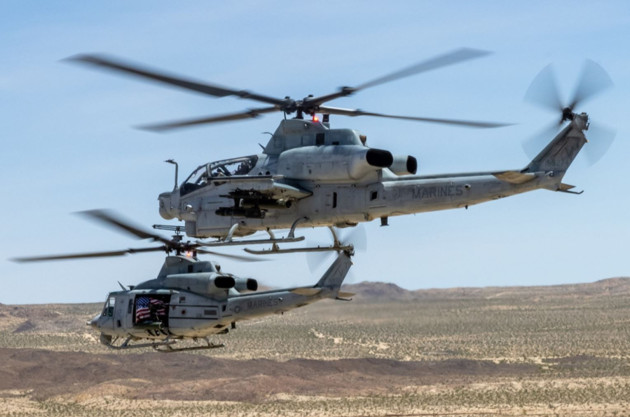
Bell UH-1Y Venom and AH-1Z Viper military helicopters. Photo credit: Bell Textron.
“We are proud to announce this agreement, and the potential to supply these incredible (AH-1Z and UH-1Y) aircraft to Ukraine. This initiative has been in development for some time, and we look forward to bringing it to completion. We are confident that H-1s can play a pivotal role in further building defense capabilities in Ukraine, providing a much-needed upgrade while strengthening current Ukrainian air support.” — Jeffrey Schloesser, Senior Vice President for Strategic Pursuits at Bell Textron.
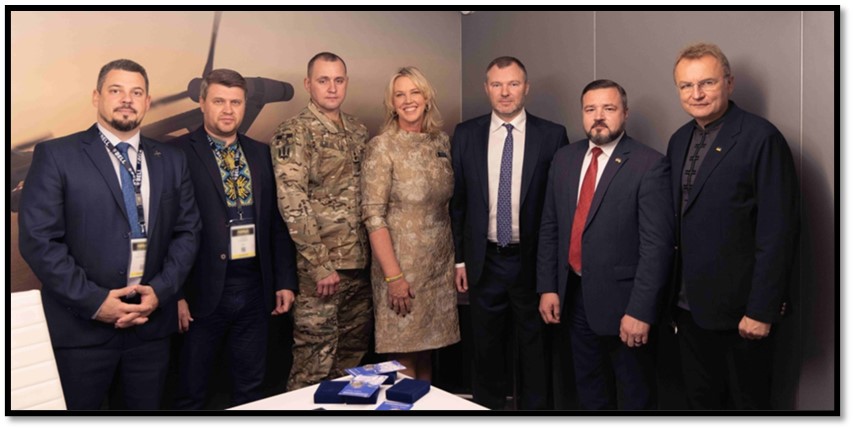
On October 20, 2025, representatives of Bell Textron (based in Fort Worth, Texas), the Ukrainian Ministry of Economy, Ecology, and Agriculture, and UkraineInvest, signed a series of letters of intent to clarify industrial cooperation related to potential acquisitions of the AH-1Z Viper attack helicopter and the UH-1Y Venom troop transport helicopter, both currently operated by the U.S. Marine Corps. At a ceremony in Washington, D.C., they jointly established a framework of options for assembly, maintenance, and local production of Bell aircraft, including personnel training and technology transfer.
Advertisement
Personnel from Bell Textron, the Ukrainian Ministry of Economy, Ecology, and Agriculture, and UkraineInvest. Photo credit: Bell Textron.
If the ambitious arrangement is formally approved, Bell Textron would coordinate with the U.S. Government under a Foreign Military Sale program to provide aircraft to the Ukrainian Armed Forces. There are already plans for Bell to open a representative office in Ukraine, and prepare for a Final Assembly and Check-Out (FACO) center, with training provided for Ukrainian technicians, engineers, and aircrews in the United States and Ukraine. In addition, Ukraine’s Odesa Aviation Plant has already been preparing for licensed production of these Bell helicopters.
This is a landmark agreement for defense cooperation between a major U.S. aerospace industry and the Ukrainian Armed Forces, offering both an operational and industrial opportunity to replace aging military helicopters with modern variants and provide employment for domestic assembly and servicing of these helicopters.
The U.S. Marine Corps flies 189 AH-1Z Vipers and 160 UH-1Y Venom aircraft, with 12 AH-1Zs exported to the Royal Bahraini Air Force, and the Czech Air Force operating four AH-1Z Vipers (with six more on order), and eight UH-1Y Venoms (with two more on order.)
Advertisement
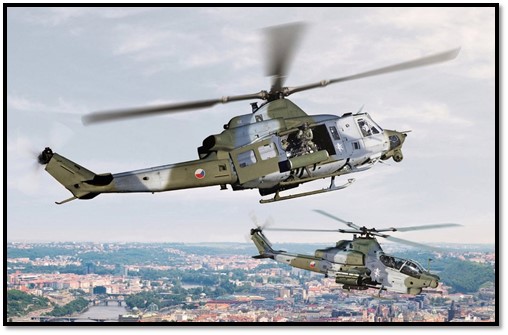
Czech Air Force UH-1Y Venom and AH-1Z Viper. Photo credit: Bell Textron.
The Viper and Venom are designed to operate jointly, and share the same General Electric twin engines, rotor system, and 85 percent of their other components, to simplify maintenance and logistics. The Venom can carry up to 12 personnel, including a pilot, copilot, crew chief, gunner, and eight combat-equipped personnel, while the Viper is a two-seat, attack helicopter.
Compared to the U.S. Army’s premier (and legendary) attack helicopter, the AH-64E Apache Guardian, the AH-1Z Viper is in the same general size, weight, and engine-power class, and both have four main rotor blades, six weapon stations, Lockheed Martin electro-optical targeting systems in the nose, helmet-mounted sighting systems (the Viper uses the Thales TopOwl), and a wide array of weapons available. The Apache also offers the APG-78 Longbow radar, which the Viper lacks, and a 30mm M230E1 anti-tank cannon instead of the Viper’s smaller, 20mm M197 three-barrel Gatling gun.
Advertisement
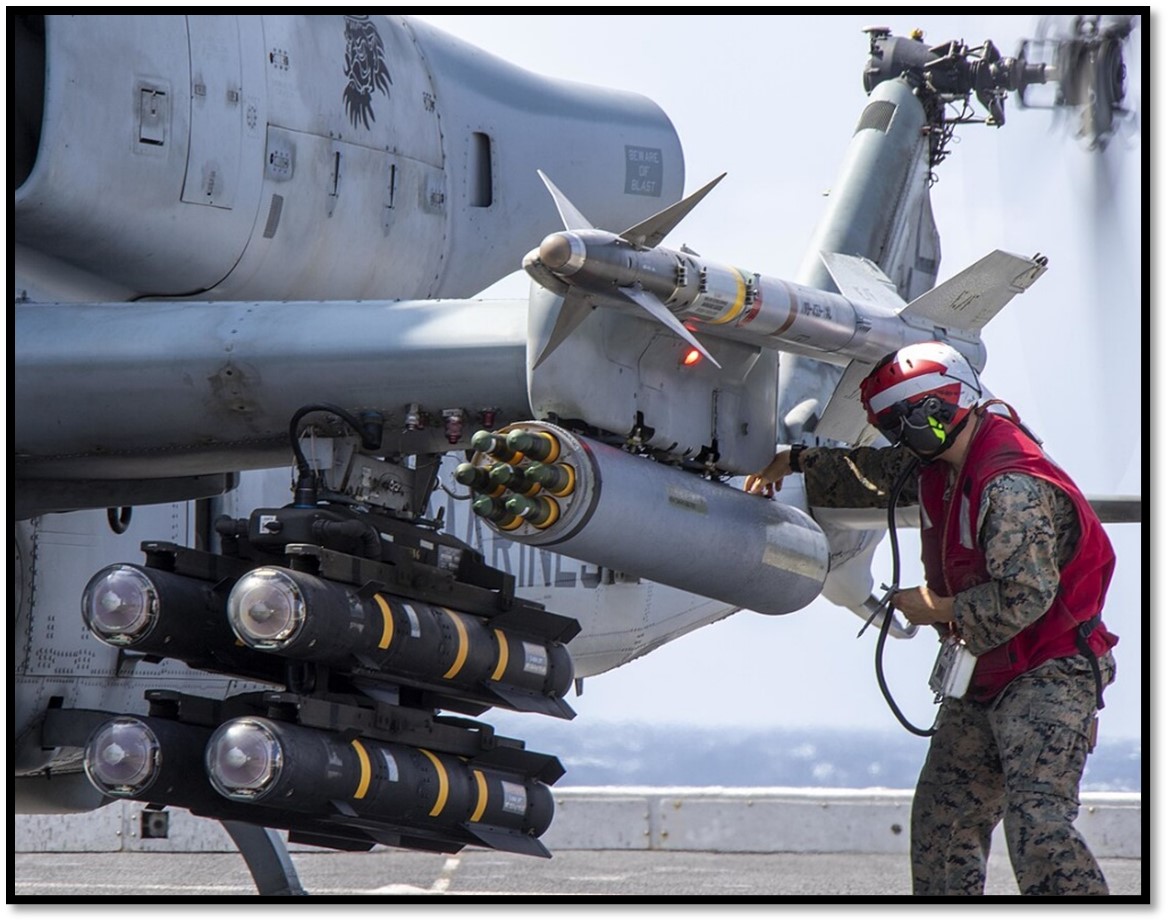
However, the AH-1Z is noticeably slimmer in frontal profile (harder to spot in battle), 17 miles per hour faster, can carry AGM-179A Joint Air-to-Ground Missiles (JAGMs, an improved version of the AGM-114K Hellfire II, incorporating a dual-mode, laser and millimeter-wave seeker), AIM-9M-8 Super Sidewinder heat-seeking missiles for self-defense, and costs a mere $35 million fully loaded, versus $52 million (or 50 percent more) for the upgraded Apache.
AH-1Z Viper loaded with AGM-179A JAGM missiles, an AIM-9M-8 Sidewinder, and Hydra 70 rockets. Photo credit: U.S. Navy.
For a cash-strapped country like Ukraine, still engaged in the deadliest, full-scale war of the 21st century, against the largest nation on Earth, it’s vital to obtain the best-possible bang for their buck, and the AH-1Z Viper offers considerable advantages against Russian armored vehicles and troops on the ground, with a sterling recommendation from the Czech Air Force, which already operates the Viper and Venom, and is soon receiving more examples of both aircraft.
In fact, these existing AH-1Zs and UH-1Ys were actually donated to the Czech Republic by the U.S. government, in response to the Czechs generously giving their last remaining Mi-24/35 Hind-E helicopter gunships (five Mi-24Vs and 10 upgraded Mi-35s) to Ukraine.
Advertisement
If this highly-anticipated, landmark defense agreement between Bell Textron and the Ukrainian Armed Forces is approved as a Foreign Military Sale, the implications for Ukraine are enormous, involving simultaneous force modernization, industrial opportunities, and military technology transfer at a very critical time.










COMMENTS