

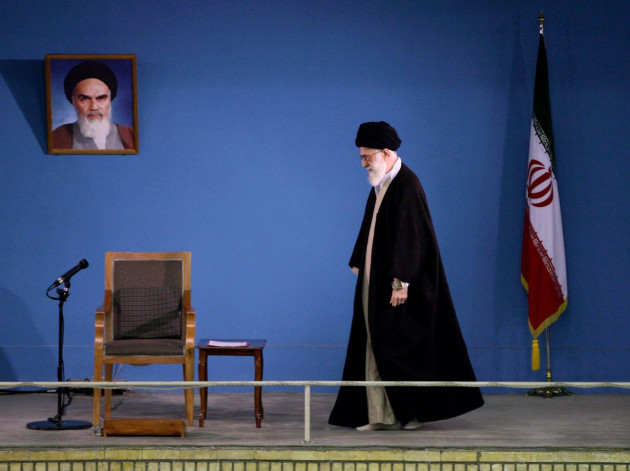
The more relevant question, therefore, is not whether Iranian leaders are seeking to trigger an apocalyptic outcome, but how a system shaped by these beliefs interprets struggle, conflict, and time.
In this context, religion does not function as a direct cause of specific policy decisions. Rather, it operates as part of a broader strategic culture—one that helps shape how risk is understood, how sacrifice is interpreted, and how long-term objectives are pursued.
One way to understand this distinction is through a simple example. A person raised in a family that values long-term perseverance and sacrifice may not be told exactly what decisions to make in every situation. But when faced with a challenge, they are more likely to endure hardship rather than walk away quickly. Their upbringing does not dictate each action—it shapes how they interpret choices and respond to pressure.
In a similar way, belief systems within a political structure do not necessarily determine specific policies. But they can influence how leaders interpret risk, time, and conflict, and how they respond when those pressures arise.
It is also important to distinguish between the Iranian government and the Iranian people. The population is not monolithic, and its views do not always align with those of the ruling system. Public sentiment within Iran is diverse and, at times, openly critical of government policies. Any assessment of Iran’s behavior must therefore focus on the structure and leadership of the state, rather than assuming uniformity across its society.
From Belief to Behavior: The Strategic Pattern
If belief and ideology shape the environment, the next question is whether that influence can be observed in behavior.
In Iran’s case, a consistent pattern emerges. Rather than relying primarily on direct confrontation, Iran has developed a strategy centered on indirect pressure, long-term positioning, and the use of proxy forces. This approach allows it to exert influence across the region while managing risk and avoiding large-scale conventional conflict.
This pattern suggests a system structured for endurance rather than rapid resolution. It reflects a preference for sustained pressure over decisive engagement, and for shaping the environment over time rather than seeking immediate outcomes.
Proxy Warfare as a Core Strategy
Iran’s reliance on proxy forces is one of the most visible expressions of this approach. Through networks that include Hezbollah, various Iraqi militias, and the Houthis, Iran has been able to extend its reach far beyond its borders.
This model provides several advantages: plausible deniability, reduced direct exposure, and the ability to apply continuous pressure across multiple fronts. It is not a temporary tactic—it is a central component of how Iran operates.
A system that values indirect struggle and long-term positioning is naturally aligned with proxy warfare as a primary tool. While this approach is not caused by belief alone, it is consistent with a strategic culture that emphasizes endurance, adaptability, and sustained engagement.
Risk Tolerance and Time Horizon
These patterns also suggest important differences in how risk and time are understood.
Western models of deterrence often assume that increasing pressure will lead to de-escalation. But that assumption depends on a shared understanding of what constitutes unacceptable cost.
Iran’s behavior indicates a different approach. It has shown a willingness to absorb pressure, sustain losses through proxies, and continue engagement over extended periods. This does not imply irrationality. Rather, it suggests that risk may be interpreted differently when conflict is viewed as part of a longer struggle rather than a discrete event.
Time is also a critical factor. Western strategies often operate on shorter timelines, seeking measurable outcomes within defined periods. Iran, by contrast, appears to operate on a longer horizon, prioritizing gradual gains and strategic positioning over immediate results.
A system built for endurance will approach negotiation and conflict differently than one built for rapid resolution.
Nuclear Capability, Rhetoric, and Strategic Interpretation
Iran’s continued pursuit of advanced military capabilities, including nuclear potential, combined with hostile rhetoric toward Israel, understandably raises concern. At first glance, this combination can appear to suggest a willingness to accept catastrophic outcomes.
However, a closer examination points to a more complex picture.
Iranian rhetoric toward Israel is often framed in ideological and political terms, frequently focused on opposition to the state rather than explicit operational intent toward civilian annihilation. While such rhetoric is aggressive and deeply concerning, it does not, on its own, establish a strategy built around apocalyptic objectives.
At the same time, Iran’s observable behavior—particularly its reliance on proxy warfare, calibrated escalation, and indirect confrontation—reflects a pattern of risk management rather than reckless engagement. Its actions suggest an effort to exert pressure, expand influence, and deter adversaries while avoiding direct large-scale conflict.
The pursuit of nuclear capability can be understood within this framework. Capability does not necessarily imply intent to use such weapons in an apocalyptic manner. It may instead reflect a desire for deterrence, leverage, and regime survival within a hostile regional environment.
This distinction is critical. The challenge is not that Iran is irrational, but that it may be operating within a strategic framework that differs from conventional Western assumptions about deterrence and escalation.
Implications for Strategy
These differences carry important implications.
First, deterrence may require recalibration. If an adversary is willing to absorb pressure over time, then strategies based solely on increasing cost may not produce the intended effect.
Second, diplomacy may function asymmetrically. One side may seek resolution, while the other may use negotiation as a means of managing time and preserving flexibility.
Third, proxy warfare is likely to remain central to Iran’s approach. It is not a temporary response to current conditions, but a structural feature of how it operates.
Finally, the risk of misinterpretation is significant. If we apply familiar models without adjusting for strategic culture, we risk solving the wrong problem.
Conclusion
Iran presents a complex and enduring challenge—one that cannot be fully understood through conventional frameworks alone.
This does not mean that existing models of diplomacy or deterrence are irrelevant. But it does mean they may be incomplete.
Understanding an adversary does not require agreement. But it does require accuracy. Without that, even well-intentioned strategies can fail—not because they are poorly designed, but because they are built on assumptions that do not fully apply.
The challenge is not simply responding to Iran’s actions. It is understanding the framework in which those actions are shaped.
—
Author Disclaimer
All statements of fact, opinion, or analysis expressed are those of the author and do not reflect the official positions or views of the U.S. Government. Nothing in the contents should be construed as asserting or implying U.S. Government authentication of information or endorsement of the author’s views.
About the Author
Steve Gottlieb is a retired U.S. Navy Medical Service Corps officer, former CIA analyst, and prior firefighter/paramedic.
References
- Congressional Research Service – Iran: Politics, Human Rights, and U.S. Policy
- RAND Corporation – Iranian strategic culture and deterrence analysis
- Institute for the Study of War – Iran proxy networks
- Washington Institute for Near East Policy – Iran doctrine and regional strategy
- Carnegie Endowment for International Peace – Iran political and nuclear strategy
- Encyclopaedia Britannica – Mahdi and Twelver Shi’a beliefs
- Oxford Islamic Studies Online – Shi’a eschatology and theology
- Wilson Center – Iran political-religious system
- Office of the Supreme Leader of Iran – official doctrine and public statements








COMMENTS