Military

Book Review: Five Years to Freedom by Colonel James N. Rowe

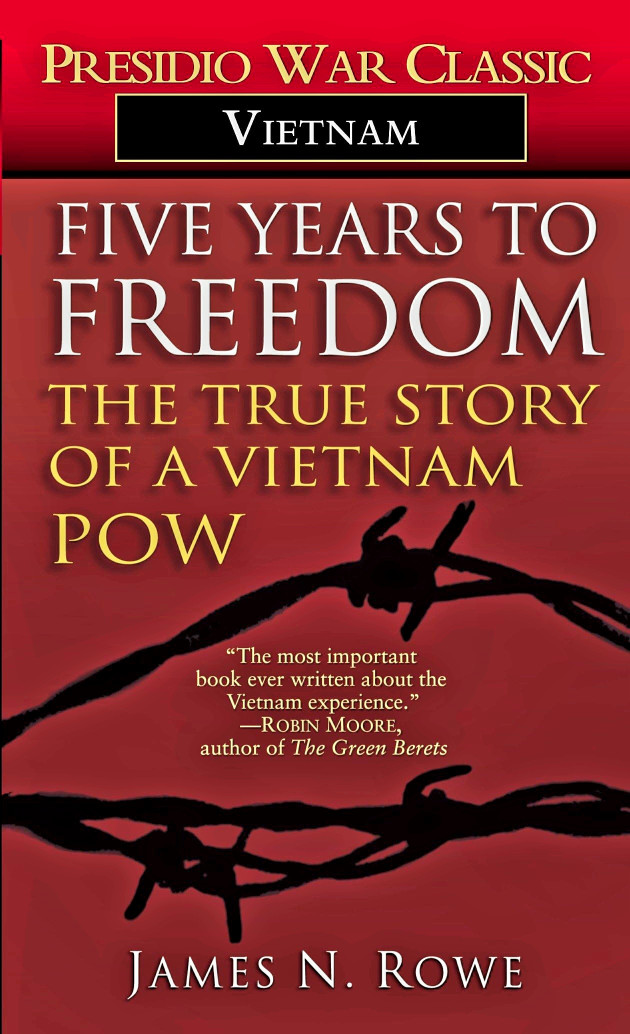
Five Years to Freedom is a compact, must-read POW memoir that shows how Nick Rowe endured five years of Viet Cong captivity through discipline and mental control, influenced the modern SERE program, and belongs alongside Frankl and Solzhenitsyn as a study of inner freedom under coercion.
Five Years to Freedom should be required reading for anyone in the military, particularly those serving in small units, advisory roles, or special operations. It is a compact, direct, and well-written account of captivity, resistance, and escape that never drags or romanticizes the experience. Rowe tells his story plainly, which makes the book both engaging and surprisingly short for a five-year prisoner of war memoir. There is no filler. Every page carries weight.

Advertisement
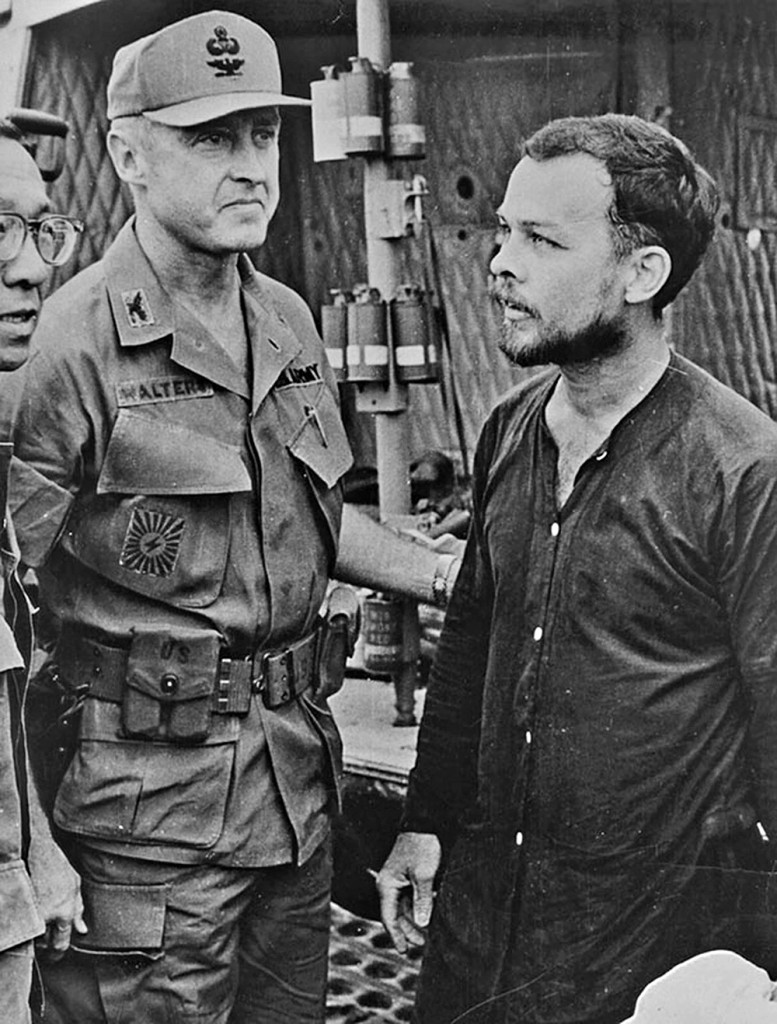
After being rescued from his VC captors, Nick Rowe arrives at Camau still wearing his black pajamas (Army Special Operations Forces photo)

SOFREP has published multiple articles over the years covering Colonel James “Nick” Rowe, his captivity in Vietnam, and his later role shaping the modern SERE program. Those articles frequently reference Five Years to Freedom. This review treats the book itself as the subject, not as supporting material. Read straight through, it stands on its own as one of the most practical POW narratives ever written by an American serviceman.

Rowe was captured by Viet Cong forces in October 1963 while serving as a Special Forces advisor. One teammate was killed during the capture. Rowe spent the next five years in jungle prison camps, held in bamboo cages, starved, beaten, subjected to constant political indoctrination, and forced to watch other prisoners die. He resisted cooperation, kept secret coded diaries in multiple languages, and made repeated escape attempts. In 1968, he escaped alone during a U.S. air operation and was recovered by helicopter after signaling with a mosquito net.

The book’s strength is its clarity. Rowe describes captivity as a daily problem-solving exercise. Food, illness, guards, propaganda sessions, and fleeting opportunities all receive the same sober treatment. There is no moralizing. There is no search for sympathy. The reader sees how discipline, routine, memory, and future focus kept him functional when physical conditions collapsed.

Advertisement

That approach places Five Years to Freedom in the same intellectual neighborhood as Viktor Frankl’s Man’s Search for Meaning and Aleksandr Solzhenitsyn’s The Gulag Archipelago. All three works deal with imprisonment under totalitarian systems and the effort to preserve inner freedom under extreme coercion. Frankl examines how meaning and choice survive inside Nazi camps. Solzhenitsyn documents the moral corrosion of the Soviet gulag system through thousands of testimonies. Rowe’s account operates at a smaller scale, focusing on one man, one jungle war, and one escape. What links them is the insistence that the mind remains a battlefield even when the body is caged.

Where Five Years to Freedom leaves the reader wanting more is in explicit lessons. Rowe demonstrates discipline, resistance, and psychological control throughout the book, but he rarely steps outside the narrative to spell out what military members should learn from his experience.

Advertisement

Readers familiar with his later work in SERE will recognize those lessons between the lines, but younger readers may wish he had paused to address them directly.

That absence is understandable given the book’s time and tone, but it also highlights its historical importance. Rowe carried those lessons forward after Vietnam and used them to build the modern SERE program at Fort Bragg and Camp Mackall.

Many of the techniques, stressors, and survival priorities described in the book later became formal training, shaped by firsthand knowledge rather than theory.

Advertisement

Five Years to Freedom remains relevant because it shows what captivity actually looks like when there is no rescue timeline and no outside reassurance. It is short, sharp, and honest. For readers interested in SERE, Special Forces history, or the mental mechanics of endurance, this book earns its place on the shelf.

Advertisement

You must become a subscriber or login to view or post comments on this article.