Book Review

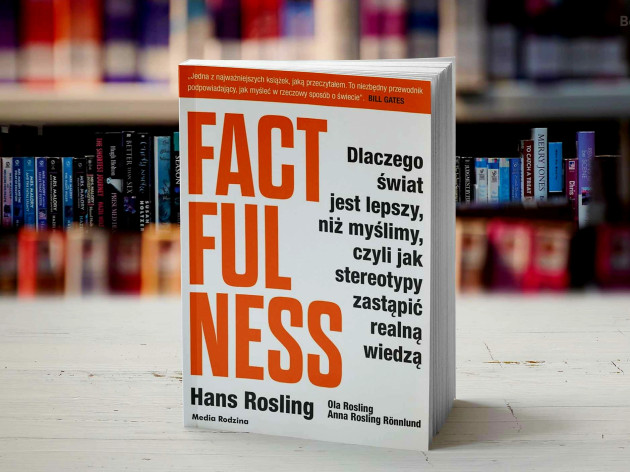
BOOK REVIEW: If You Read One Book This Year, Make It Factfulness

Factfulness is a powerful, data‑driven argument that the world is far better and more stable than fear‑ridden media and instinctive thinking make it seem, and that adopting a fact‑based worldview is the key to clearer, less panicked decision‑making in an age of hype and hysteria.

If you only read one book this year, this should be it. With all the fear mongering and fake news being spread like a bad STD these days, Factfulness by Hans Rosling cuts through the sewage and allows us to see a more realistic, data‑driven world view ‐ not the one the media and politicians keep selling us.

Advertisement

Rosling’s core argument is brutally simple: most people are catastrophically wrong about the state of the world. He shows that, time and time again, even the smartest, best‑educated people fail basic fact‑based questions about poverty, health, violence, and education. And it’s not because they’re stupid; it’s because our instincts, the media, and the culture of crisis have trained us to see everything as worse than it actually is.

The book is structured around ten “instincts” that distort reality: the gap instinct (dividing the world into us vs. them), the negativity instinct (focusing on bad news), the fear instinct (overestimating scary risks), the urgency instinct (reacting as if every problem is a now‑or‑never emergency), and several others. Rosling explains how each of these instincts served us in the past, but now they misfire, making us blind to real progress and prone to panic decisions.

One of the most powerful points is the “four levels” income model. Rosling shows that the old binary of “developed” vs. “developing” countries is outdated and misleading; most people today live in the middle, not at the extremes. When we see the world in income levels, the so‑called “poor countries” are actually becoming much more like the “rich” world, especially in areas like child survival, education, and even access to tech.

Advertisement

The book is also a sharp takedown of the media’s addiction to drama and conflict.

Rosling points out that news is designed to capture attention, not to inform accurately, so it systematically overemphasizes disasters, violence, and worst‑case scenarios, while almost ignoring slow, steady progress. That’s why so many people think the world is getting worse, when on almost every measurable indicator – extreme poverty, child mortality, violence, access to education – things are actually getting better.

Advertisement

For SOFREP readers, Factfulness is especially valuable: it gives us a framework to cut through the noise, propaganda, and emotional manipulation. It teaches us to ask for data before accepting a scary narrative, to question guilt‑based blame games, and to resist the urge to over‑simplify complex conflicts. Instead of flying blind on fear, we can build a worldview based on facts, not instincts.

In short, Factfulness is not naive optimism; it’s a stress‑reducing habit of demanding evidence, seeing both the problems and the progress, and making smarter decisions as a result.

Advertisement

What readers are saying

Generating a quick summary of the conversation...

This summary is AI-generated. AI can make mistakes and this summary is not a replacement for reading the comments.