Major John L. Plaster's book 'SOG' offers a gripping and unfiltered account of the MACV-SOG missions in Vietnam, contrasting sharply with Hollywood's portrayal of war. It reveals the brutal realities and high stakes faced by soldiers, emphasizing the true consequences of combat.
Key points from this article:
The book details the harrowing experiences of MACV-SOG teams in Vietnam, highlighting missions that often ended in death or severe injury.
How Plaster's firsthand accounts expose the stark differences between real warfare and Hollywood's dramatized narratives, making it uncomfortable for non-veterans.
Why 'SOG' is significant as it challenges readers to confront the harsh truths of combat, illustrating that elite soldiers often faced expendable conditions without the romanticized endings of typical action films.
Updating summary...
Book Review: SOG: The Secret Wars of America’s Commandos in Vietnam By Major John L. Plaster
Galen Fries
Speed
1x
Listen
COMMENTS
Major John L. Plaster’s SOG is a blunt, first-hand account of MACV-SOG’s small-team missions behind enemy lines that makes Hollywood action look fake by comparison because it’s built on real consequences, brutal odds, and men who did not get to choose how it ended.
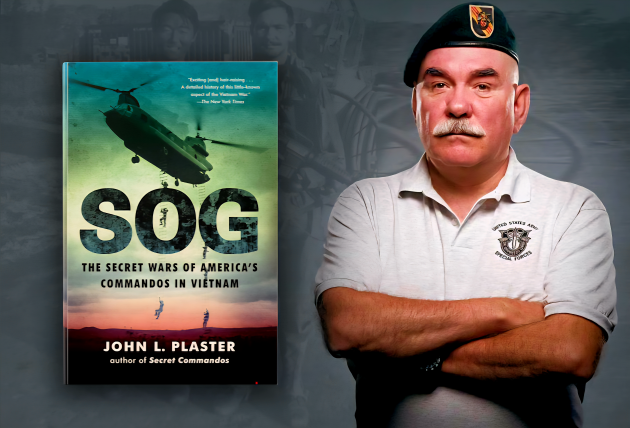
USAR Special Forces Major John L. Plaster and his book SOG. Image Credit: Together We Served
Most action movies are boring once you’ve read SOG.
Predator. Rambo. Pick your favorite. All of them feel staged, padded, and dishonest after you read what Major John L. Plaster and MACV-SOG actually did in Vietnam. Not because Hollywood lacks explosions, but because it lacks consequences. SOG has nothing but consequences.
Advertisement
I was not prepared for this book to be as gripping as it is. I already own Plaster’s The Ultimate Sniper, a clear and factual manual, but nothing in that book hinted at just how good a storyteller he is.
SOG reads like one insane movie script after another, except nobody yells “cut,” nobody resets the scene, and most missions end with men dead, missing, or barely extracted under fire. Plaster does not write like a historian looking back from a safe distance.
He writes like a man dumping after-action reports that stayed classified for 25 years because the government pretended the unit never existed.
Advertisement
MACV-SOG burned through men at a rate no modern unit would tolerate. Recon teams went into Laos and Cambodia knowing the odds were stacked against them. Small teams. Deep penetration. No artillery. No QRF (quick reaction force). Often no CAS (close air support) until the very end. When things went bad, they went catastrophic.
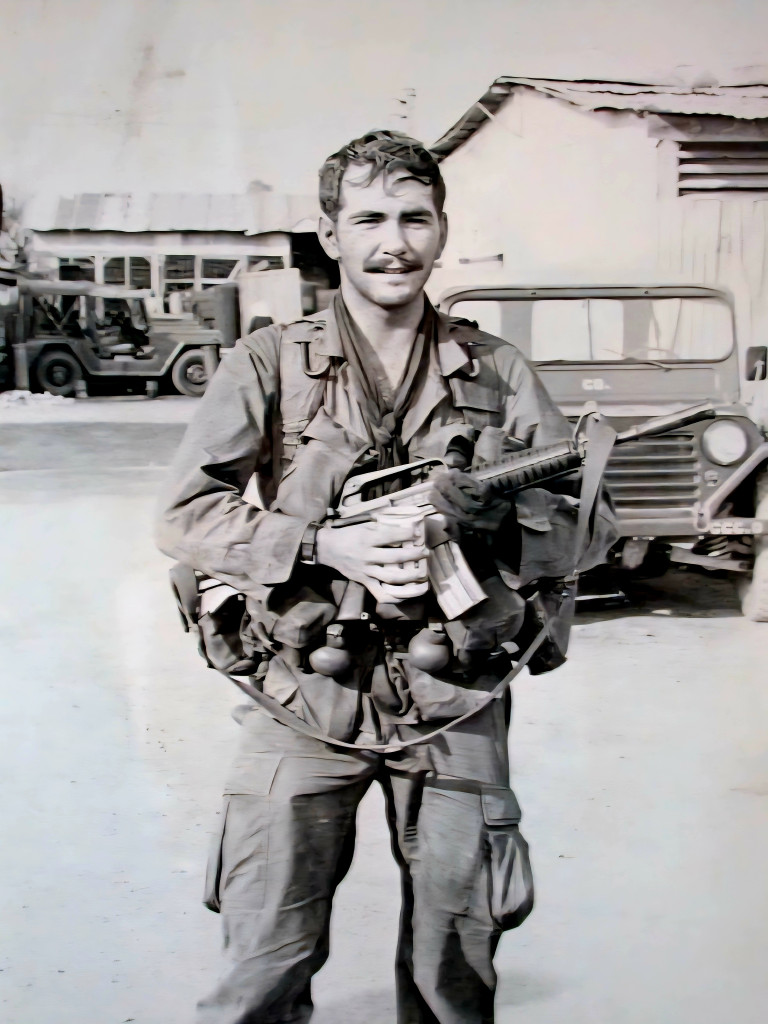
Major John Plaster SOG team commander: Image Credit: Sogsite
Plaster makes that reality clear without melodrama. Teams compromised by tracker dogs. Ambushes by battalion-sized NVA elements. Helicopters shot up on extraction. Men fighting 360 degrees with CAR-15s, sawed-off M79 grenade launchers, and whatever ammo they could grab. Entire teams wiped out. Not hypotheticals. Not metaphors. Names and missions.
Advertisement
That is where civilian reviews miss the point.
The New York Times calls this book “a worthy act of historical rescue.” That is polite, bloodless language for something that was neither polite nor bloodless. SOG does not rescue history. It exposes how far real war sits from the stories civilians are comfortable reading.
This book isn’t impressive because it is dramatic. It is impressive because it is restrained. Plaster does not sell himself as invincible. He documents fear, confusion, mistakes, and the simple reality that courage often meant doing the mission anyway, knowing the casualty odds were ugly.
Advertisement
What makes SOG hit harder than fiction is that the men did not get to choose their ending. No heroic music. No slow-motion victory. Sometimes the mission succeeded, and the team came back. Sometimes nobody came back. Sometimes the men you thought were safe died, and the ones you were sure would not make it somehow survived.
For veterans, SOG rings true because it does not explain itself to civilians. It does not soften language. It assumes the reader can handle the idea that elite service sometimes means being expendable. For non-veterans, it should be uncomfortable. If it is not, they missed the point.
If you think war looks like a two-hour movie with a clean arc and a clear hero, skip this book. If you want to understand what small-unit combat looks like when the rules are stripped away, and survival comes down to your last four rounds, three for the enemy and one for yourself, read SOG.
Put the action movies back on the shelf. They do not hold up.
Advertisement
What readers are saying
Generating a quick summary of the conversation...
This summary is AI-generated. AI can make mistakes and this summary is not a replacement for reading the comments.










COMMENTS