

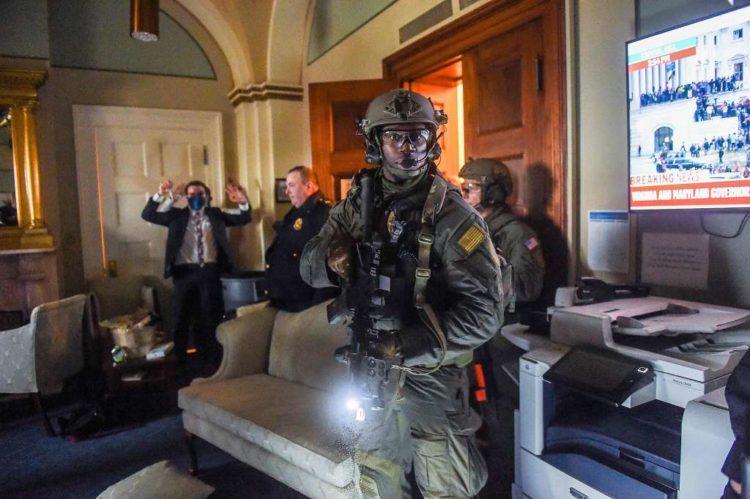
Accessing local files stored on the hard drive or gaining access to the SIPRNet would be nearly impossible for the average internet user, especially one lacking the credentials or a CAC with SECRET level clearance. Still, it is feasible. It’s also possible that authorized users — in this case, most likely senators serving on the Armed Services or Homeland Security Committees — could have left their CACs in their computers during the turmoil.
However, if someone among the rioters knew what they were doing, the SIPRNet security breach could be severe.
Say, for example, if a computer belonging to a National Security Council member or an Armed Serviced Committee member — who have nearly full access — were left unguarded and logged in, information from the SIPRNet could easily be downloaded onto the hard drive and then removed from the building in a cargo pocket or backpack.
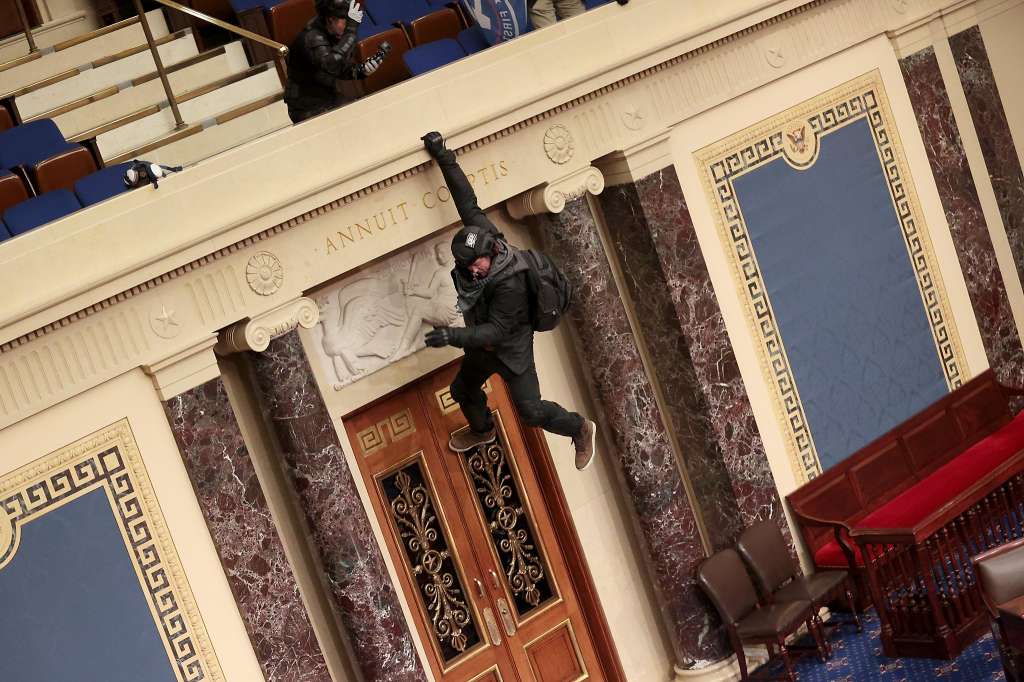
Another concern is uploading files onto the server. For example, it would take no time at all to upload a virus. While a SECRET computer would reject the thumb drive immediately, someone smart enough could bypass this.
While a remote possibility, it would have been easy for a trained professional to slip unnoticed into the Capitol building in the midst of the confusion. Once inside, they would have had ample time to locate a SECRET computer, gain access, and carry out any number of actions. According to the most up-to-date timelines of the events on Wednesday, the Capitol was breached around 3 p.m. and cleared by Capitol Police by 5:40 p.m. A trained professional — a hacker, foreign spy, or traitor — would have had unfettered access to the SIPRNet for nearly three hours.
Expert intelligence operatives can get sensitive information from a single site in minutes.
There is a SCIF in the Capitol building on the third floor. It is heavily guarded, with armed guards always present, and nearly impossible to get into.
Now, it is very likely that many members of Congress would have SECRET documents in their offices’ safes. It’s unknown how many of those were breached or taken.
Given that the SECRET internet was down yesterday, an update was rolled out, and the take-home computers are to be dropped from the network suggests that the authorities are casting a wide net. It’s also possible that they aren’t sure what might be at risk and are attempting to shut as many doors down as possible.
What Could Someone Do With a Laptop Outside the Building?
If a laptop that was logged out of the SIPRNet and still encrypted were stolen from the building, it would be little more than a paperweight for the common thief. Even if they were able to bypass the security credentials and encryption, they would have no way of connecting the machine to the SIPRNet.
That is unless they had already solved that problem.
The level of sophistication needed to access classified information on the SIPRNet outside of a secure connection is extremely high. It’s likely that only a highly trained professional or someone from a foreign espionage group would be able to make a breach. It’s unlikely — though possible — that Russian or Chinese spies were present at the demonstrations on Wednesday. That said, a stolen SECRET computer with files on its hard drive would be very valuable to the right person.
Hackers, Spies, or Traitors?
It would stand to reason that an average rioter would not know about the existence of classified material or computers in the Capitol. It’s also likely that if a rioter entered an office and saw a computer, the motive for theft would be a base one, a crime of opportunity.
But, the gathering in DC on Wednesday was no random event. It was planned, and people came from all over to participate.
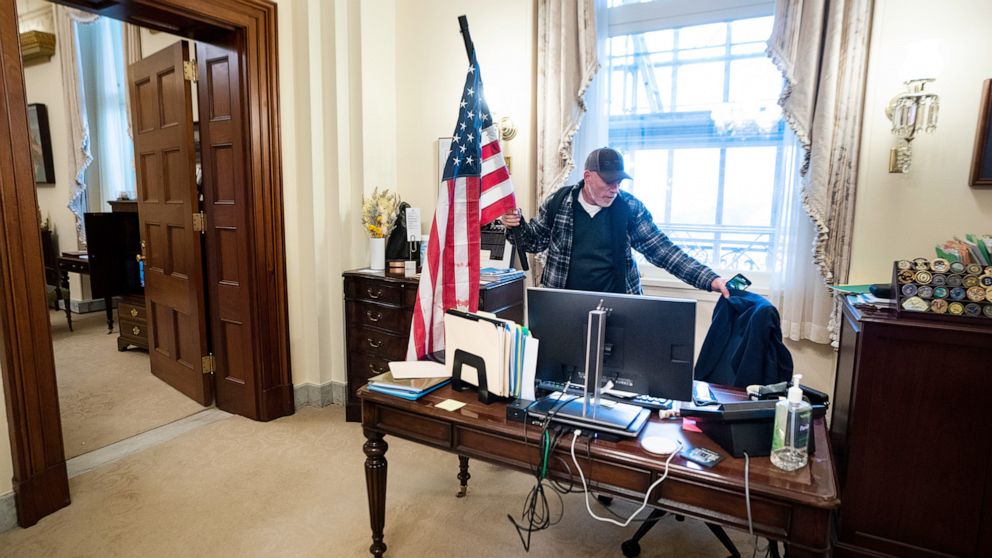
This new information comes amid questions over the lax security and claims from a Metro DC Police officer that off-duty military and police personnel were among the thugs and “flashing their ID badges” at their on-duty colleagues. Rioters who gained access to the building were pictured at the desks of high-ranking members of Congress, including Speaker Nancy Pelosi, and had unfettered access to dossiers, computers, and phones.
Michael Sherwin, acting U.S. Attorney for the District of Columbia, said “items, electronic items were stolen from senators’ offices, documents and… we have to identify what was done to mitigate that.”
The penalty for stealing a classified computer or classified information is hefty and could include over 10 years in jail.
Reporting was contributed by John Black, Sean Spoonts, and J.W. Sotak.








COMMENTS