

“I ended up with a couple of broken legs, my left arm was extended about 8-10 inches away from my body but it never did break the skin.” All of the nerves of his arm were crushed; he equated it to getting hit with an anvil. His left arm was flailed, both legs were broken and he suffered burns on over 50 percent of his body, some of them third-degree.
After being stabilized in a Vietnam-based MASH unit, he was sent to Japan where he remained for only about a week. Hope was then transferred to Brooke Army Medical Center at Ft. Sam Houston in San Antonio where the vast majority of military burn victims are taken. He spent the next nine months there.
Hope had to endure countless surgeries and spent six months in traction. “It was at this time [early 1970], that they were transferring active-duty soldiers from military hospitals to VA medical centers nearest to their homes to save on bed space,” he said. He ended up at the VA hospital in Big Spring, TX which was close to his home. Still unable to walk well, he had to go to daily physical therapy. Hope had been in traction so long that both his knees and hips weren’t functioning well at all.
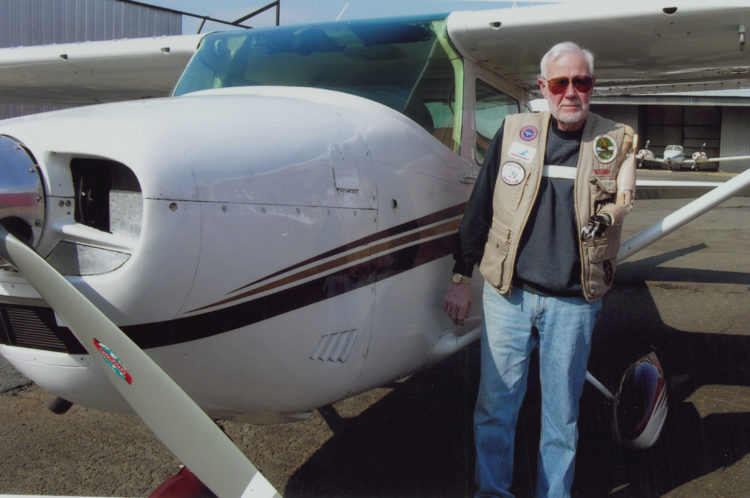
His arm was damaged severely and he was unable to use it from the time of his crash in 1969 until 1972. A doctor who was treating Hope suggested that his mobility would increase if he amputated the arm. During the summer of 1972, he went to Albuquerque, NM and after consulting with doctors there, his arm was amputated at the shoulder, but they fused the humerus head back into the AC socket so that he’d have something to attach a prosthetic arm to. He now uses a prosthetic hook and not the hand — he thought that the prosthetic hand looked stupid and isn’t as functional.
He was discharged from the Army in April 1970. In 1971, he was finally able to walk without assistance, but he still was not able to flex either knee close to 90 degrees. He knew he’d never be able to fly helicopters again so he went back to college. Hope graduated with a bachelor of science degree in Business Administration with a Marketing minor from Tarleton State University (part of Texas A&M) in 1976. He started a real estate gig with a friend but wasn’t happy and missed the camaraderie of the military.
“I made contact with nearly every combat veteran within 50 miles of where I lived,” he said. He added that he missed the regimen and the discipline that the military provided. That’s when a friend of his from the VA hospital in Big Spring, told him that the DAV (Disabled American Veterans) were looking for disabled vets and that they would provide all of the necessary training. He jumped at the chance.
In August of 1979, Hope went to work for the DAV and despite his injuries considered himself among the most fortunate people in the country. “I was extremely fortunate,” he said. “I got to work in a field that I loved and it brought me back to my second-family that I loved, the military and veterans and I worked there for 31 years.”
In 2010, he was forced to retire from the DAV as he became the primary caregiver for his mom. In 2010, he was living in Winston-Salem, NC and was running the DAV office there. After three years, at the urging of his daughter, he moved his mom to a nursing home in Winston-Salem to be closer to her.
Hope was feeling lost without the interaction of the veterans, “I was probably the most discombobulated person for those first two years,” he said. After working with veterans, their dependents, and survivors for 31 years, it was as much a part of him as anything he’d ever done.
He got the opportunity to go back to the DAV. He ran for national office, was elected, and served another four years. Hope became the National Commander of the DAV in 2014. He retired from day-to-day work in 2015, but still helps veterans with their claims work. He helps channel vets in need toward the national service officers either in Winston-Salem or if the vet is from another state to the national service officer from their area.
Service to the veterans is the calling card for Hope and the DAV. “We all understand where the veteran is coming from because we’ve all been there,” he said. “It is all about service to your country, and when you receive those injuries and disabilities, they are with you for the rest of your life…even if you totally recover. Those injuries are still with you. And as time goes on, I’m amazed at how difficult emotional disabilities are to deal with as compared to physical disabilities.”
He added that unless you’ve been there, it is very difficult to talk to veterans who have seen and experienced the horrors of war. With more and more double and triple amputees surviving on the battlefield today, because of the improvements in combat medicine and the rapidity of Medevac, an entirely new way of treatment is required.
Despite his injuries, he has continued to fly, but no longer able to fly helicopters he transitioned to fixed-wing aircraft, where the hand doesn’t work as well as a hook. He’s been flying fixed-wing aircraft for the past 25 years and likes to fly “at least once a week if not more,” he said.
As an area supervisor for the DAV for his last 10 years there, he’d have to travel to different states and visit different sites to keep the service officers up with their training that never stops. So, he had the advantage of being able to fly to many of his offices, which cut down on his travel time and gave him the opportunity to get back up in the sky, which he loves.
Ron Hope is still flying high and is another example of and epitomizes what national service means.
The DAV is celebrating its 100th birthday in 2020. Each year, DAV (Disabled American Veterans) helps more than one million veterans and their families get the benefits they’ve earned. To learn more, visit www.DAV.org.








COMMENTS